
Landing page banner


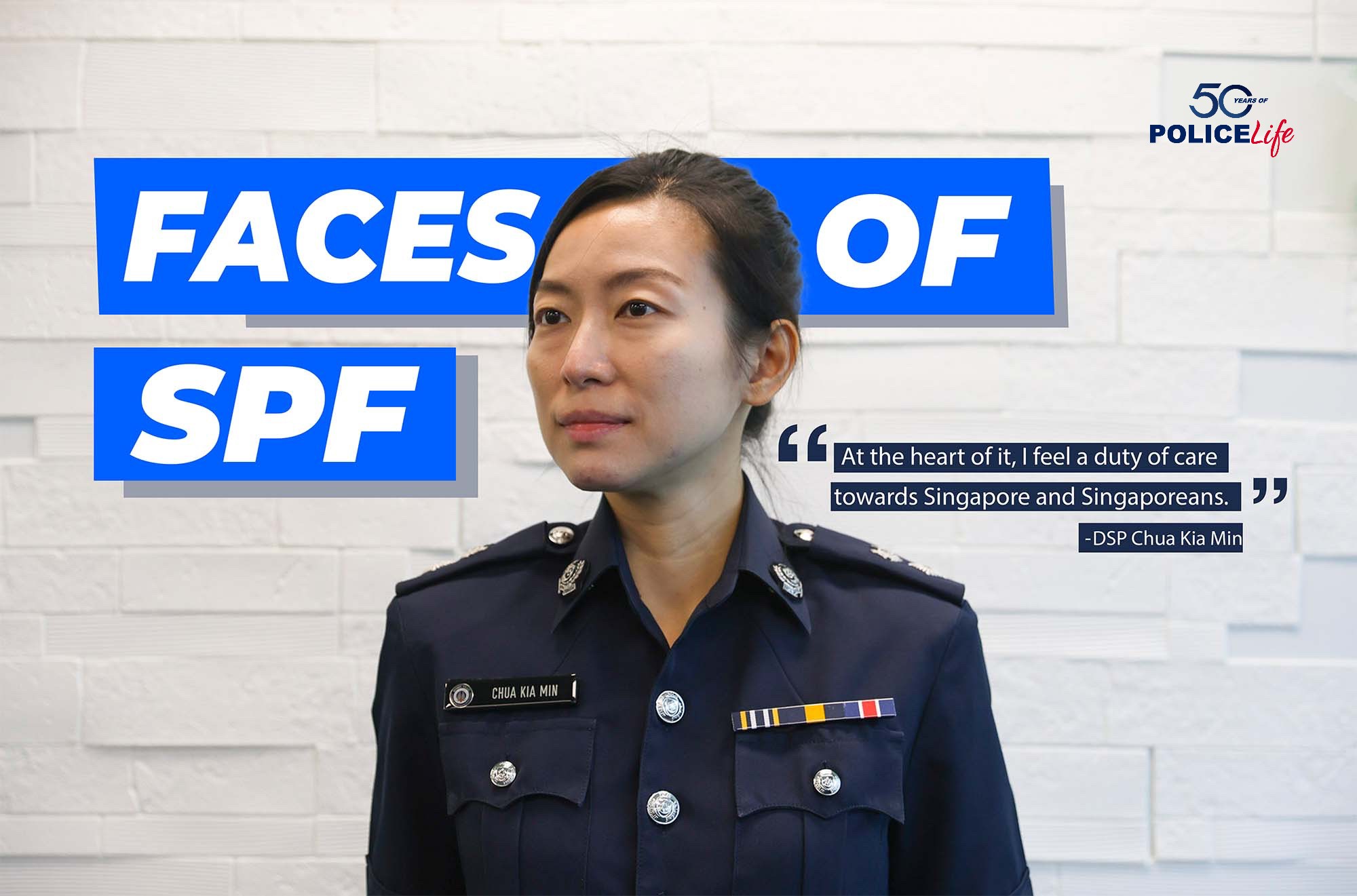
Ever wondered who works behind the scenes to keep Singapore safe in the digital domain? Operating at the frontlines of our virtual borders is the Cyber Command of the Singapore Police Force (SPF). Deputy Superintendent of Police (DSP) Chua Kia Min, Officer-in-Charge (OC) of the Cybercrime Investigation Branch (CIB), shares what it takes to tackle complex cybercrime cases and safeguard Singaporeans from evolving cyber threats.
What inspired you to join the SPF, and how has your journey been?
I was first inspired to join the SPF as a young child, when I watched the Police Contingent march at the National Day Parade. This inspiration grew when I joined the National Police Cadet Corps in secondary school, where I experienced the discipline of a uniformed organisation firsthand and gained a foundation in policing skills.Drawn to the uniform and the values it represented, I joined the SPF in 2015. I felt that becoming a Police officer would give me the opportunity to protect my loved ones and the community.
Before joining CIB, I served as a General Crime Investigation Officer and a Ground Response Force Team Leader. These postings gave me crucial frontline and investigative experience that directly shaped my current work in cybercrime investigations.
Tell us more about your primary responsibilities and duties as a Cyber Command officer.
As OC CIB, I lead a team investigating complex cybercrime cases, including ransomware attacks, cryptocurrency thefts and data breaches.Beyond our routine investigations, we also support other SPF units by uncovering crucial digital leads in major cases, tracing the digital footprints cybercriminals leave behind.
As cybercriminals often operate across jurisdictions, international cooperation is central to our work. Through collaborative work such as joint operations, intelligence sharing and capability-building efforts with foreign law enforcement agencies, we work collectively to disrupt cybercriminal networks. These efforts have contributed to successful enforcement outcomes, including the recent arrest of two phishing software developers in Pakistan.

What are some parts of the work that you never expected when you first started?
I never anticipated the vast technical versatility required of a cybercrime investigator. On any given day, we may be analysing cryptocurrency transactions, conducting dark web research, investigating ransomware attacks or uncovering money laundering networks. The diversity of cases means we must constantly adapt and learn to stay ahead of evolving cyber threats.I also didn’t expect how quickly I’d need to learn new skills to keep up with the evolving cybercrime threat landscape. The learning curve grew steeper after COVID-19 as cybercrimes rapidly advanced in frequency and complexity. This meant responding to a high daily volume of scams while continually deepening our technical expertise to stay ahead of increasingly sophisticated threats.
What's the biggest misconception people have about what you do?
Cybercrime investigators are often stereotyped as screen-bound tech geeks, but this is far from the reality. As cybercrime is inherently transnational, much of our work involves engaging and collaborating with international law enforcement partners. Solving a case requires just as much communication, coordination and relationship-building as technical expertise.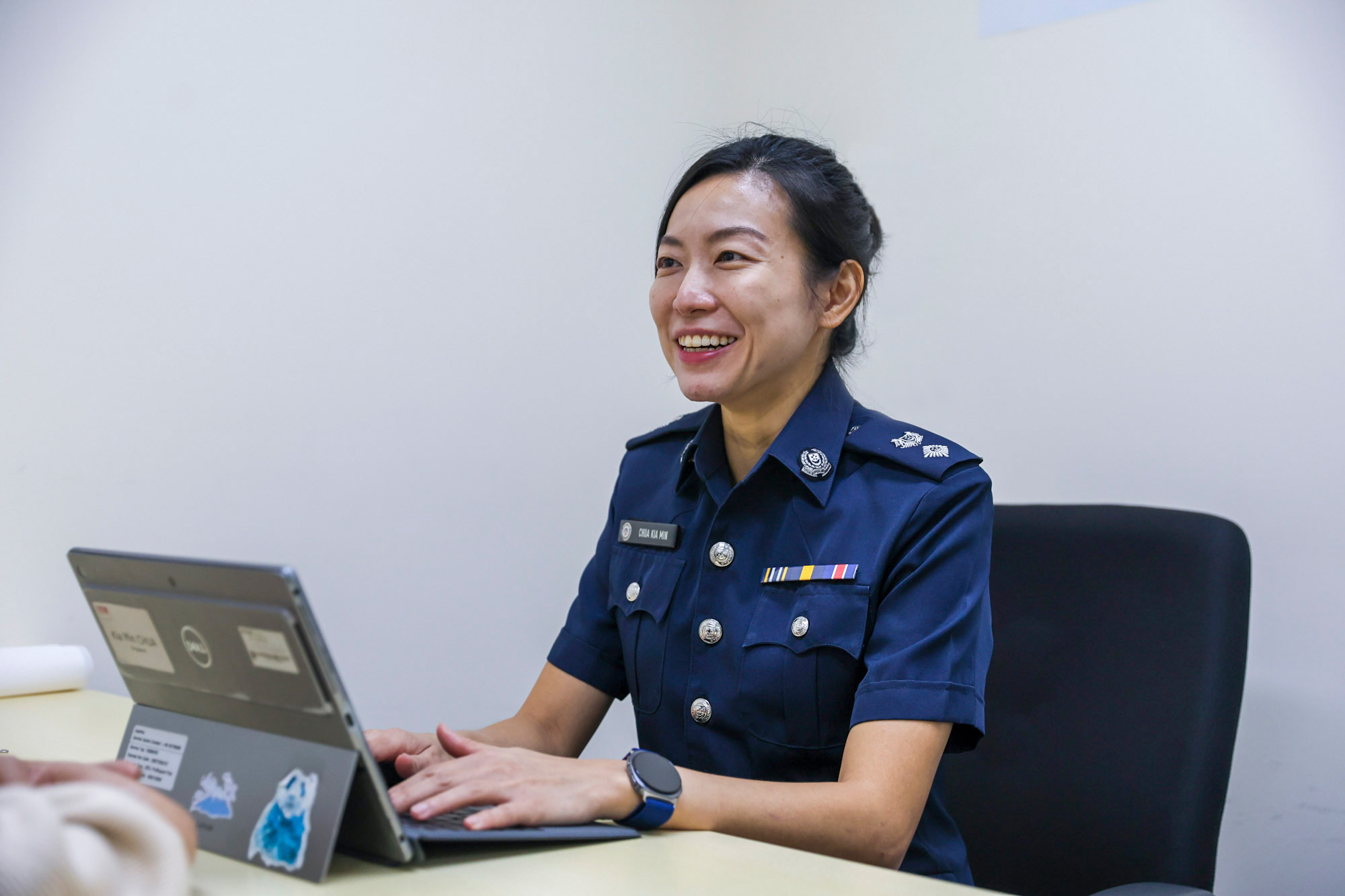
Given the rising trend of scams involving cryptocurrencies, what’s one piece of advice you’d give to Singaporeans?
Cryptocurrency is an inherently high-risk area, and scammers increasingly leverage cryptocurrency because transactions are non-reversible and difficult to trace, making asset recovery extremely challenging.Members of the public should exercise caution when dealing with cryptocurrency. Use only cryptocurrency service providers that are licensed or regulated by the Monetary Authority of Singapore and be wary of unsolicited investment opportunities or promises of high or guaranteed returns.
This especially applies when strangers offer to teach you how to create a cryptocurrency account or ask you to transfer cryptocurrency. Always stop and verify before making any transfer, and never share your seed phrase, private key or authentication codes with anyone.
How do you manage stress and unwind outside of work?
Spending time with my daughter helps me to clear my mind, allowing me to view the world through her lens of pure curiosity and wonder. It keeps me anchored to what’s truly important and reinforces the purpose behind my work: helping to build a safe, secure society where she and the next generation can freely pursue their dreams.

What keeps you motivated and committed to your work each day?
At its core, my drive stems from a duty of care towards Singapore. I’ve benefitted so much from this country and serving in the SPF is my way of giving back.
Equally inspiring is my team in Cyber Command. Their dedication, professionalism and willingness to tackle complex challenges every day remind me why our work matters. Seeing their dedication and knowing I can always count on them pushes me to give my best too. I can’t let them down!
To find out more about Direct-Entry Inspector (DEI)/Direct-Entry Sergeant (DES) positions, click the links below:
DEI: go.gov.sg/spf-inspector
DES: go.gov.sg/spf-sergeant


