
Landing page banner


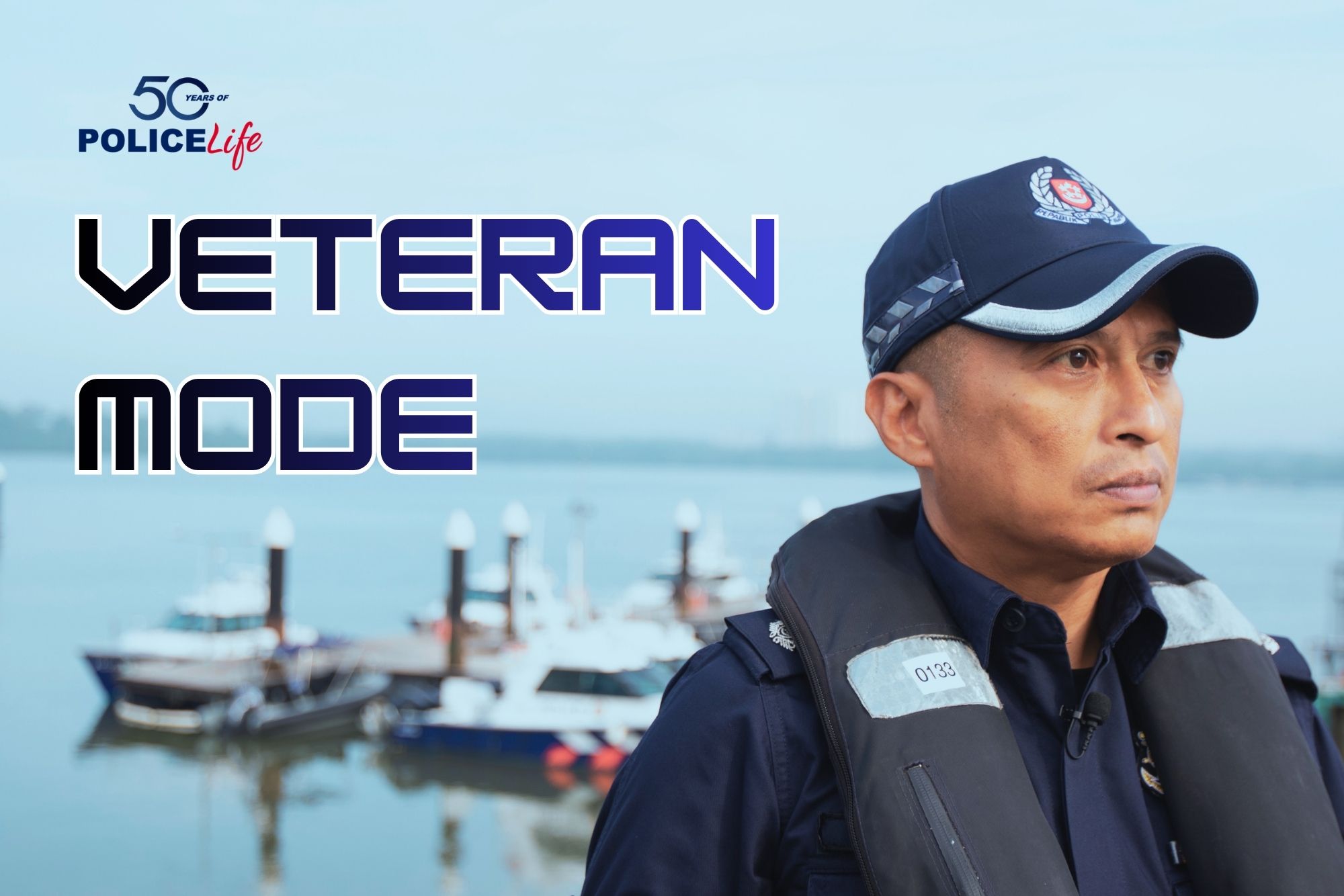
“If the Singapore Police Force is my first marriage, then my wife is my second.”
Assistant Superintendent of Police (ASP) Mohd Idzwan smiled wryly as he reflected on his career over three decades, which began in 1994 – way before he started a family.
At 51, he has dedicated his entire adulthood to guarding our nation’s territorial waters with the Police Coast Guard (PCG), rising through the ranks from Patrol officer and trainer to finally Team Leader.
In 1997, he encountered his first major incident. The young Patrol officer received a radio call that a pair of kayakers had capsized in the eastern waters of Singapore and were missing. A thunderstorm was raging and visibility was poor.
ASP Idzwan and his team were dispatched to search for the men. They stood on their vessel in the heavy rain, straining their eyes as they scanned the water to find them. Eventually, the radar system picked up echoes and the shivering kayakers were located and brought back to safety.
But the job is more than just about rescuing those in danger. ASP Idzwan feels a deep sense of purpose as he firmly believes that maritime policing is “the first line of defence” for Singapore.
“Before anyone can illegally enter Singapore, they first have to get through the sea,” he said. “It’s an important mission that we cannot fail at.”
Braving the Waves
I met ASP Idzwan at PCG’s Lim Chu Kang Base. It was a long drive into the facility, situated deep within a forested area in the northwestern tip of Singapore, far from any building or residential neighbourhood. The only sound was the faint crashing of waves against the shore.
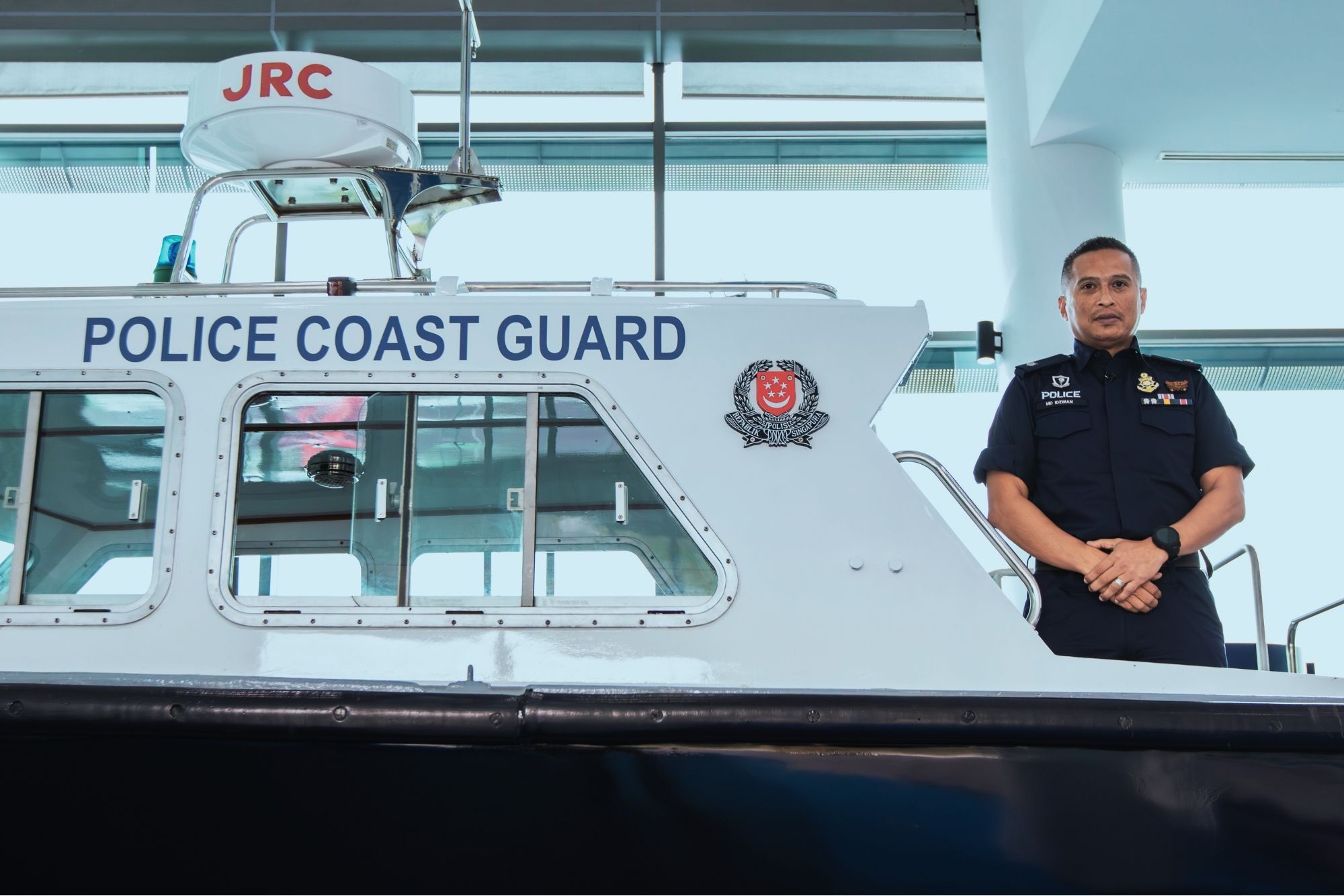
I imagined that this was a mere precursor to the harsh environment PCG officers face on patrols. ASP Idzwan told me that he dealt with “total darkness” out at sea at night, which was frightening to him as a young officer because he couldn’t see anything at all.
“It’s a challenge,” he recalled. “We really need to use all our senses – our hearing, smell and sight – to detect any intrusions and determine if something in the water is a floating log or a swimmer.”
But technological advances over the years have made the job more efficient. Officers now have access to upgraded equipment on patrol crafts, including improved radar systems, the Seaborne Electro Optics System (SEOS) and digital navigation maps.
The SEOS is a camera system that provides high-resolution visuals and thermal imaging, enhancing surveillance and detection even in low-visibility night operations.
“For veterans like me, that meant having to unlearn and relearn everything,” explained ASP Idzwan.
“We need to keep up with current trends, technologies and techniques so that we’re always prepared.”
Moving as One
As a team, ASP Idzwan and his officers carry out regular drills – like how to rescue a drowning person – to ensure that they can confidently respond to any situation while on duty.
When responding to incidents, officers must be clear about their role and coordinate seamlessly with the rest of the team on the next move, explained ASP Idzwan.

Teamwork is essential to him. “It’s very dangerous when you act on your own and your partner or the rest of the team doesn’t know what you’re doing,” he said.
Being a Team Leader doesn’t mean that he’s office-bound – he still goes out to sea on every shift. ASP Idzwan spends the first two to three hours of his shift on administrative tasks, armoury checks and maintenance matters. He then heads out with his team, providing guidance while conducting his supervisory rounds and proactive patrols.
ASP Idzwan believes that leadership isn’t only about giving orders but also correcting and encouraging team members.
“It’s knowing when to be firm and when to step back. This ensures that when the team moves, they move as one,” he said.

Anchored by Family
As a married man with four children, ASP Idzwan often finds balancing work and familial responsibilities a challenge. He explains to his family that he is on standby 24/7 and can be called back for work at any time.
To help his family understand the importance of his job, he brings them to the annual PCG Family Day, where they can see how his team operates.
These efforts have paid off. Inspired by his father, one of ASP Idzwan’s teenage sons is interested in joining the PCG.
Support from his family energises him. “A simple ‘take care’ or ‘make sure you’re safely back home’ from my wife really motivates me,” he said.
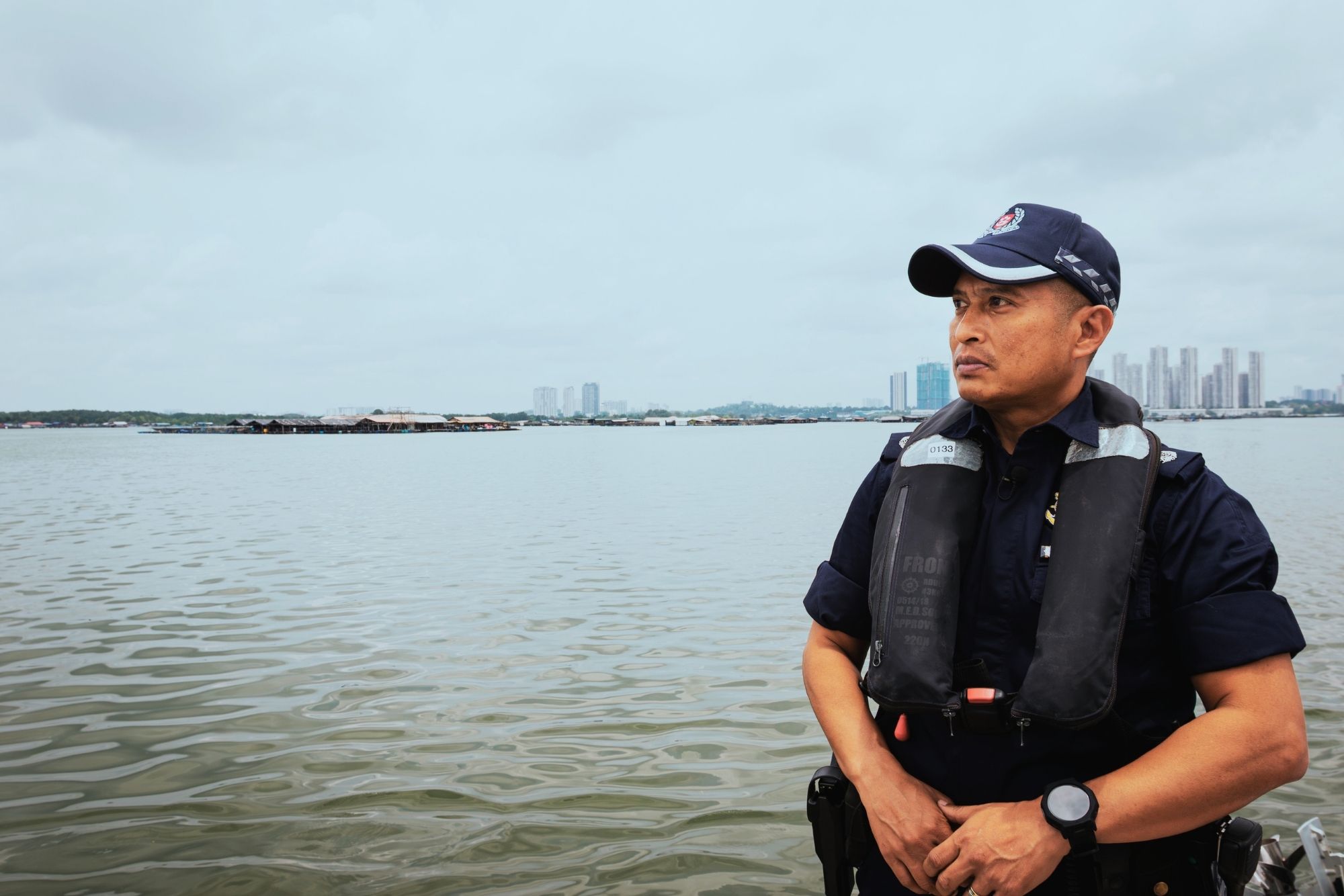
The sea is his calling. A therapeutic calm washes over him when he stands by the shore and smells the salt in the breeze.
“Whenever I’m stressed, I look out at the sea and feel better,” he shared. “It’s something I enjoy because I’m by the water all the time.”
To find out more about Direct-Entry Inspector (DEI)/ Direct-Entry Sergeant (DES) positions, click the links below:
DEI: go.gov.sg/spf-inspector
DES: go.gov.sg/spf-sergeant


