
Landing page banner


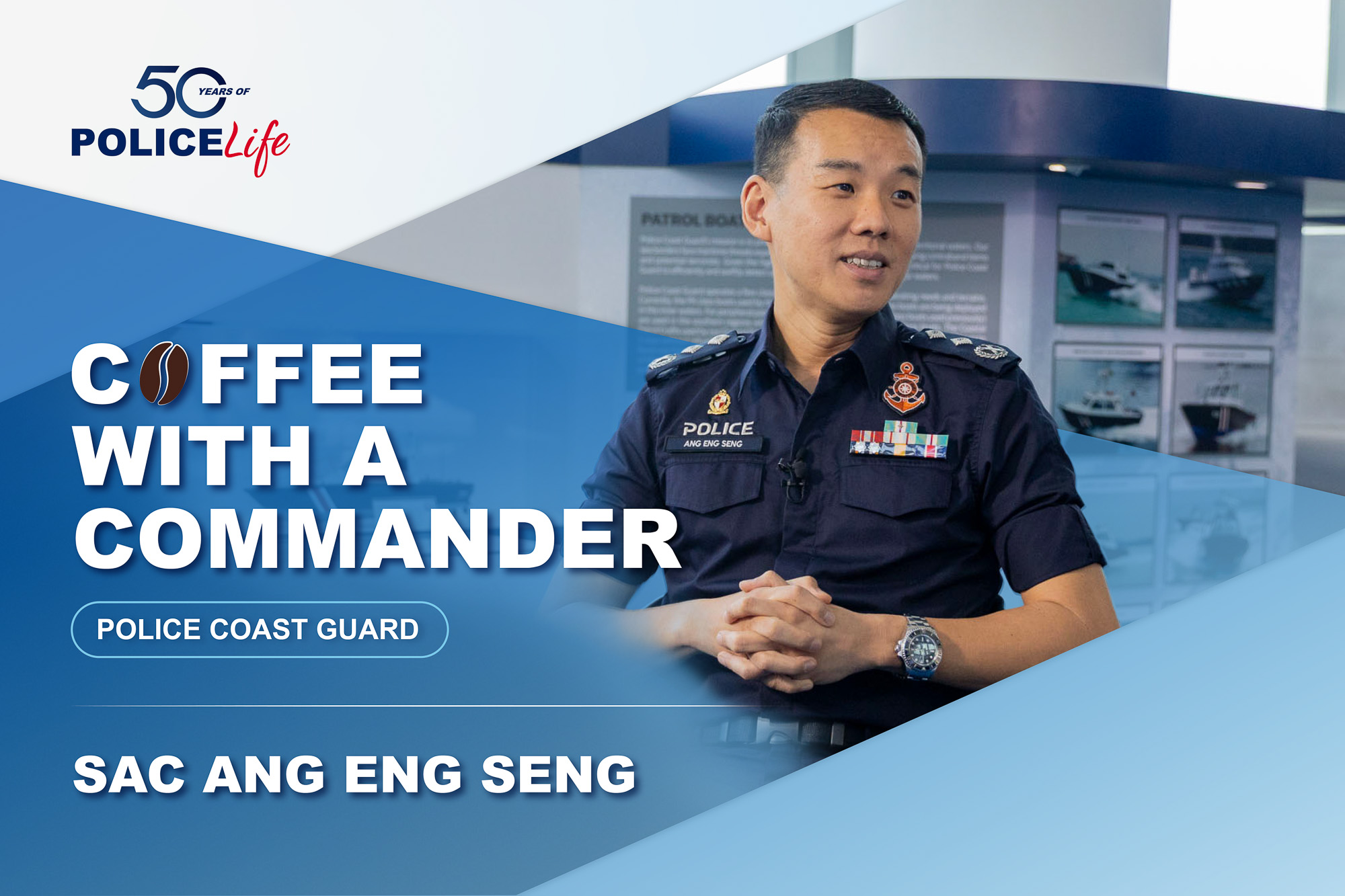
When illicit activity strikes our territorial waters, the Police Coast Guard (PCG) is there to respond to protect Singapore and her people.
A small vessel with six suspects was closing in on Singapore’s coastline under the cover of darkness in December 2025.
Spotted from the PCG Command Centre, a Police vessel successfully intercepted it after an intense pursuit. All subjects onboard were arrested.
Leading the effort to counter maritime crimes like these is Commander PCG, Senior Assistant Commissioner of Police (SAC) Ang Eng Seng.
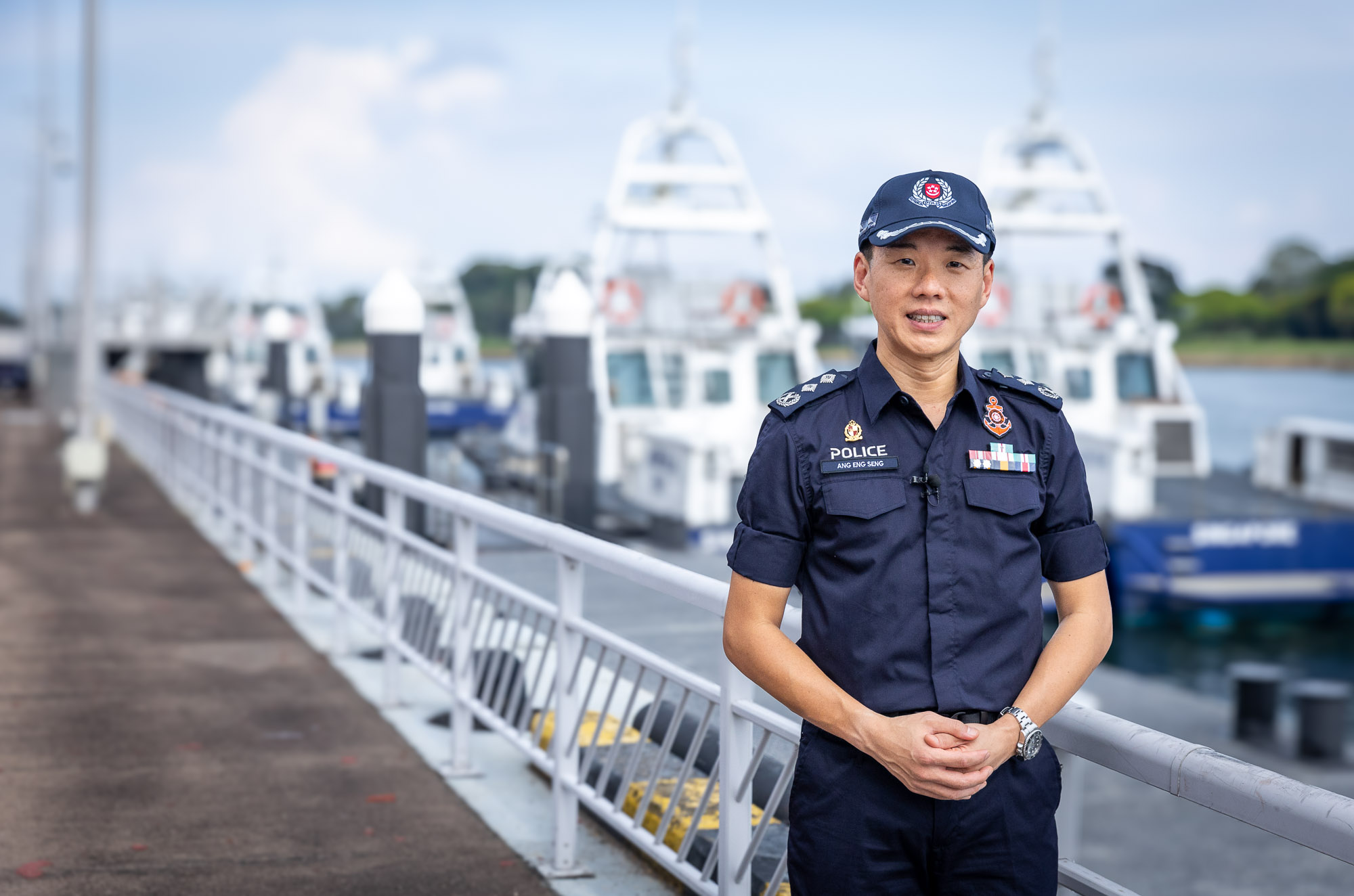
“Intruders need to succeed only once for mission success but the PCG has to succeed each and every time,” he said.
With the maritime industry contributing to around 7% of Singapore’s GDP, maritime security provides the foundation for our nation to thrive as a global shipping hub. Mission success translates to economic prosperity for our nation, according to SAC Ang.
SAC Ang assumed his role as Commander of Police Coast Guard in April 2025, having previously served as Commander of Woodlands Police Division. In an interview, he shared with Police Life his experiences, challenges and leadership beliefs as he helms the PCG.
Steering a Different Course
For SAC Ang, moving from a land division to PCG meant adapting to many new aspects of the role – both in terms of leadership strategies and operations.
As one of the oldest units in the SPF, PCG’s structures, processes and procedures are well-established, contributing to a deep-rooted culture.
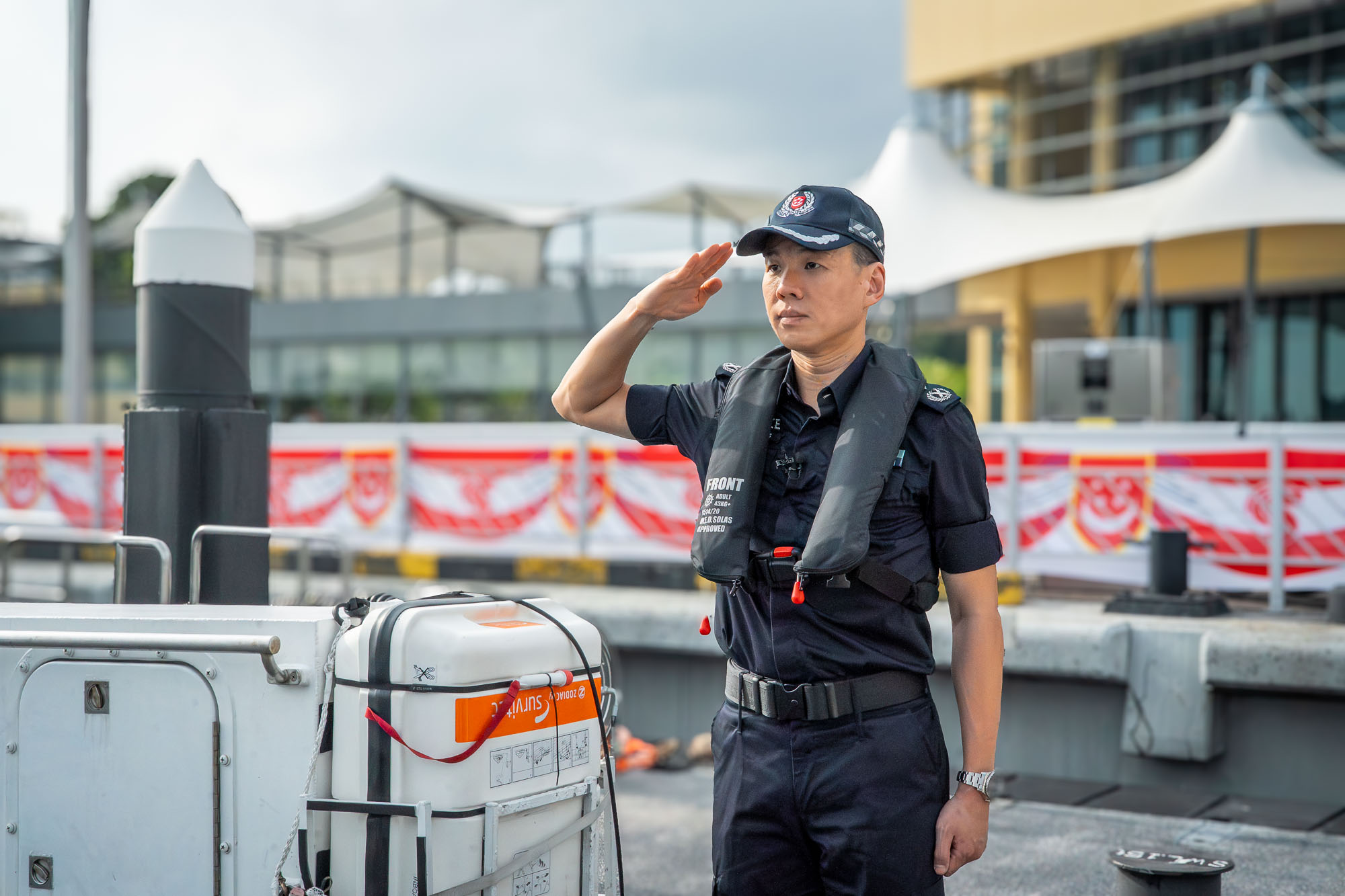
SAC Ang explained: “In a way, I need not worry so much about the basics. However, if something needs to change, more attention must be given to managing the change.”
This stood in sharp contrast to Woodlands Police Division, which was a newly formed unit where he had to lay the groundwork.
“The new Division was akin to a blank canvas and I was privileged to play a role in shaping its culture,” he said.
There are additional responsibilities too. Unlike on the mainland where the Singapore Civil Defence Force is usually deployed to medical emergencies, PCG officers attend to seafarers in distress at sea – overseeing both medical assistance and crime.
“This means that in the maritime domain, we have to be familiar with and keep updated on issues that don’t fall strictly under policing,” he said.
Watchful Eye on the Waterfront
Incidents can occur at any time, so PCG officers must constantly stay alert.
SAC Ang highlighted how the congested maritime space in the Singapore Straits creates unique challenges. Close to 1000 ships pass through the water south of Singapore daily.
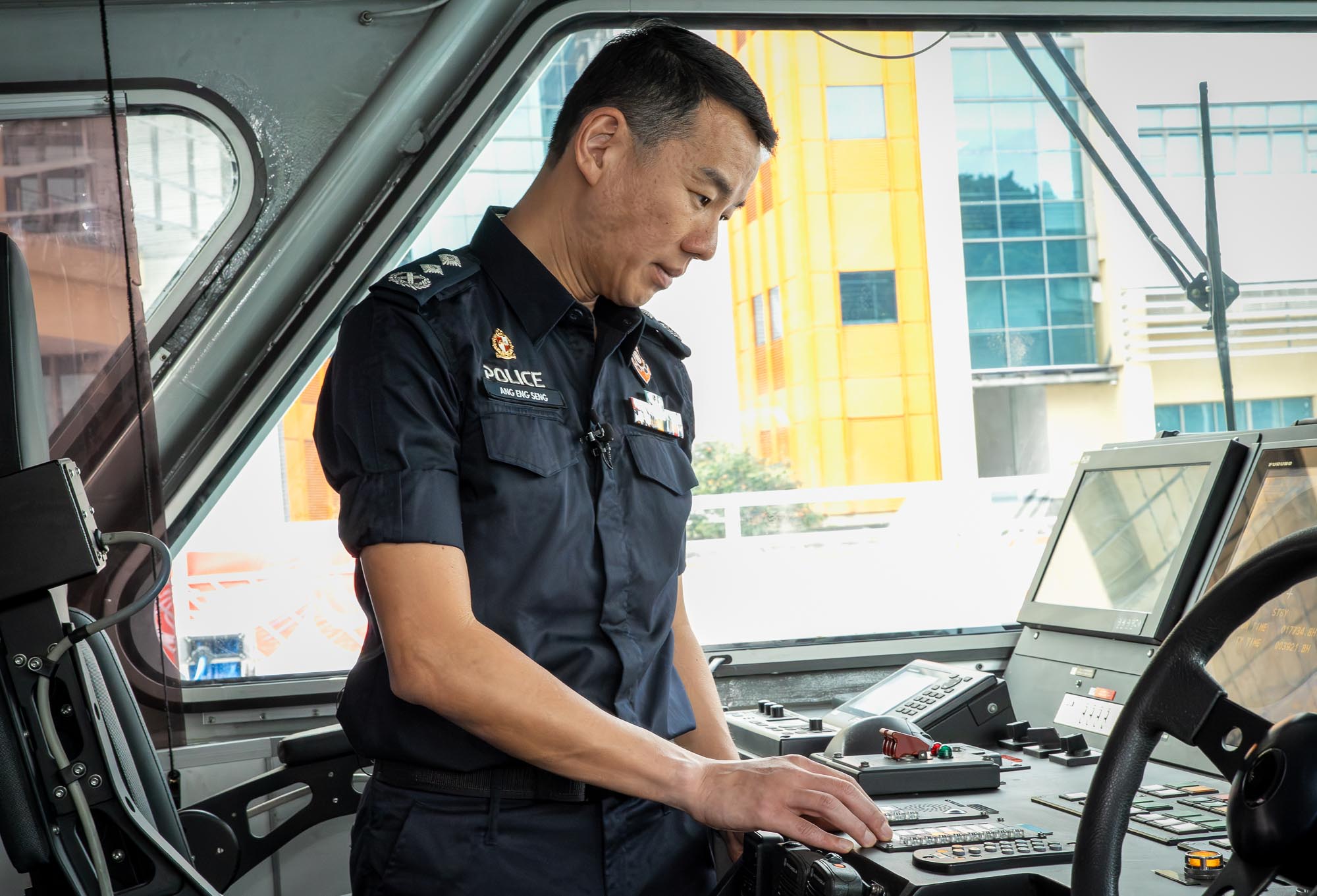
This translates into challenges for officers to distinguish intruding vessels from merchant, trade and recreational vessels.
“If we spot the intruders too late, it takes only mere minutes for them to reach our shore,” he said.
To optimise operations, the PCG leverages technology to identify vessels of interest.
Surveillance systems integrated with Artificial Intelligence (AI) and data analytics can analyse a vessel’s speed to calculate how long it’d take to reach a certain position, allowing the PCG to respond in a timely manner.
On top of that, cameras have been installed along our coast to enhance deterrence.
The PCG is also trialling the unmanned surface vessel, which can autonomously patrol waters and support operations alongside manned vessels.
No news means good news. “The measure of our success is not in the number of incidents people may hear about,” he shared. “It lies in the many that didn’t happen because PCG was there.”
Apart from technology, working with international counterparts is essential to minimise threats in our surrounding region. The PCG collaborates with Malaysia and Indonesia to share information and conduct joint training exercises.
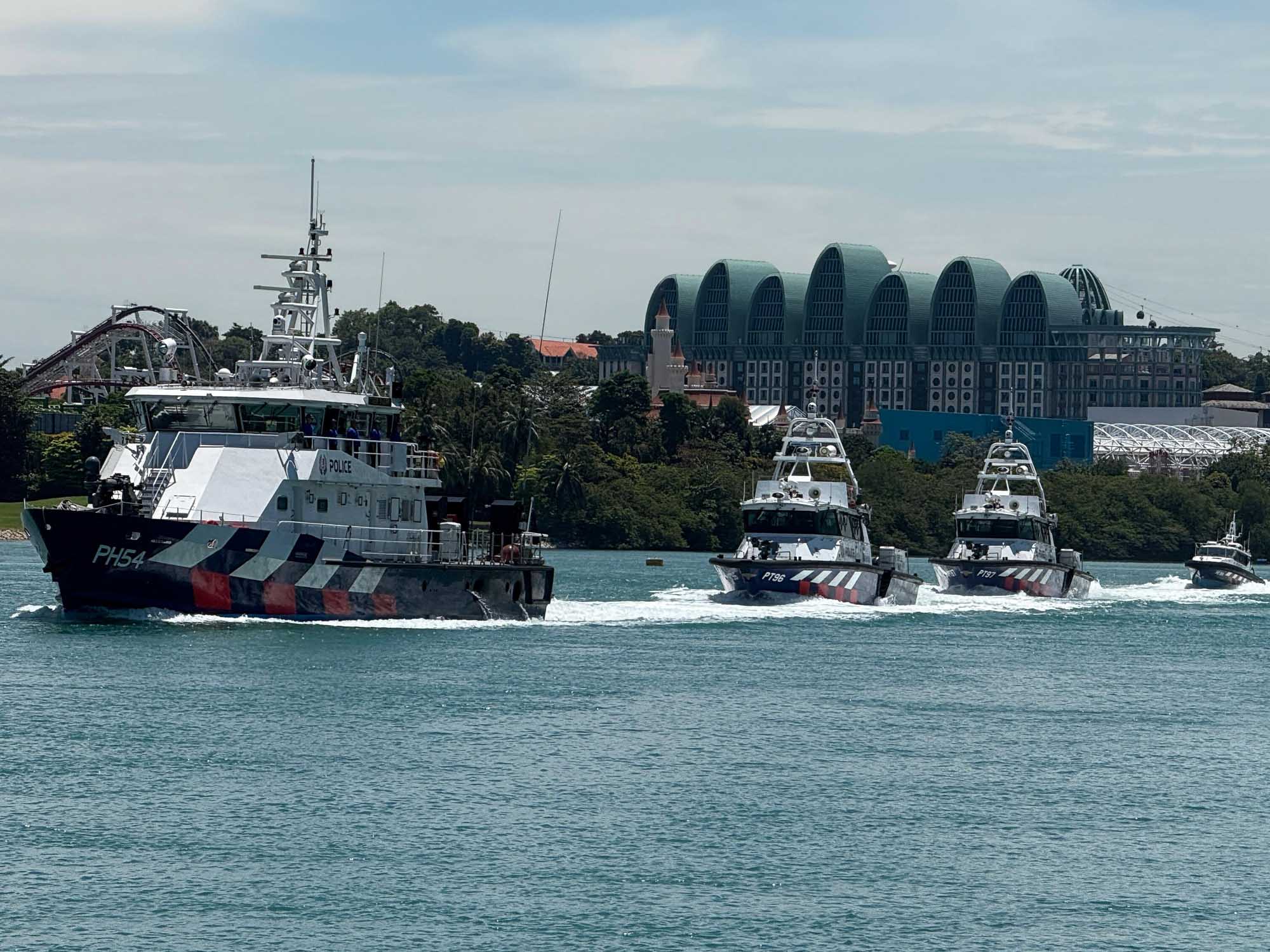
These engagements help build mutual trust and sustain cooperative relationships to combat the evolving transnational criminal threats. After all, SAC Ang emphasised that it’s untenable if our own waters remain safe but trade partners and vessels aren’t able to reach our port safely.
Putting People at the Heart of Policing
While the PCG may have sophisticated equipment, SAC Ang believes that it’s ultimately the officers themselves who are the unit’s greatest assets.
“It’s our officers who are at the heart of every operation, system and procedure,” he said.
He elaborated that human judgement remains key. For example, it takes years of experience to develop the instinct to determine whether an individual is honest or masquerading as a fisherman – something that cannot be replaced by AI.
Hence, he spends about half of his time engaging with officers. It’s important to him that the unit retains its talent by nurturing officers and fostering a positive work environment.
Their attitude shapes the PCG’s future. SAC Ang stressed that officers must always seek to improve and never let complacency set in.
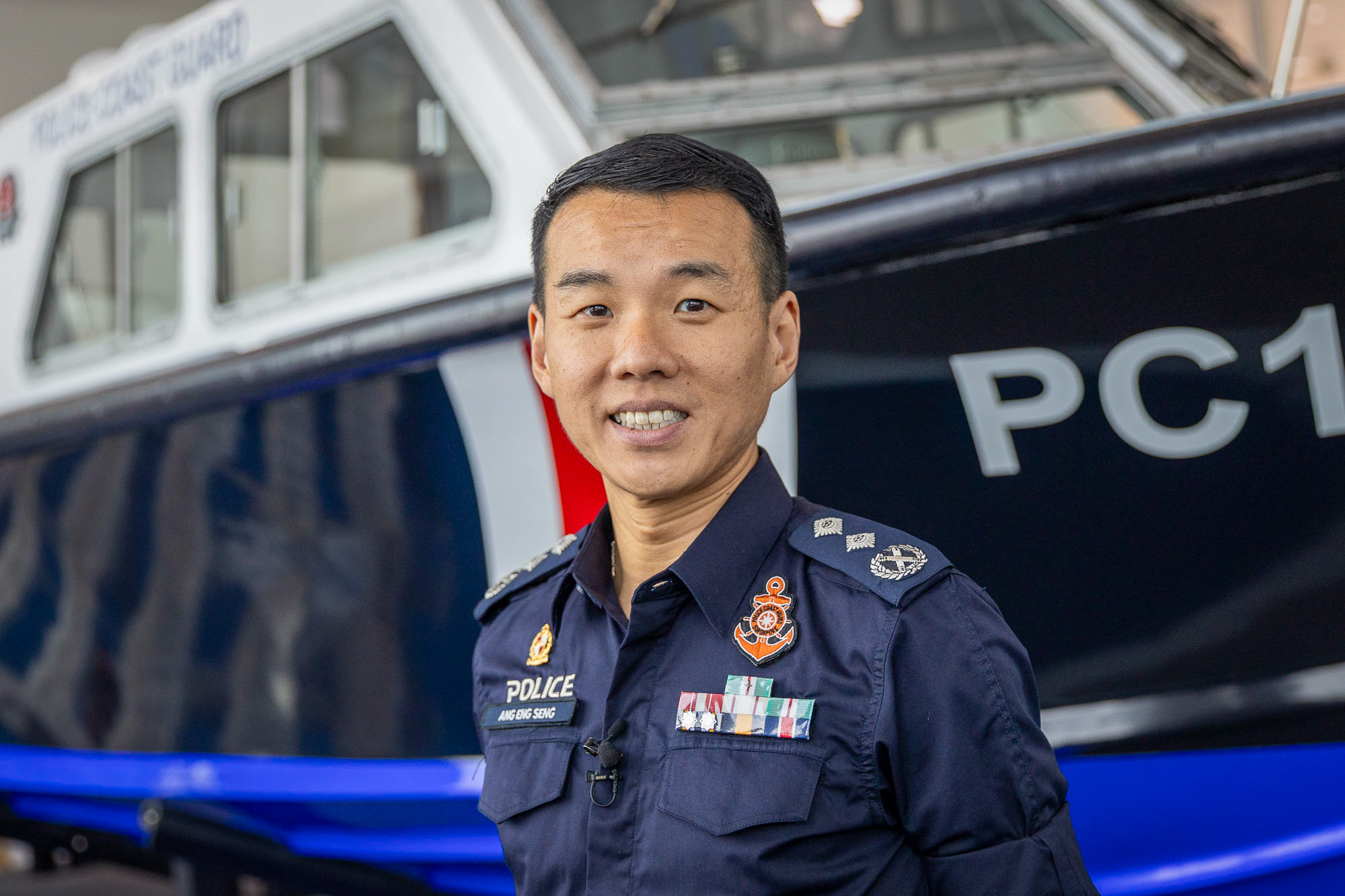
“We need to always have the mindset that if we don’t progress, become stagnant and if we think we’re prepared to handle any situation, that will mark the start of our adversaries getting ahead of us.”
Coffee with a Commander Series
In this series, we hear from SPF Commanders on their motivations, challenges and leadership journeys. Read the stories of Commander of Woodlands Police Division SAC Tan Chi Chong and Commander of the Special Operations Command SAC Arthur Law.
To find out more about Direct-Entry Inspector (DEI)/Direct-Entry Sergeant (DES) positions, click the links below:
DEI: go.gov.sg/spf-inspector
DES: go.gov.sg/spf-sergeant


