
Landing page banner


Forensic DNA analysis is one of the most vital tools that law enforcement agencies have to fight crime. First introduced in the 1980s, forensic DNA analysis now plays a crucial role in criminal investigations and proceedings. Here’s how scientists at the Health Sciences Authority (HSA) extract and analyse DNA!
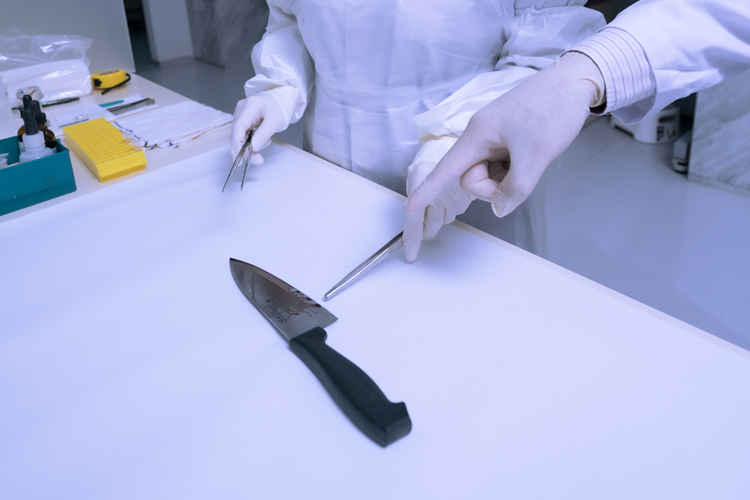
1. Examination for Biological Materials: An exhibit seized by the Police is brought to the HSA’s DNA Profiling Laboratory. The Lab Officer considers which is the most suitable area to conduct blood examination.
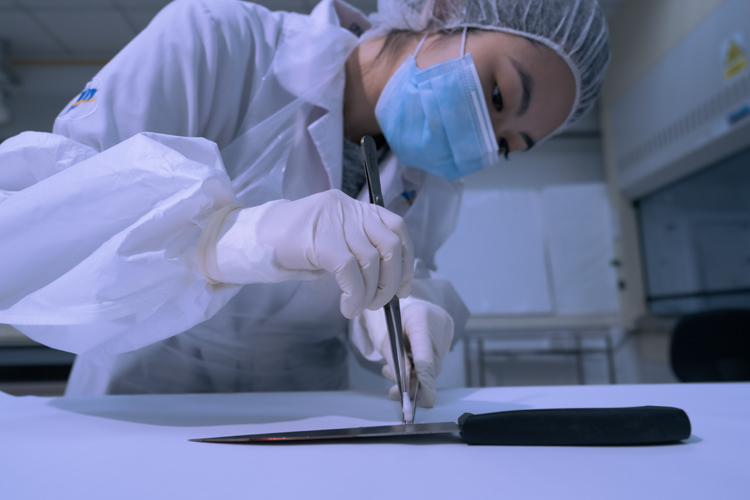
2. Recovery of Biological Materials: After a test to confirm that the stain on the exhibit is human blood, a cotton bud is used to swab the stain.
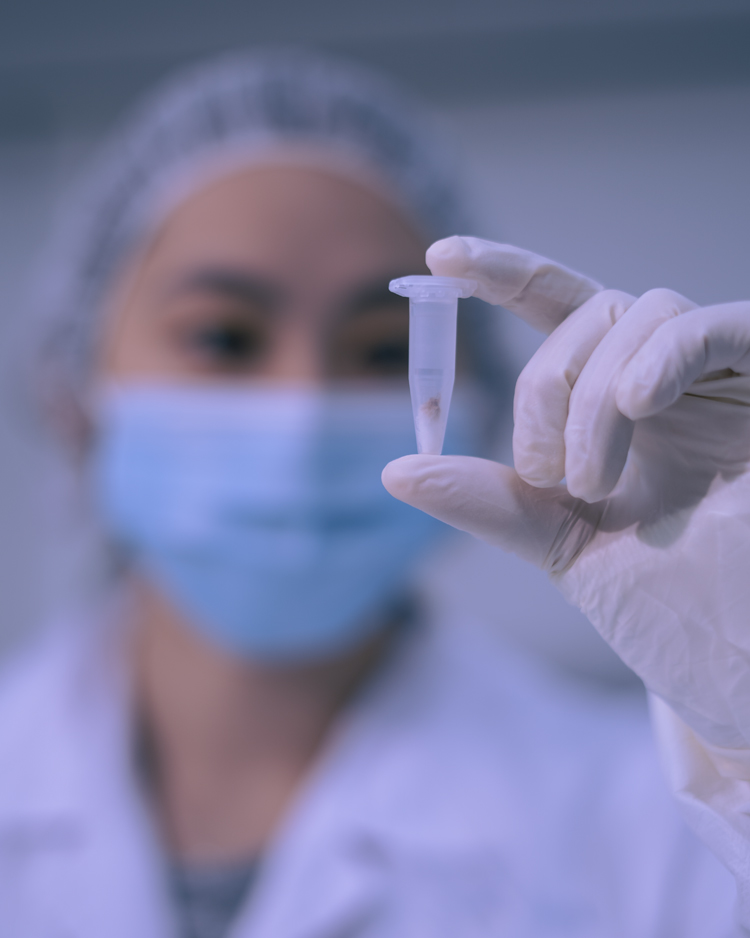
3. Completing the Collection Process: The cotton bud is cut out and placed into a test tube for DNA extraction.
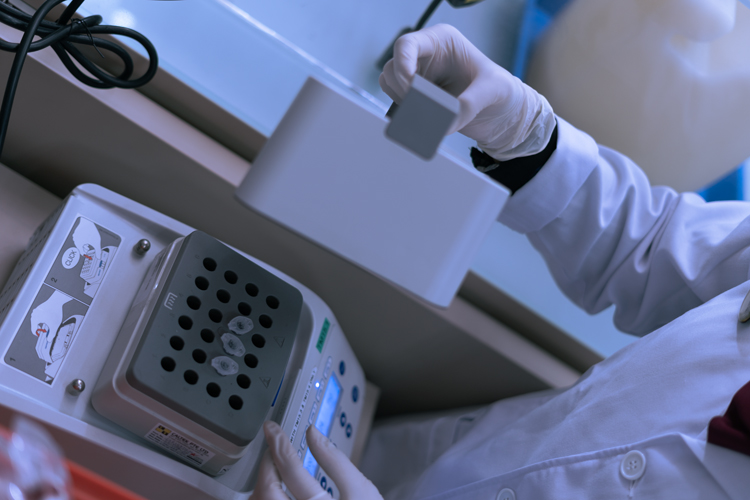
4. Preparation for DNA Extraction: At the DNA Processing section, the Lab Officer prepares the sample for extraction. First, a concoction known as an extraction buffer is added to the sample. It is then incubated for 30 minutes in a thermomixer.
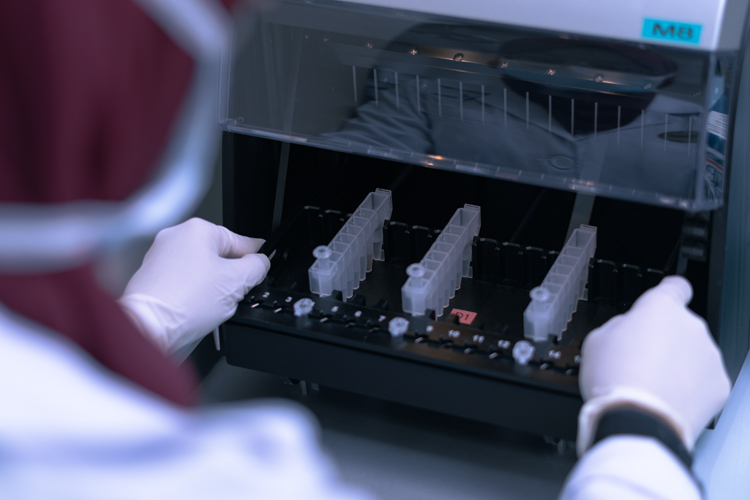
5. DNA Extraction: After incubation, the sample is now ready for processing in the DNA extraction machine. Much like clothes in a washing machine, the sample goes through rounds of lysis (the process whereby cell membranes are broken down to release DNA) and washing. After the extraction process, the DNA is recovered in a buffer solution forming the DNA sample.
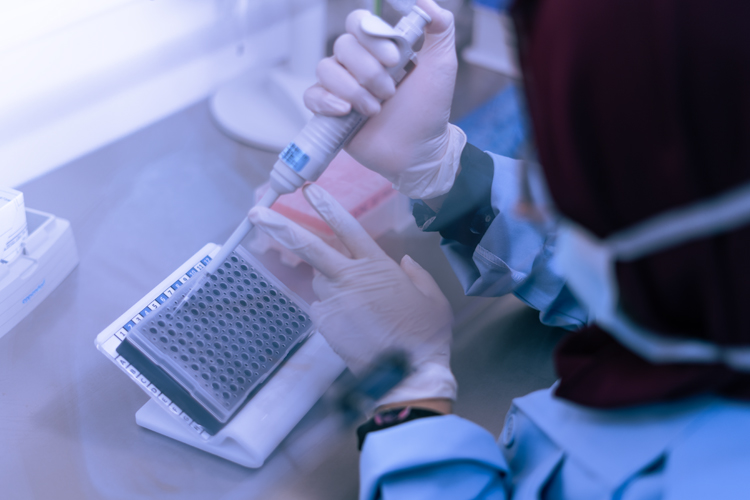
6. DNA Quantitation: A small portion of the DNA sample is prepared to determine the quality and concentration of the DNA sample that’s needed for amplification.
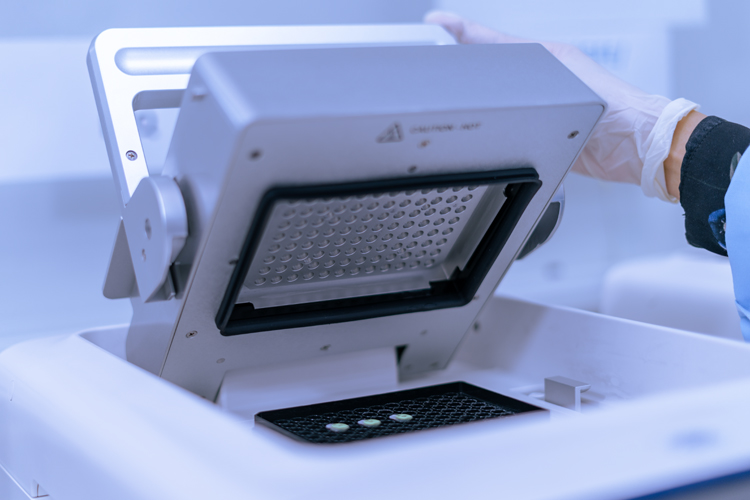
7. DNA Amplification: A small portion of the DNA sample is loaded into the DNA amplification machine, based on the concentration determined during quantitation. Similar to a photocopier, this machine amplifies the DNA sample by making billions of copies for separation and detection.
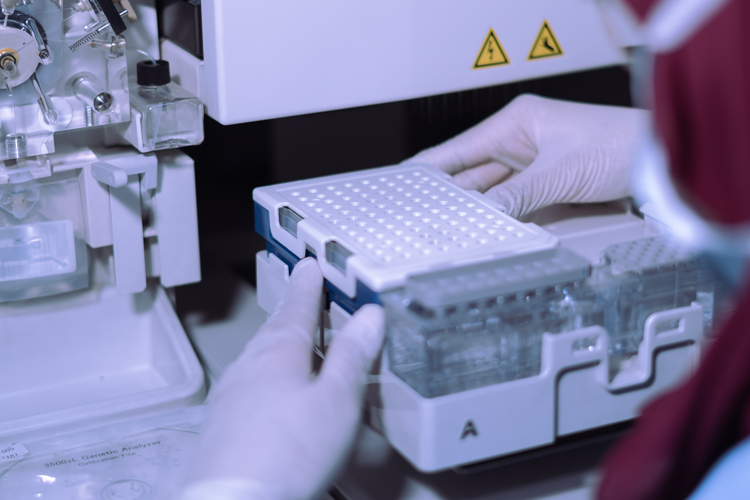
8. DNA Separation and Detection: The amplified DNA is separated and detected in a genetic analyser. The DNA profiles are then generated into a graph that shows data on the DNA.
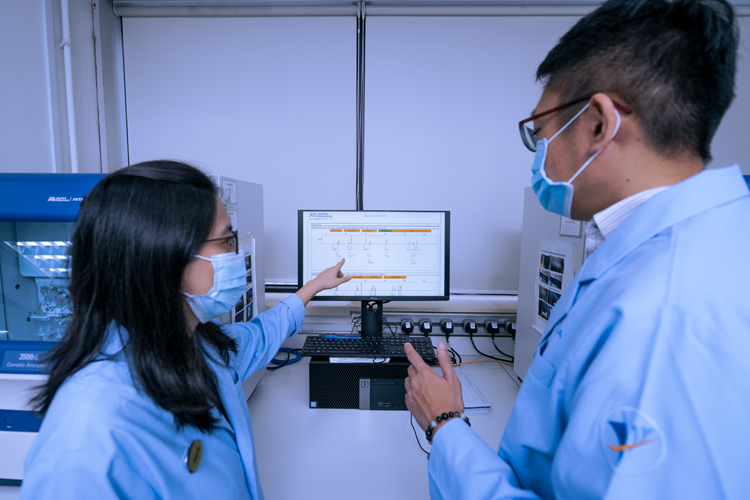
9: Interpreting the DNA Result: HSA scientists Jolena Tan and Ryan Ping discuss and interpret the DNA profile. The result is then shared with the Police via a formal report, which can serve as an important piece of evidence in criminal investigations and proceedings.


