
Landing page banner


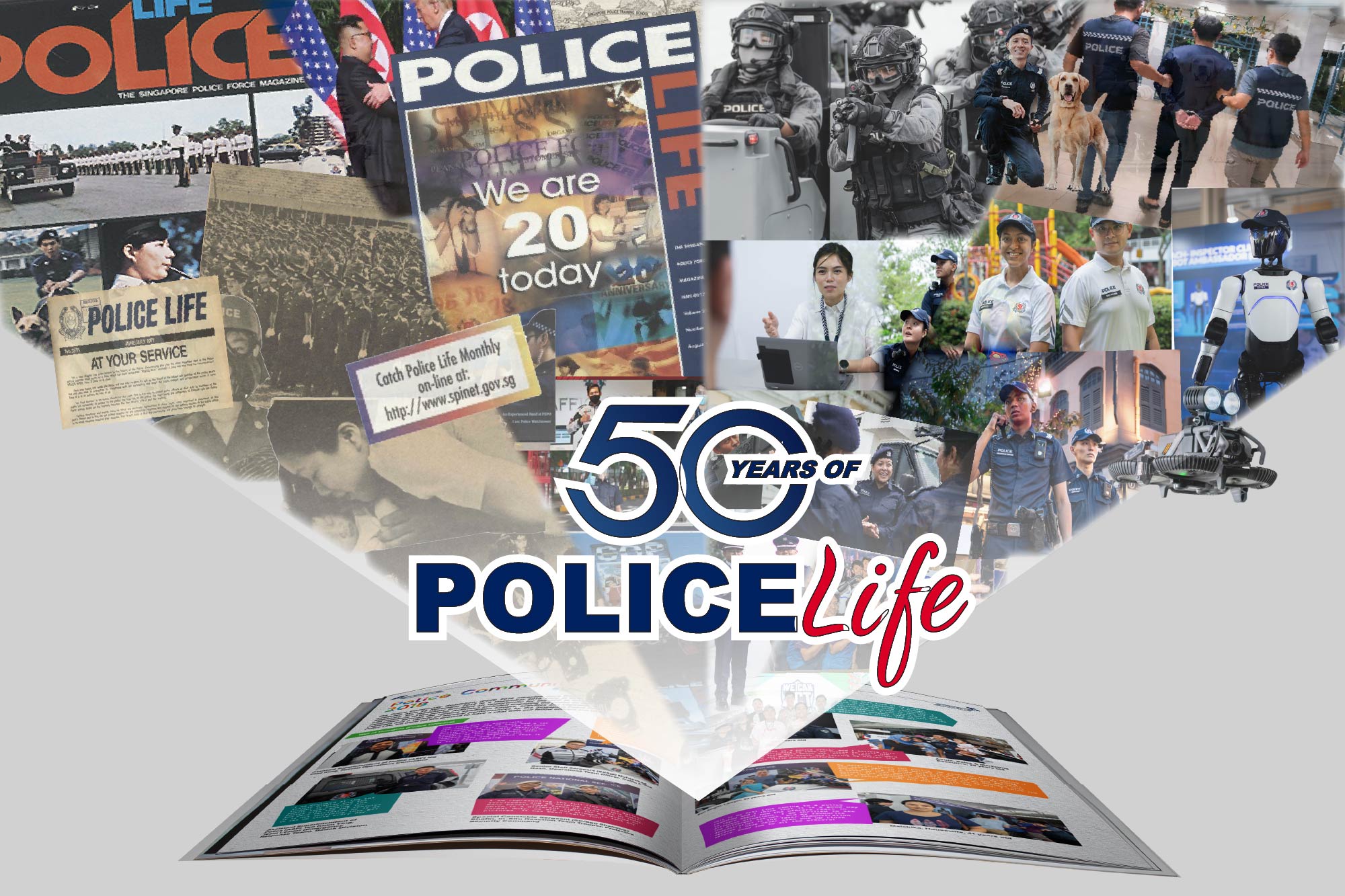
Before it was a tap away on a mobile screen, Police Life was a physical magazine shared among officers over coffee, briefings and station life. For five decades, the publication has documented the development of the Singapore Police Force (SPF), capturing major institutional reforms and the stories of our officers on the beat.
Today, as ink gives way to pixels, Police Life continues to mirror the Force it covers – always evolving to stay connected with our officers and the wider community.
Before Police Life: The Early Publications
The tradition of print media in the Force began long before Singapore’s Independence in 1965. Launched in Kuala Lumpur, Malaysia, in 1928, the Malayan Police Magazine served both the Federated Malay States and the Straits Settlements. The magazine covered a wide range of Force matters, featuring news, farewells, obituaries, sports and even cartoons. It also informed the public of policing developments, with certain topical articles republished in newspapers such as The Straits Times and The Malaya Tribune.
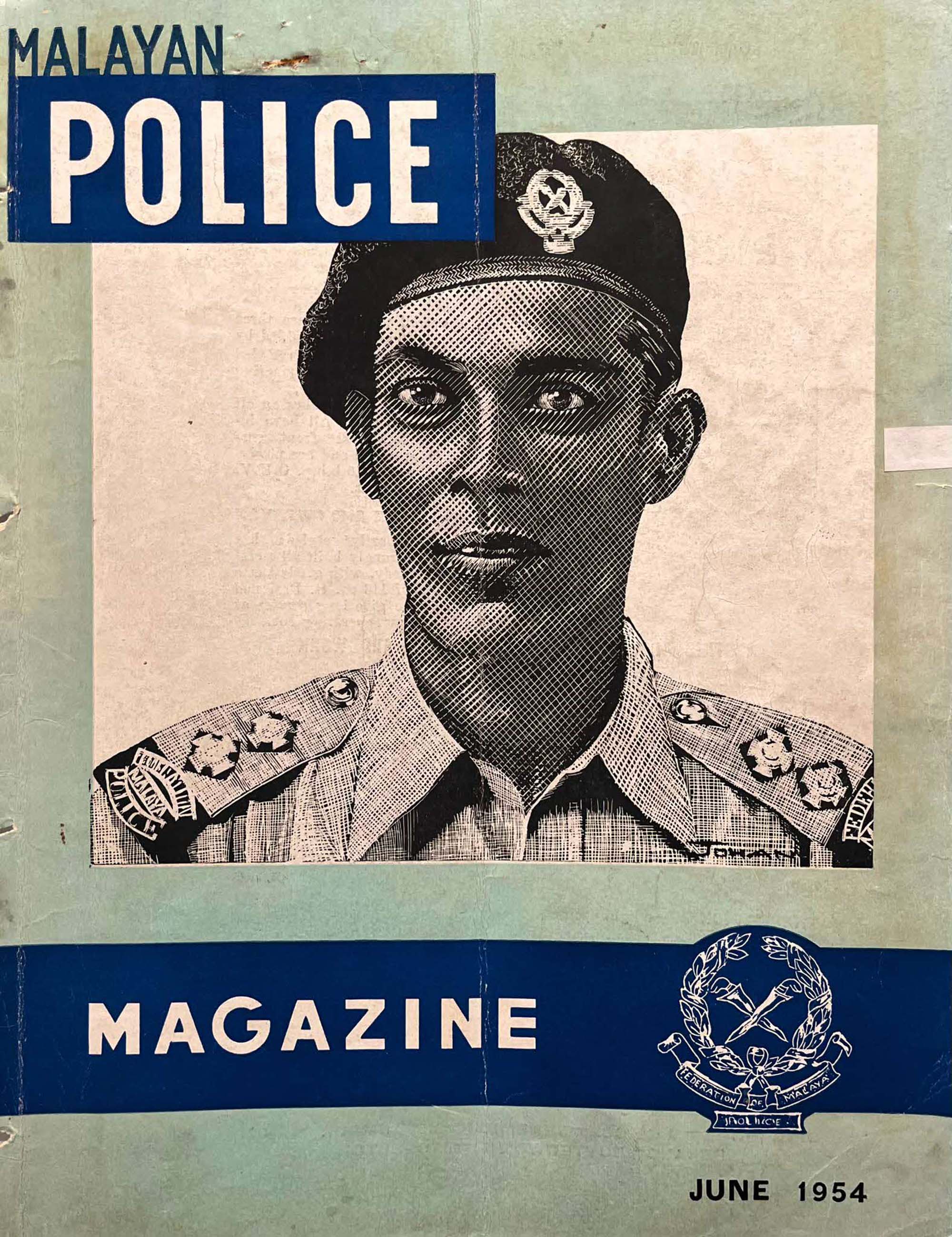
Following the dissolution of the Straits Settlements in 1946, the Singapore Police was left without a dedicated publication of its own. This gap was filled in 1954 with the launch of the Singapore Police Magazine to document the work of the Force and maintain esprit de corps among officers, through regular news updates. It featured sports coverage, case recounts, poetry and reflections penned by officers, as well as police-themed cartoons and illustrations.
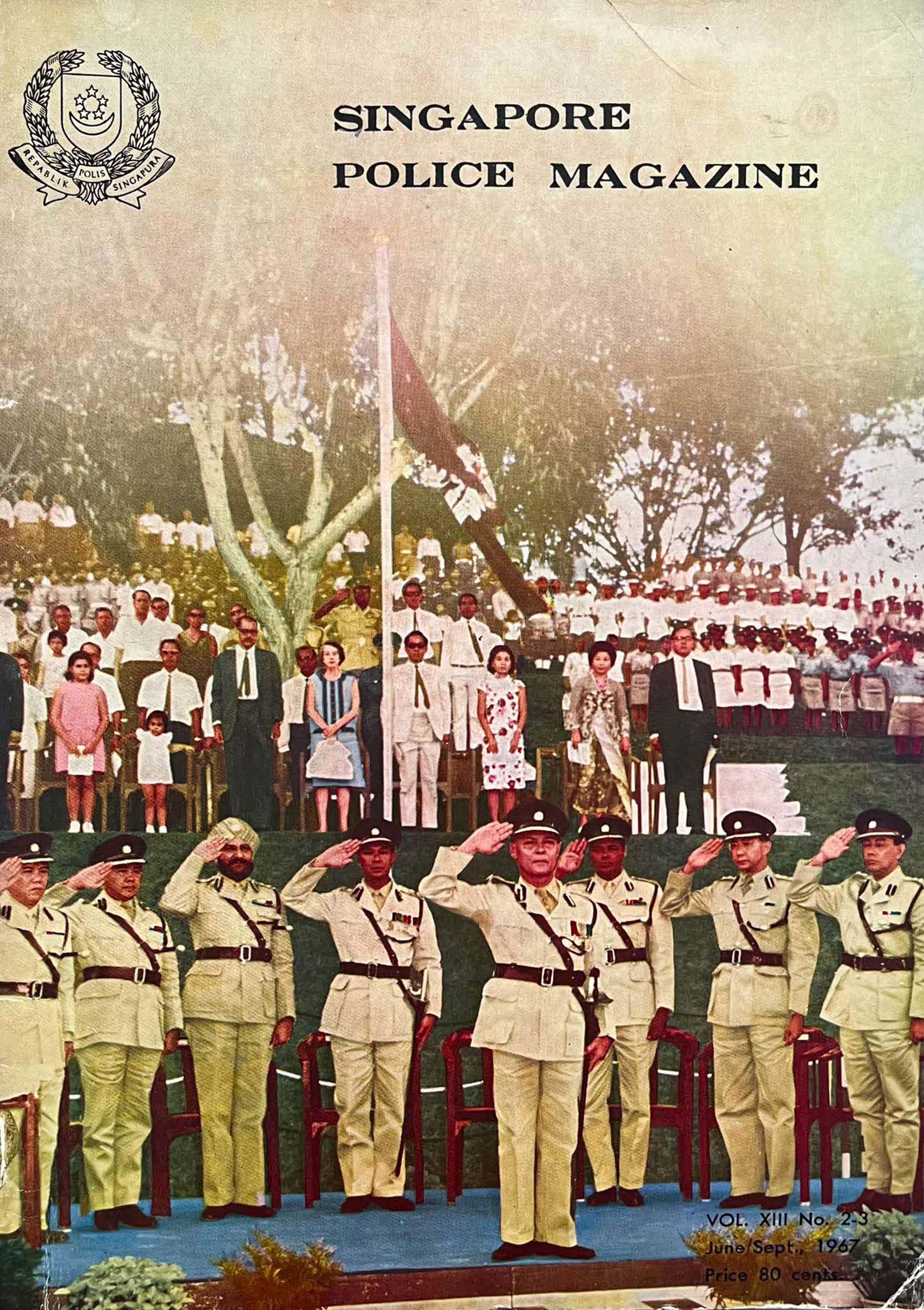
By the 1960s, the magazine was published quarterly and priced at 80 cents. In an era defined by print, it was an important means of preserving the Force’s institutional memory, sharing knowledge and forging a shared identity across the ranks.
In 1971, the Force reformatted the quarterly magazine into a newspaper, renaming it Police Life. This version was short-lived and its production was halted in 1973 due to budget and constraints.
The Founding of Police Life
The turning point came in August 1976. As Singapore underwent a period of rapid urbanisation and economic growth in the mid-1970s, the Force embraced modernisation to address new safety and security concerns.
It was then-Commissioner of Police (CP) Goh Yong Hong who revived Police Life to explain management policies to ground officers and chronicle important events in the Force’s professional and social calendar. In doing so, the magazine would help to build a sense of pride and shared purpose across all ranks.
In establishing a regular production cycle for Police Life, former CP Goh was clear about its purpose: “I felt in 1976 that a regular police magazine was a necessity, not an option. It had to reflect the latest developments of the Force and give our men a better understanding of the Force’s policies and at the same time highlight recreational and welfare activities within the Force. Such a magazine had the potential to become more than an in-house chronicle of events – it could ultimately reflect the Force’s aspirations and achievements to the outside world.”
Ink in Their Veins
These early issues were produced by the editorial team of the then-Public Relations Division, now the Public Affairs Department (PAD). The team enlisted part-time National Servicemen, many of whom were professional journalists in civilian life.
Assistant Superintendent of Police (Ret) Daniel Tan, formerly a publication coordinator for Police Life, recalled the effort that went into the inaugural issue. “It was a challenge. Though it was far from the conventional policeman's job, I was excited. To me, and I am sure to the rest [of the Editorial Board] as well, Police Life was like our baby and we were proud of it,” he said. “I had barely any publishing experience. I searched through Police National Service records and handpicked a team to help me. The management… was very supportive and we managed to turn the idea into a magazine in a matter of two months to launch our maiden issue in August 1976.”
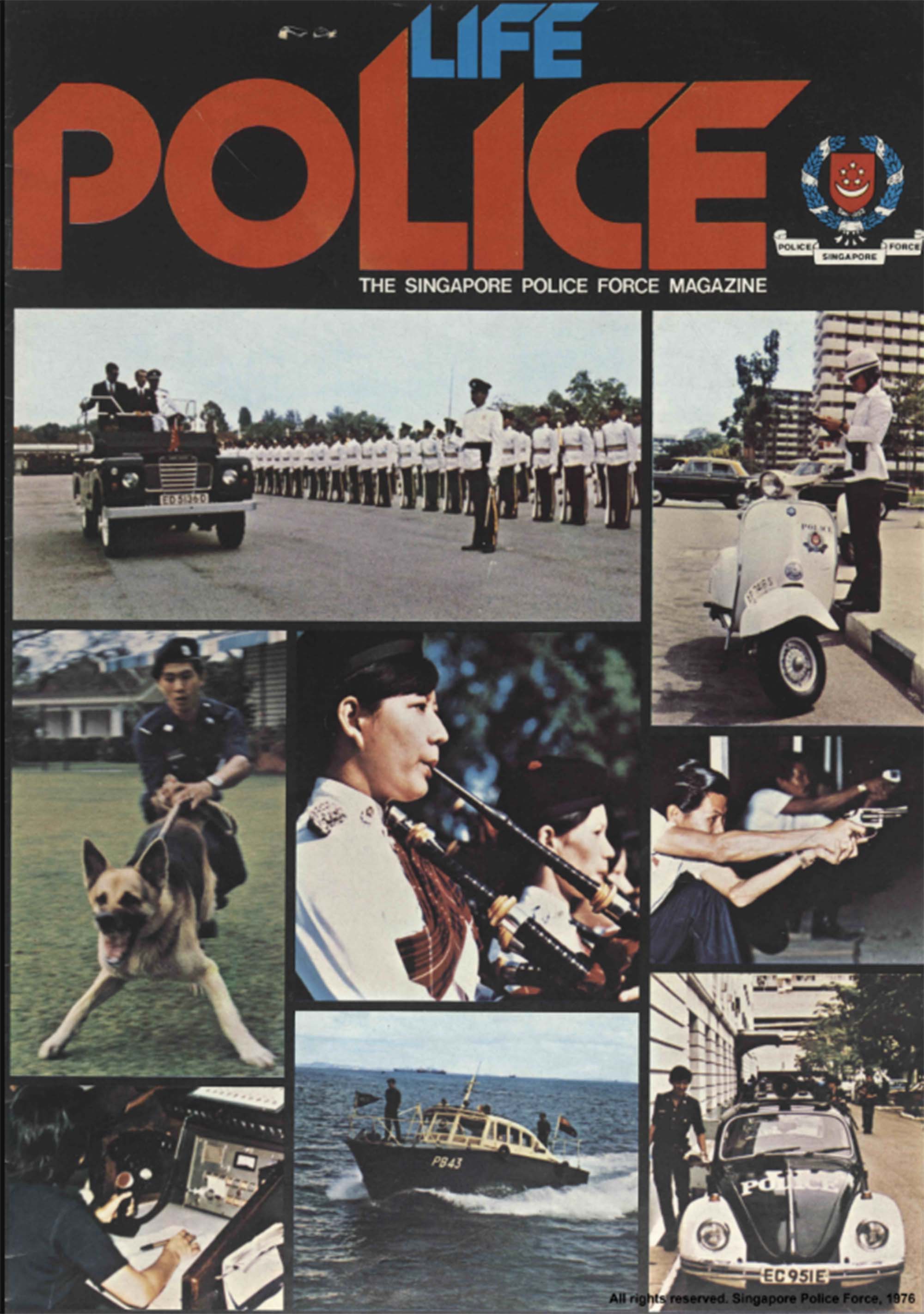
This new iteration of Police Life soon shifted to a bi-monthly schedule, allowing for shorter, faster-paced news updates and articles. While the pages were in black and white, the magazine embraced a modern aesthetic through dynamic layouts and photos.
The magazine continued to evolve over the years, moving to a monthly schedule in August 1982 and rebranding as Police Life Monthly before transitioning to partial colour, then full-colour printing in January 1988. In the 1980s and 1990s, it even won the National Productivity Board’s award for best in-house newsletter for five consecutive years.
The Making of Police Life in Analog
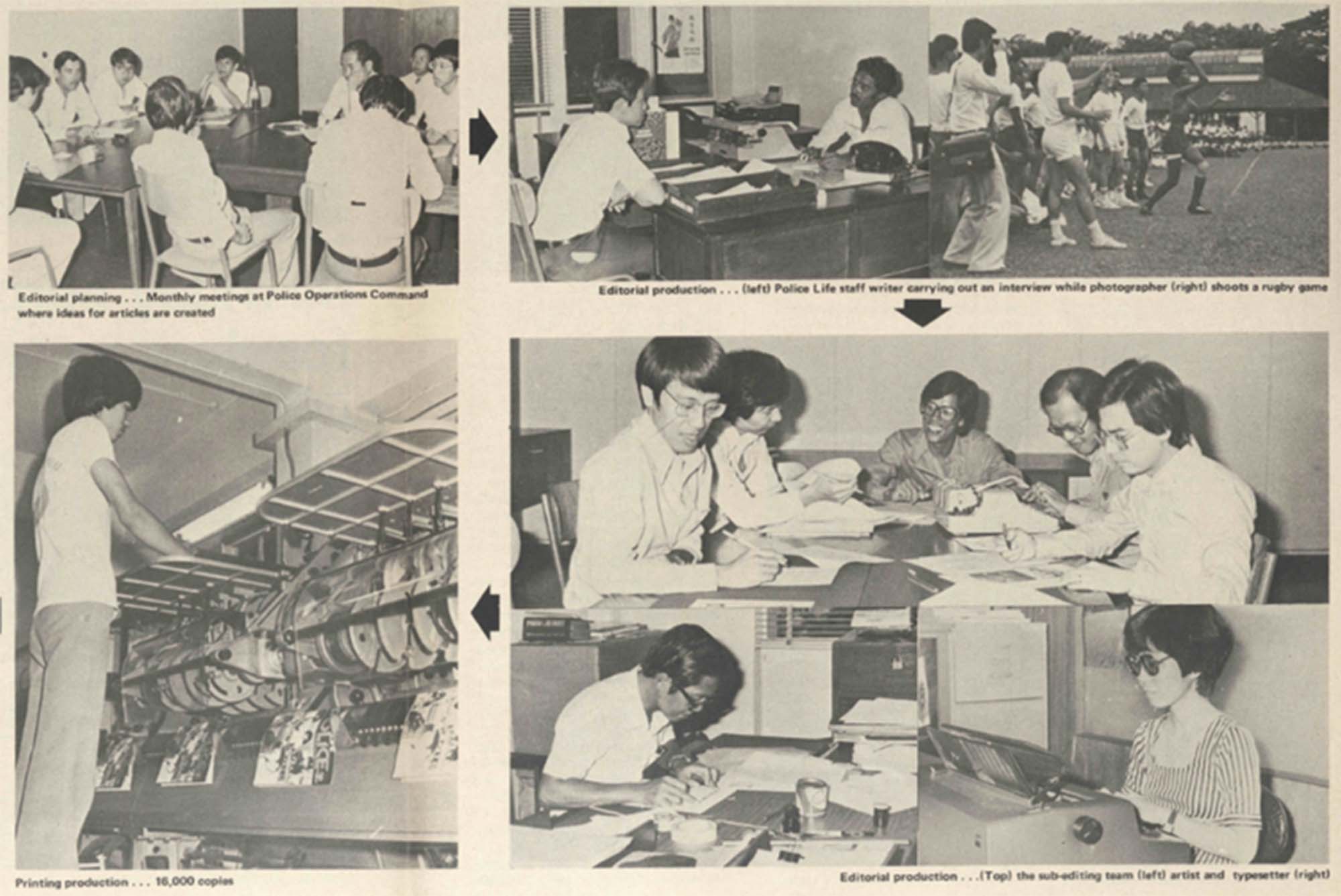
Behind every copy of Police Life was a demanding production process. In the late 1970s, each bi-monthly issue required at least 1,000 man-hours of work by the Editorial Board (comprising journalists, public relations officers and advertising executives) and the Management Committee, headed by the Deputy Commissioner of Police.
Each issue took two months to produce, with production moving through three stages: editorial planning, editorial production and printing production. In the first week of each production cycle, the Management Committee and Editorial Board held planning meetings at Police Headquarters to discuss ideas. The writers and photographers were then assigned to conduct research, interviews and shoots.
Once the articles were written, they were checked and refined. Headlines were prepared, photographs were selected and articles typeset for individual pages. After proof-reading and a final review by the Management Committee, the completed pages were sent to press. By the time 16,000 copies of Police Life came off the press for distribution, editorial work on the next issue had already begun.
Continuity and Change
The shift towards digital began in the 1990s. In September 1996, Police Life Monthly was made available on the SPF’s internet platform (SPINET). That same month, the magazine merged with Citizens on Patrol, the Police National Serviceman magazine published by the Singapore Association of National Servicemen, expanding its readership to include both regular officers and Police National Servicemen.
In the 2010s, Police Life became available on the Police@SG mobile application, extending its reach to a wider audience.
As media consumption habits shifted to the online domain, Police Life was relaunched as a digital platform in January 2023, becoming more responsive and dynamic, to a warm response from readers.
The transition reflects the SPF’s commitment to strengthening its communication and public engagement efforts. Stories can be published and shared on social media faster; articles now include videos; and digital tools allow the editorial team to track reach and engagement, for more effective, data-driven communication.
Over the past five decades, Police Life has consistently adapted its format to better serve its readers. As Police Life marks its 50th anniversary on 11 August, Ms Ng Yun Shiean, Head of the Editorial Unit, reflects on its journey: “While the medium has evolved, what Police Life sets out to do remains the same – to share officers’ stories and showcase the SPF’s capabilities in keeping Singapore safe, preserving our institutional memory while building public trust. We thank our readers for being part of our journey and we’ll continue to bring you better Police stories!”


