Landing page banner


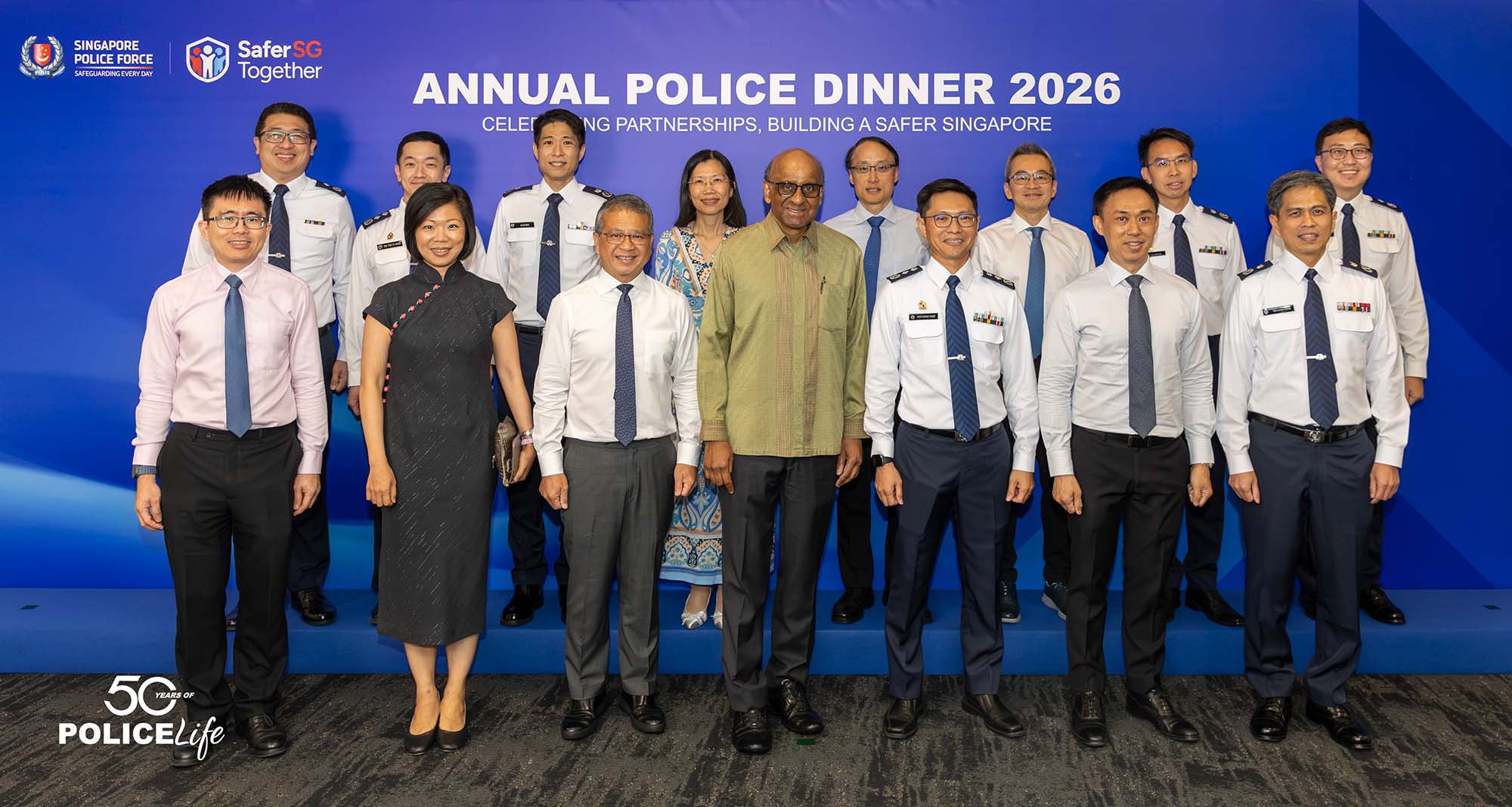
The Singapore Police Force (SPF) hosted its Annual Police Dinner on 10 July 2026 at the Flower Field Hall, Gardens by the Bay. Mr Tharman Shanmugaratnam, President of the Republic of Singapore, graced the event as the Guest-of-Honour.
This year’s Dinner honoured the SPF’s ties with its local and overseas partners, in acknowledgment of their contributions to Singapore’s standing as one of the safest cities in the world.
Among the 450 attendees were representatives of partnering public agencies and SPF volunteers, as well as private sector representatives, community stakeholders and international partners.
Safety Requires a “Whole-of-Society Effort”
In his welcome address, Commissioner of Police (CP) How Kwang Hwee thanked partners for their steadfast support for the SPF over the years.
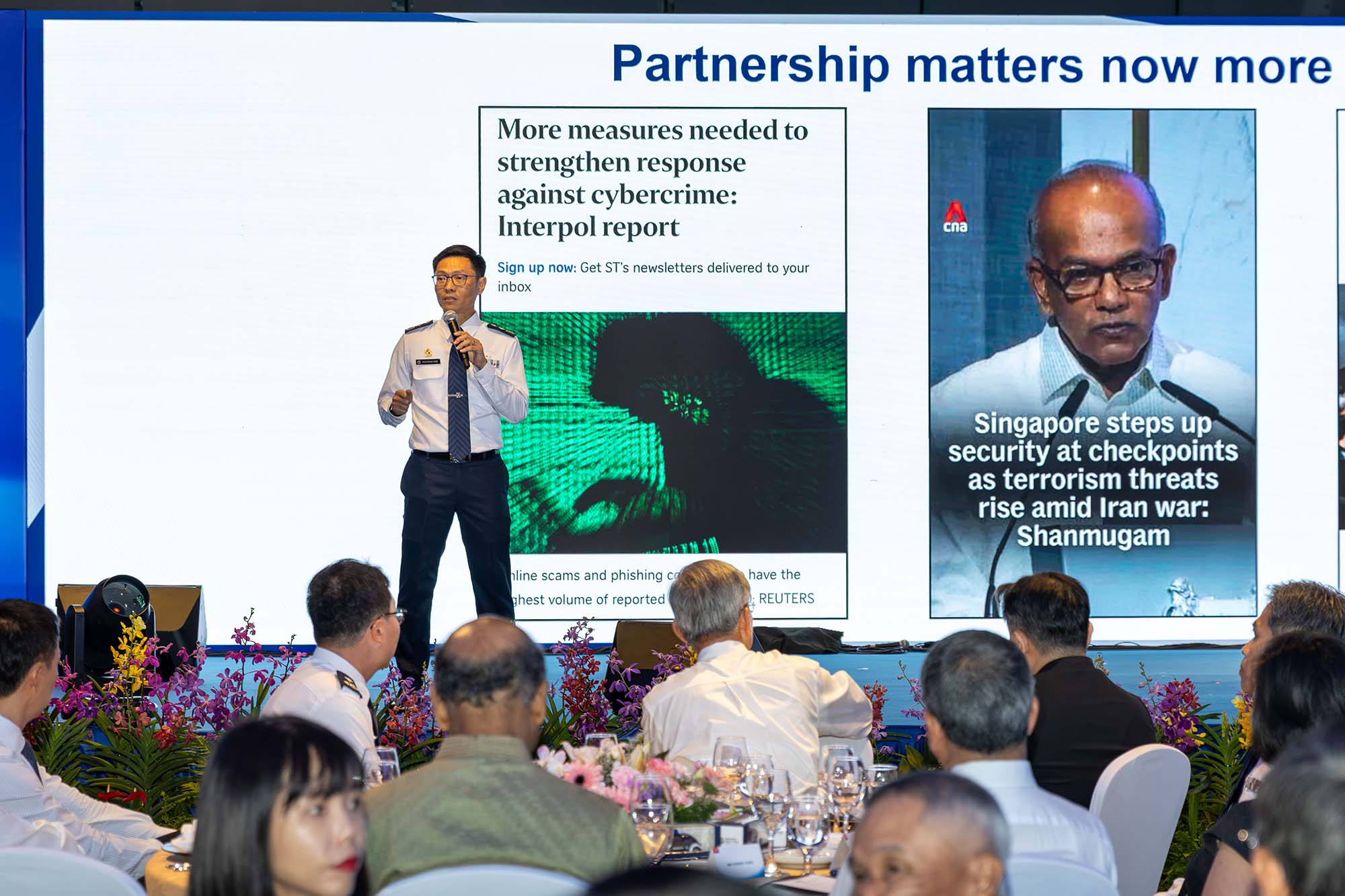
CP How said our operating environment has become more complex with rising geopolitical tensions and disruptive technologies like Artificial Intelligence (AI) enabling more sophisticated crimes.
Partnership across society now matters more than ever because “enforcement alone cannot keep pace” and the Police need to work with its partners on upstream measures for crime prevention and disruption.
“In this complex operating landscape, security outcomes can no longer be guaranteed by any one organisation,” said CP How. “Singapore’s safety and security is a whole-of-society effort.”
Looking ahead, CP How affirmed that the SPF will deepen its existing relationships and cultivate new partnerships through the ‘SaferSG, Together’ movement.
A Night of Music and Memories
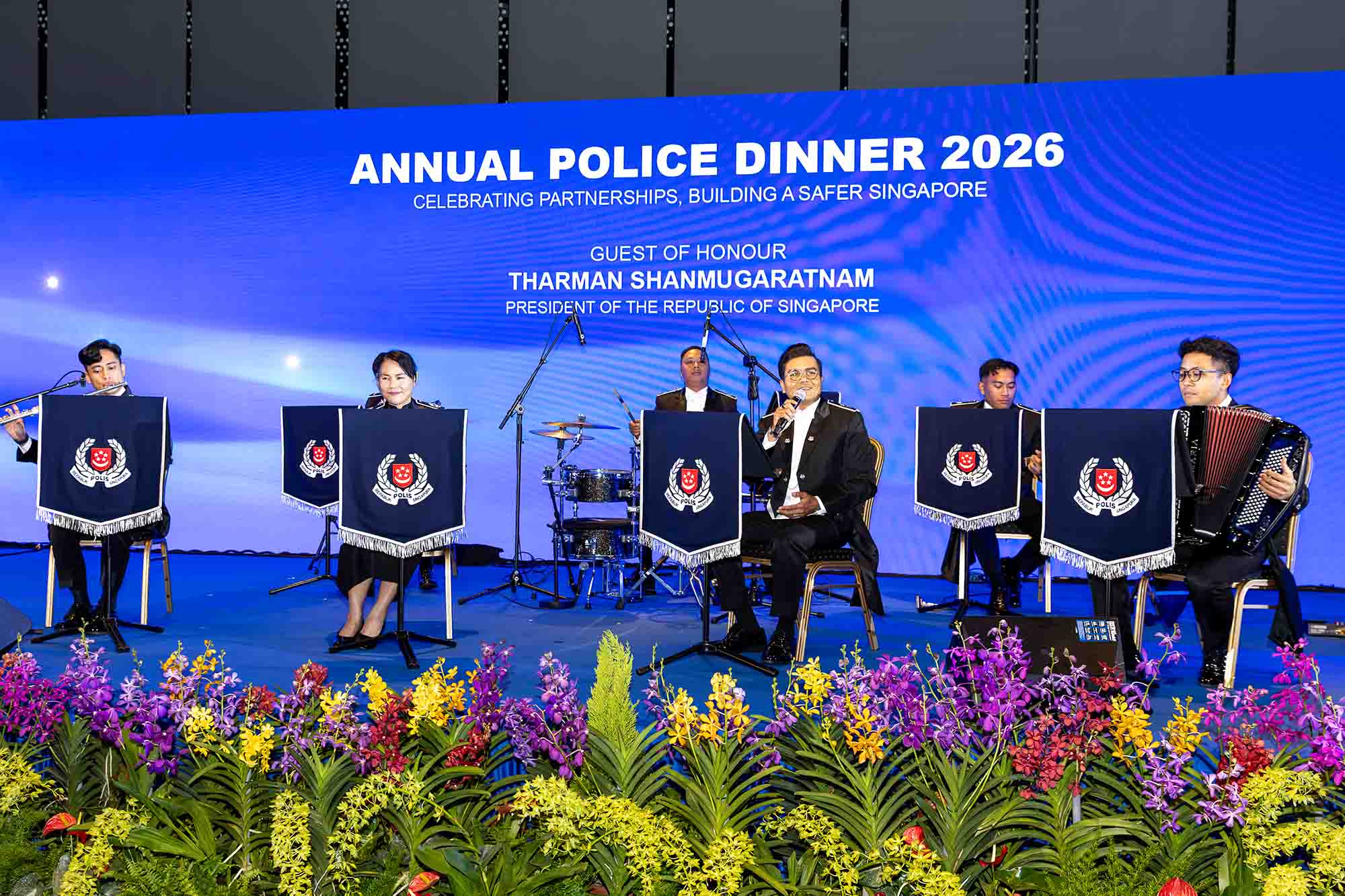
During the Dinner, the SPF Band treated the audience to a captivating performance, playing a series of popular tunes including their rendition of the iconic Singaporean song ‘Home’ for the finale.
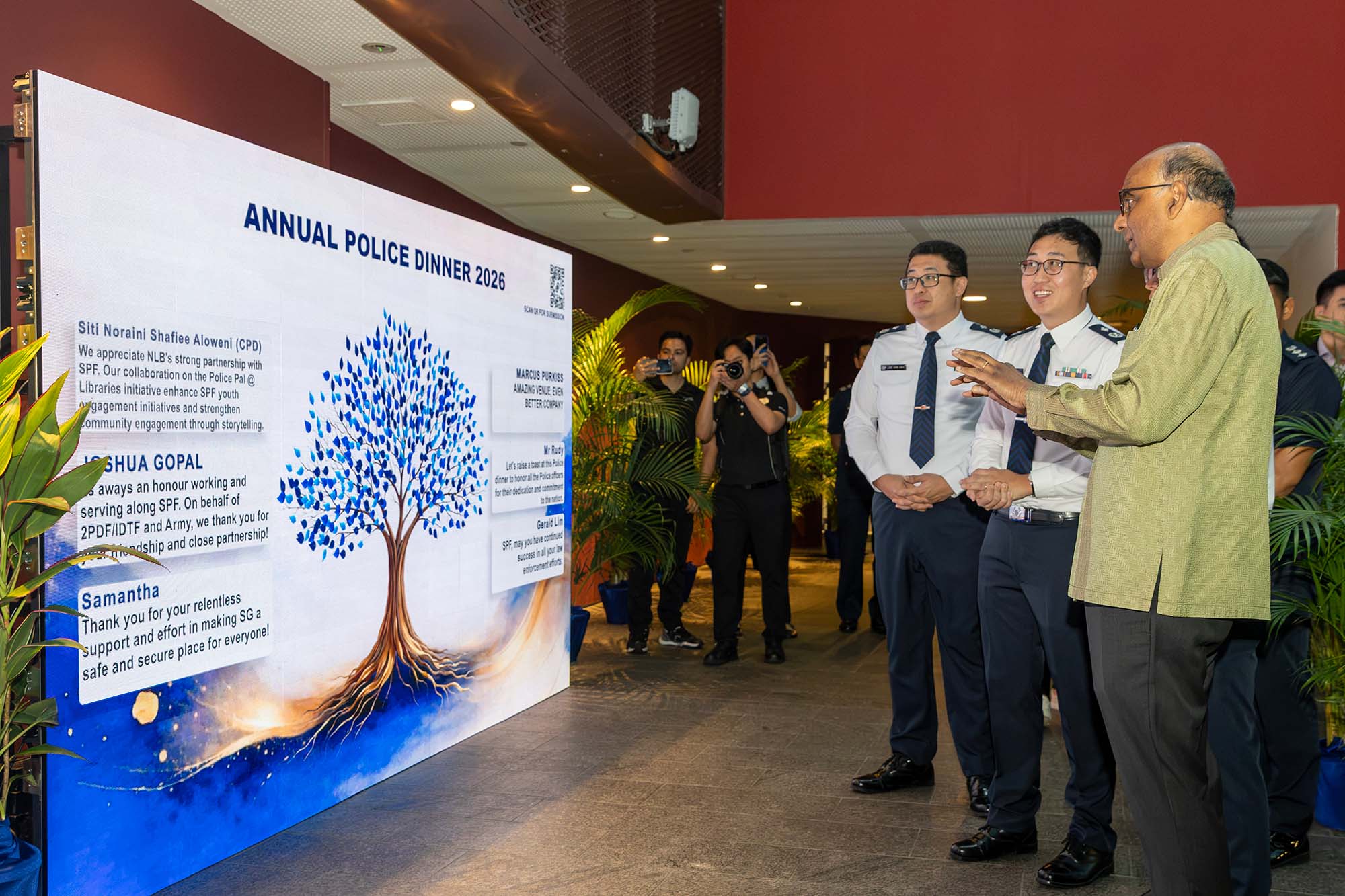
Guests expressed their appreciation for the Police’s efforts by submitting notes that were displayed on a large LED wall at the venue. The evening closed with guests rising as one to sing the National Anthem, a fitting reminder that trust and partnership are vital to keeping Singapore safe.


