
Landing page banner


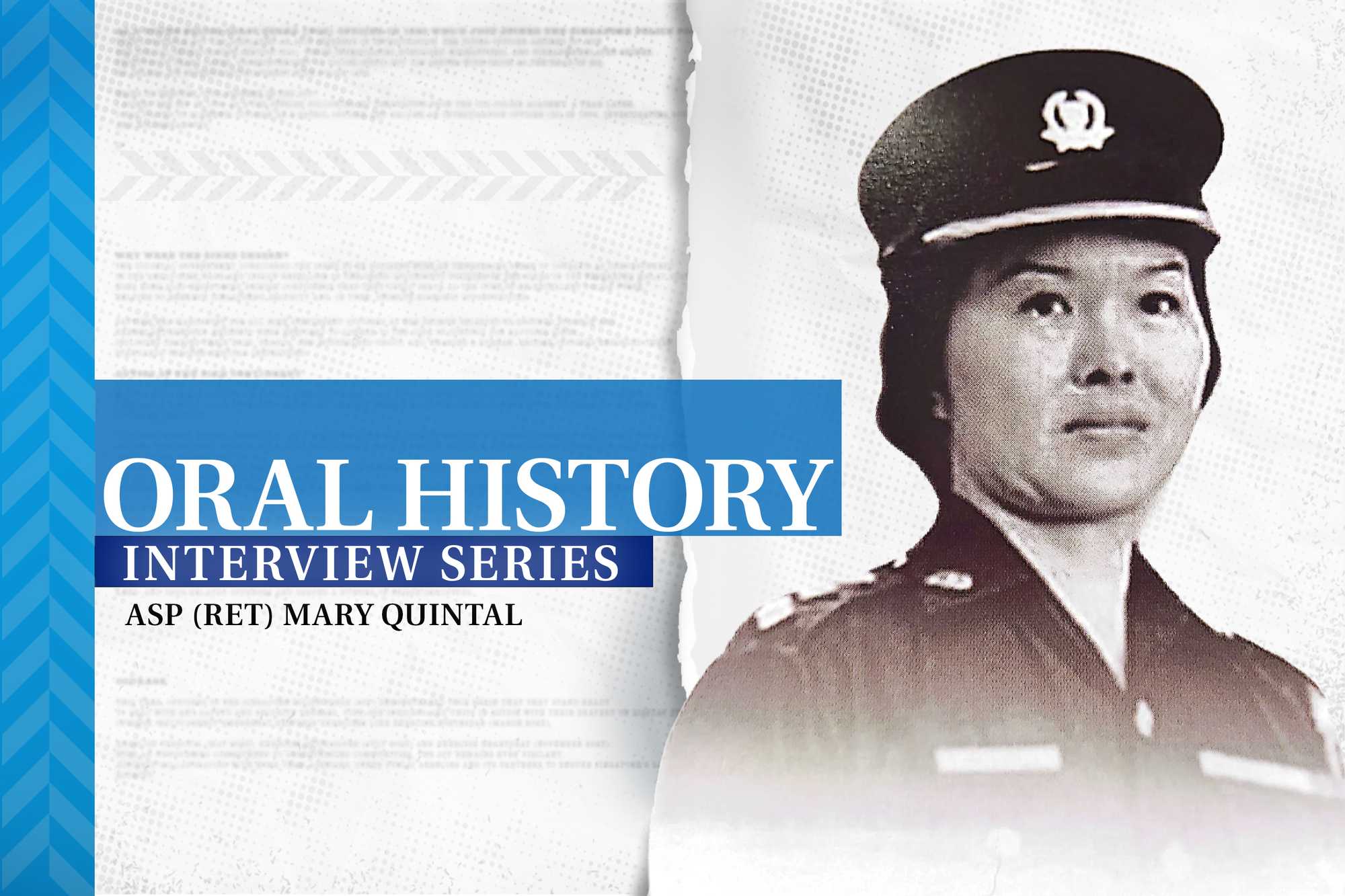
The career of Assistant Superintendent of Police (ASP) (Retired) Mary Quintal (née Mary Voon Tshu En) in the Singapore Police Force (SPF) began in 1949, when women were first recruited on a trial basis into the Women Extra Constabulary rather than the regular Force.
The strong performance of the first Women Constables, including that of ASP (Ret) Quintal, led then Commissioner of Police (CP) (Ret) RE Foulger to absorb them into the regular service as the Women Constabulary on 1 January 1950. ASP (Ret) Quintal was placed on probation as an Inspector and appointed Officer-in-Charge of the Women Police Contingent (WPC).
She helped define women’s service in the SPF over a 25 year career – breaking the glass ceiling in rank and paving the way for policing to become a viable career for later generations of women.
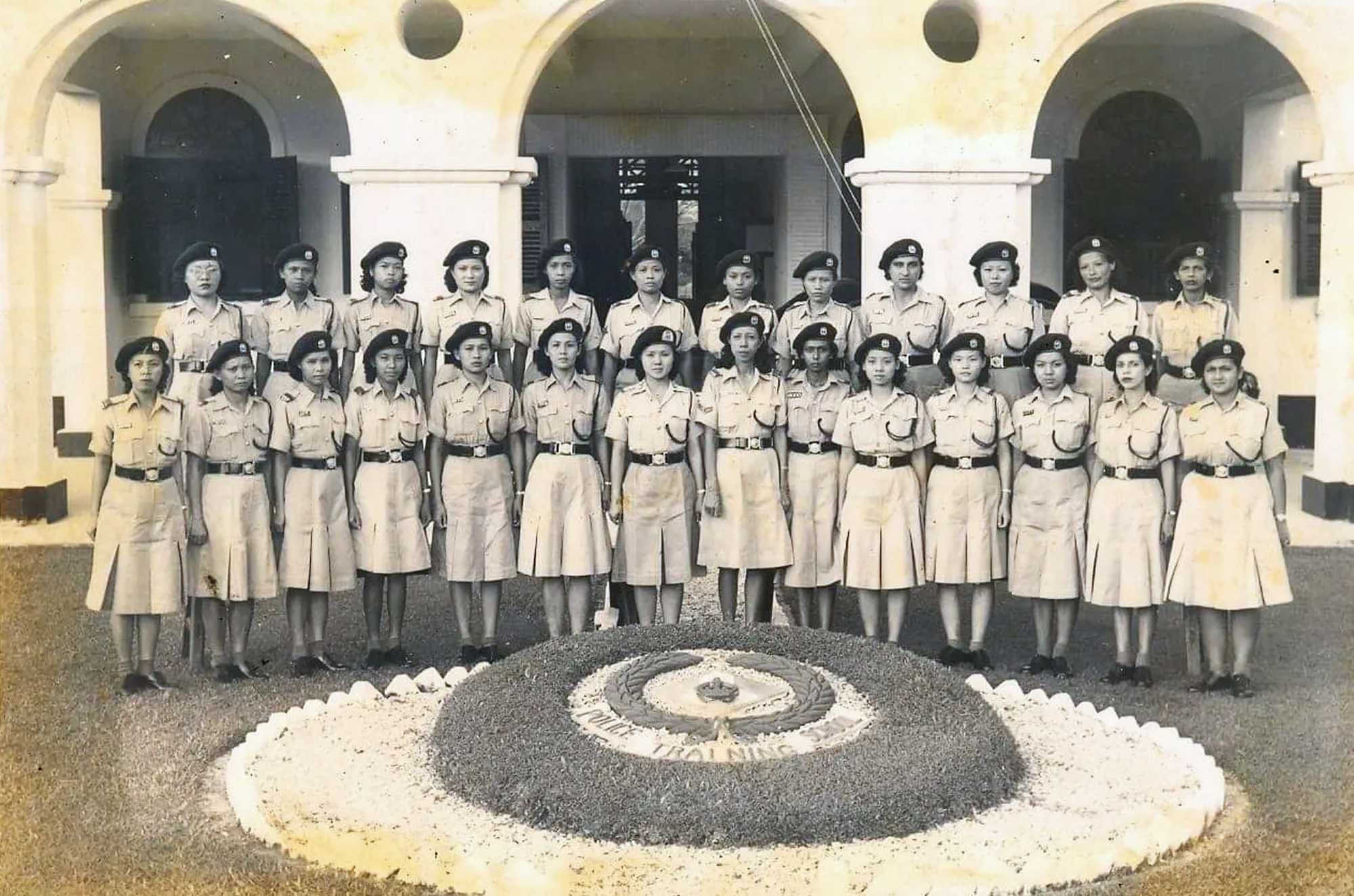
Standing Up for Equal Pay
“Women police were the first of the women in the Civil Service to receive equal pay… with men, right from the word ‘go’,” ASP (Ret) Quintal recalled, at a time when neither female officers in England nor those in other branches of the local Civil Service received the same treatment.
That parity, however, was not accepted without question. CP (Ret) Foulger, who’d established the Women Constabulary and granted equal pay, came under pressure from then Colonial Secretary of Singapore, WL Blythe, to justify the decision. ASP (Ret) Quintal was summoned to his office, where he put the matter to her directly: “Give me one good reason as to why women should continue to receive equal pay as their male counterparts.”
Her reply, she later explained, rested on education and merit. “I looked at him, thought for a moment and I said, ‘Well, all women police recruits when they were recruited are educated. The men are not; most of them are not… That’s good enough.’”
Equal pay for women police officers was retained.
Learning Abroad, Reforming at Home
In August 1951, ASP (Ret) Quintal was sent to England to study how the Women Police Branch was organised, spending time with the Metropolitan Police in London. She was tasked with identifying practices that might be adapted for Singapore.
With the Commissioner’s permission, she also returned with sample uniforms. These shaped her first reforms: replacing the existing pleated skirt with a six piece, A line style that fell below the knees, based on the English pattern and designed to look smarter while allowing for easier movement.
After Singapore achieved Independence in 1965, ASP (Ret) Quintal sat on the committee that was tasked with redesigning the Police uniform. She recommended different fabric weights for the upper and lower garments to better suit the local climate and supported the shift from tan to dark blue.
Her most contested intervention came with the all-female Traffic Police Mobile Squad. Asked by a senior officer to present three uniform models “all in skirts,” she questioned what would happen “if they have a fall [and] hurt themselves.”
His response, she recalled, was that “they shouldn’t fall.”
She replied firmly: “Well, accidents happen; you cannot prevent accidents.”
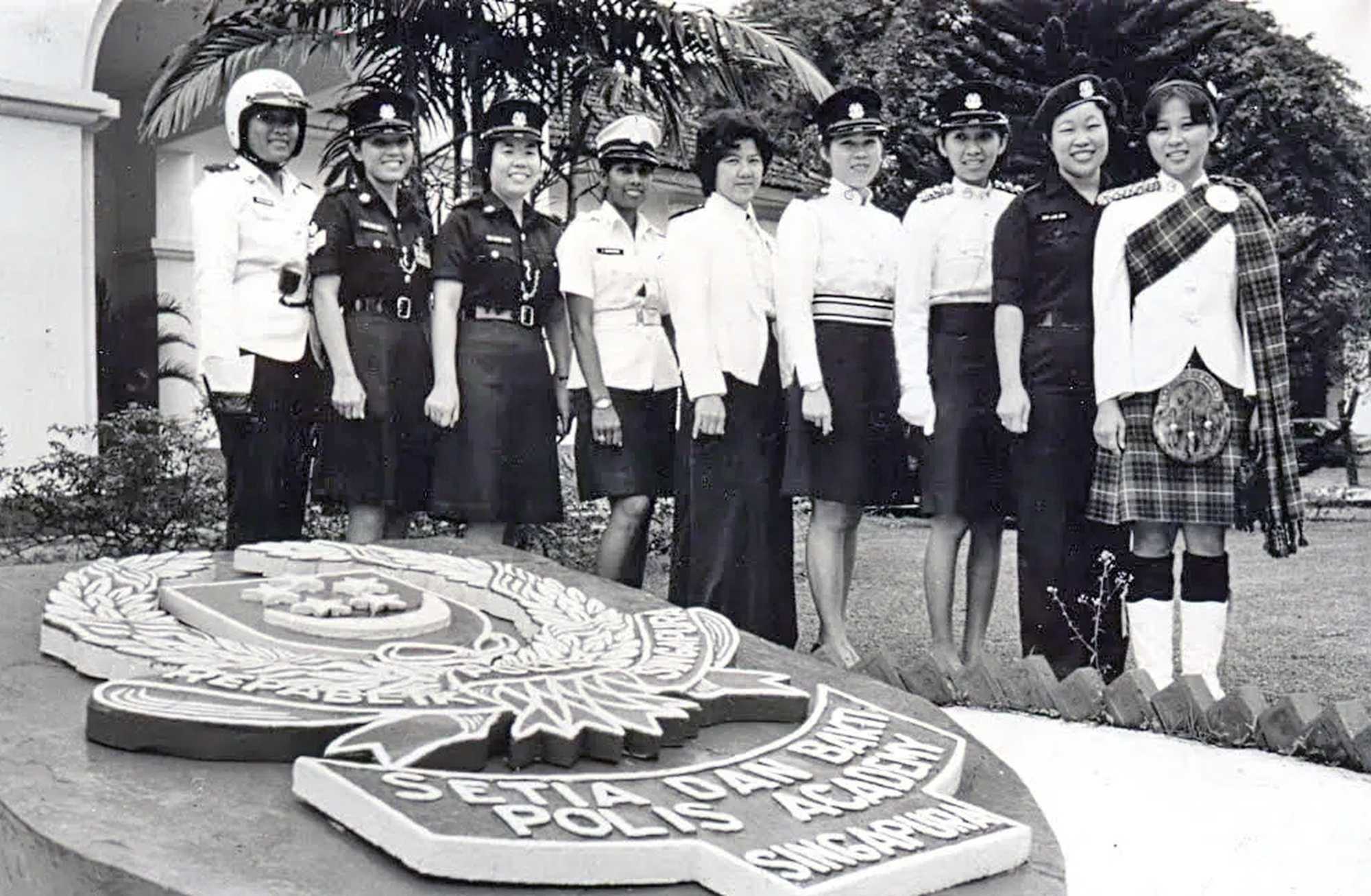
At the presentation to then Minister for Home Affairs Wong Lin Ken, ASP (Ret) Quintal presented three female officers, one in trousers and two in skirts. The trousered uniform was approved.
Advocating for Others, and for Herself
Throughout her career, ASP (Ret) Quintal was known for speaking up for better conditions, opportunities and recognition for female officers. She worked with male senior officers to ensure that female officers in their divisions were fairly assessed and deployed. She also drew up duty rosters for assignments that required female officers, such as guarding hospitalised female suspects, and encouraged better educated women to join the Force, believing that strong recruits would raise the standing of female police officers across the SPF.
ASP (Ret) Quintal also championed broader deployment for female officers. Seeing no reason for them to be confined to limited roles, she drew on practices she’d learned during her attachment to Scotland Yard to push for female police officers to be posted to key units within the Criminal Investigation Department, including the Gambling Suppression Branch, Anti Vice and Secret Societies units.
At the same time, she noted the limits placed on her own advancement. The established rank for the Officer Commanding (OC) of the WPC remained Inspector, and she held that rank for 11 years, even as the number of women in policing grew and her responsibilities expanded with it.
Elsewhere, she noted, the situation differed: in Hong Kong, the OC of Women’s Squad held the rank of Superintendent. When ASP (Ret) Quintal indicated that she was considering this position, it prompted a broader review within the SPF. She was promoted to ASP soon after and held that rank until her retirement in 1974.
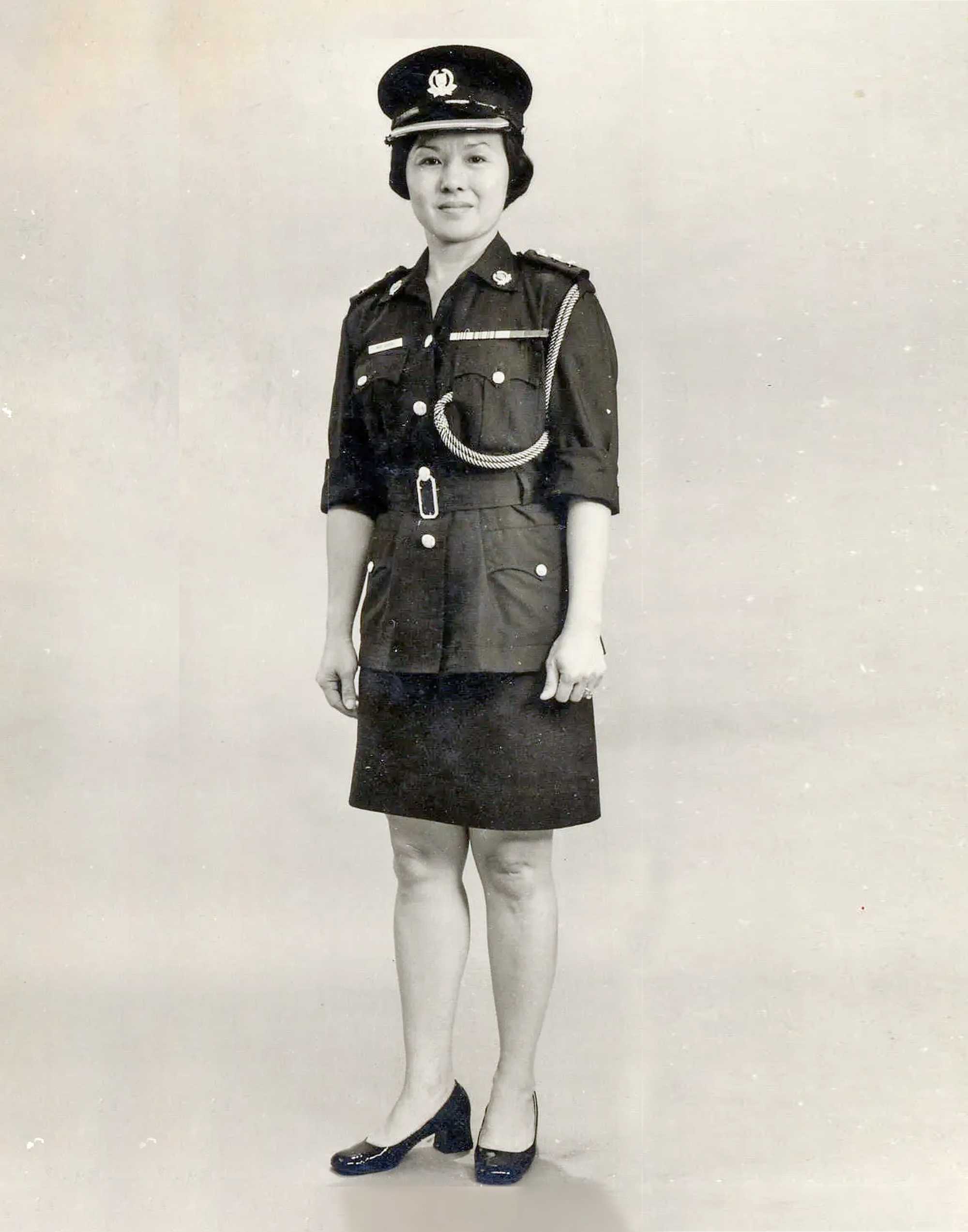
In making her case, ASP (Ret) Quintal demonstrated the same resolve she’d shown on behalf of her fellow female officers, helping raise the rank ceiling for women in the SPF. Reflecting on her years in the Force, she said, “…women police have proved to be a success because it has continued to grow from strength to strength… That is a real joy to me.”
Oral History Interview Series
Our officers have incredibly interesting careers, and for the past decade, the Heritage and Social Responsibility Branch of the SPF’s Public Affairs Department has been meeting retired officers of all ranks to hear their stories. The Oral History Interview Series seeks to inspire officers in their service and carry on the legacy of those who have come before them.


