
Landing page banner


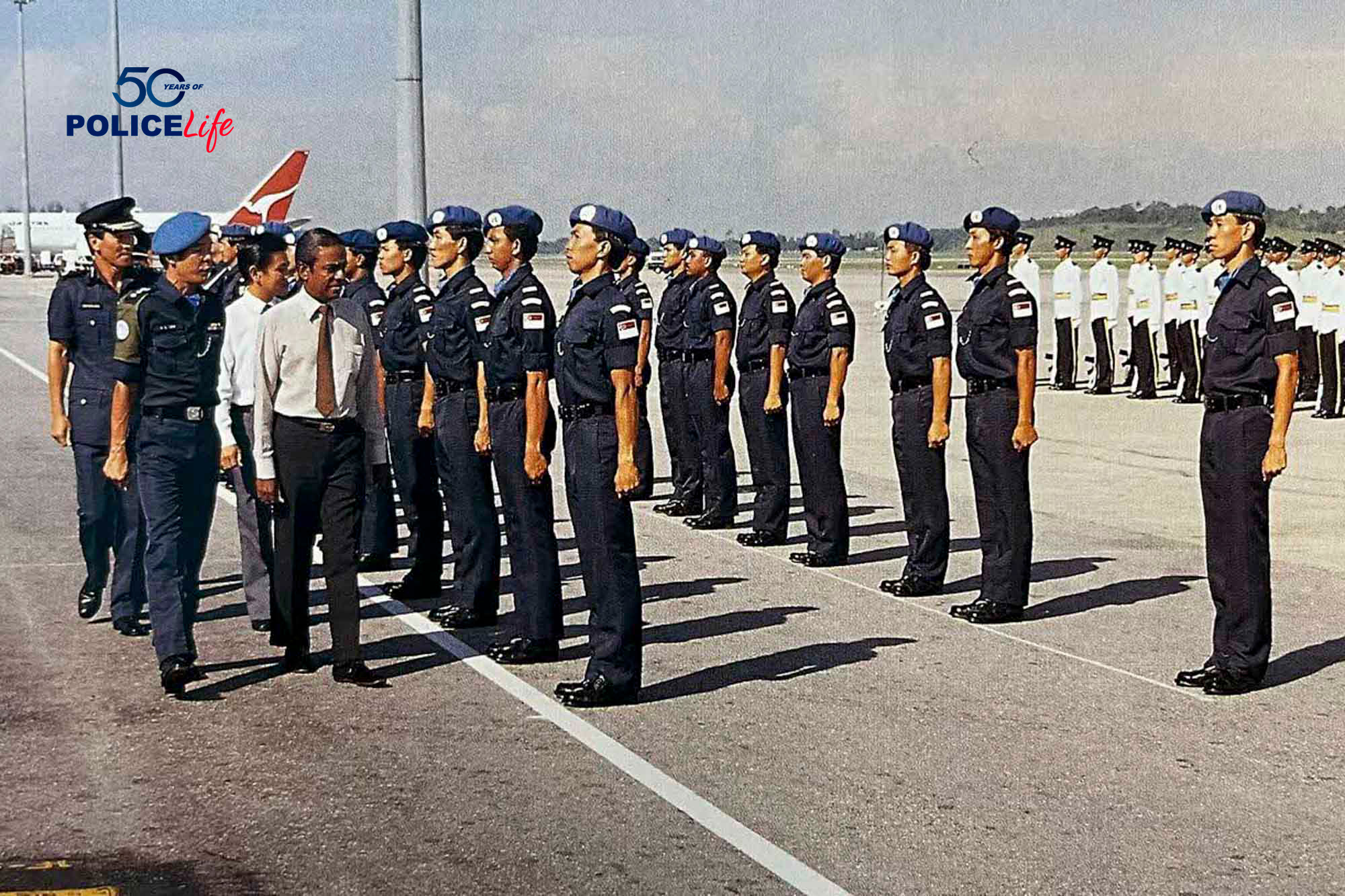
For more than three decades, the Singapore Police Force (SPF) has deployed officers to support international peacekeeping and humanitarian operations. From supporting United Nations (UN) missions to assisting communities affected by natural disasters, SPF officers have been deployed overseas in times of need, bringing specialised expertise to complex and challenging environments.
The Birth of Singapore’s Peacekeeping Force
“You've got four weeks...” With those words, an unusual message arrived at the Commissioner of Police’s (CP) office on 30 March 1989 from Singapore’s Mission to the UN in New York.
The request came from Virendra Daya, then-Chef de Cabinet to the UN Secretary-General, who asked whether Singapore would contribute to the United Nations Transition Assistance Group’s (UNTAG) civilian component. Singapore was given just over four weeks to select, train, equip and deploy a contingent of Police officers to Namibia. Serving alongside peacekeeping officers from 24 other countries such as Australia, Barbados, Fiji, Hungary, and Sweden, the officers would carry out policing duties including daily bush patrols and the settling of communal and industrial disputes.
Despite being warned of the potential hardships and risks, more than 400 officers volunteered. Following a rigorous selection process, shortlisted candidates underwent an intensive three-week training programme jointly organised by the Police Academy and the Gurkha Contingent (GC). Training covered physical fitness, weapons practice, topography, first aid and survival techniques, alongside briefings on Namibia and the wider African region.
At the same time, then-Acting Superintendent of Police (Supt) Lee Kok Leong, Officer-in-Charge of the Police Task Force II and then-Senior Assistant Supt Lum Hon Fye, Head Contingency Planning of the task force, travelled to Namibia on a reconnaissance mission to assess operational requirements. Acting Supt Lee was appointed to command the contingent while Senior Assistant Supt Lum coordinated the mission from Singapore.
Back in Singapore, the Police faced unfamiliar logistical challenges. The requisition list, which included desert boots, winter jackets, compasses and mess tins, resembled that of an infantry deployment more than a conventional Police operation.
The departure date was eventually postponed by a week to provide additional time for preparations. A contingent of 21 officers was subsequently deployed to Namibia.
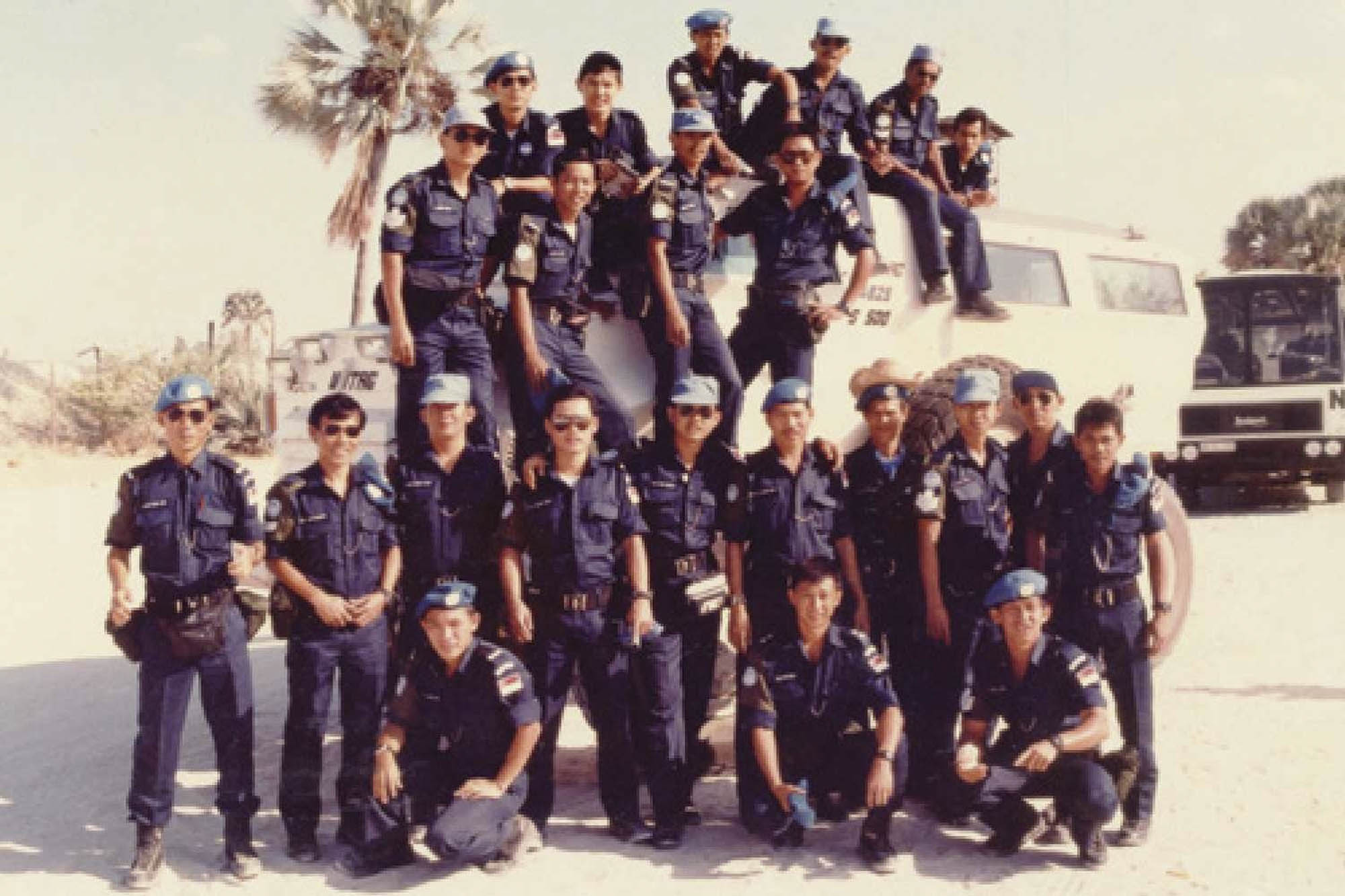
The Namibia deployment marked the beginning of the SPF’s overseas peacekeeping journey. In the years that followed, SPF officers continued contributing to peacekeeping missions around the world.
To strengthen the Force’s ability to respond to future overseas deployments, the SPF United Nations Peacekeeping Force (UNPKF), now known as the SPF Overseas Peacekeeping and Relief Force (OPRF), was established within the Special Operations Command on 27 June 1998. Its role was to maintain a ready pool of trained officers for rapid deployment to peacekeeping missions.
Answering Calls for Help
Beyond traditional peacekeeping roles, the UNPKF has also supported humanitarian and disaster-relief operations. To date, it has contributed to 15 overseas operations across Cambodia, Timor-Leste, Iraq, Jordan, Aceh, Nepal, Surabaya and Laos. Among these were three Operation Vanguard deployments: the AirAsia Flight QZ8501 crash response in Surabaya in 2015; the Nepal earthquake in 2015; and the Laos dam collapse in 2018.
One of the earliest disaster-relief deployments under Operation Vanguard took place in January 2015, following the crash of Indonesia AirAsia Flight QZ8501 into the Java Sea while en route to Singapore on 28 December 2014, which killed all 162 people on board. A Singapore Disaster Victim Identification (DVI) team comprising six SPF officers and two forensic specialists from the Health Sciences Authority (HSA) was subsequently deployed to Surabaya in January 2015 to assist the Indonesian authorities in identifying the victims.
Just a few months later on 25 April 2015, a 7.8-magnitude earthquake struck near Kathmandu, killing nearly 9,000 people and causing widespread destruction across the country. UNPKF officers were deployed as part of a 66-member SPF contingent supporting relief efforts. Upon arrival, UNPKF officers partnered with GC officers to coordinate relief efforts, from locating displaced persons to delivering critical supplies to affected areas.
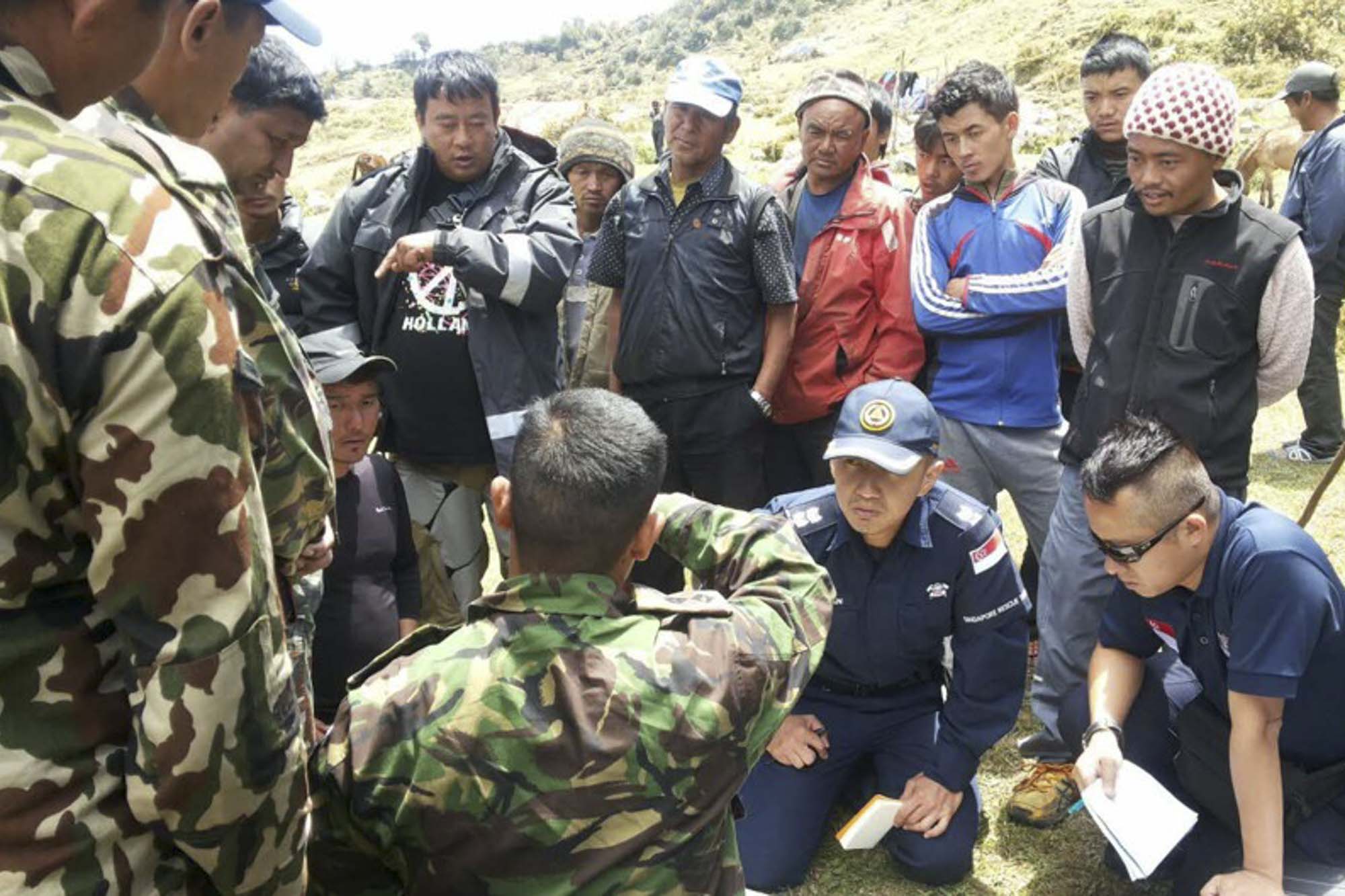
Conditions were challenging. Officers slept in tents and had limited access to water. Station Inspector (SI) Knagesvaran S/O Thrunavakarasu shared, “The weather was so cold that we’d wake up in the middle of the night shivering, even with a blanket on.”
Despite the discomfort, officers continued their duties. “We definitely missed the comfort back home. But as an SPF UNPKF member, we had to learn to adapt quickly to the environment around us,” SI Knagesvaran added.
The unpredictable environment was another challenge. In one instance, Inspector (Insp) Gu Weng Khuen and his team travelled for hours to reach a remote village, only to find the route impassable because of earthquake damage.
“It was an emotional rollercoaster, but it reinforced the importance of perseverance, even when things didn’t go according to plan,” Insp Gu said.
Officers also highlighted the importance of teamwork. Recalling an aftershock that struck on the final day of the deployment, Insp Gu said, “What impressed me was how the team came together immediately – no panic, just calm coordination.”
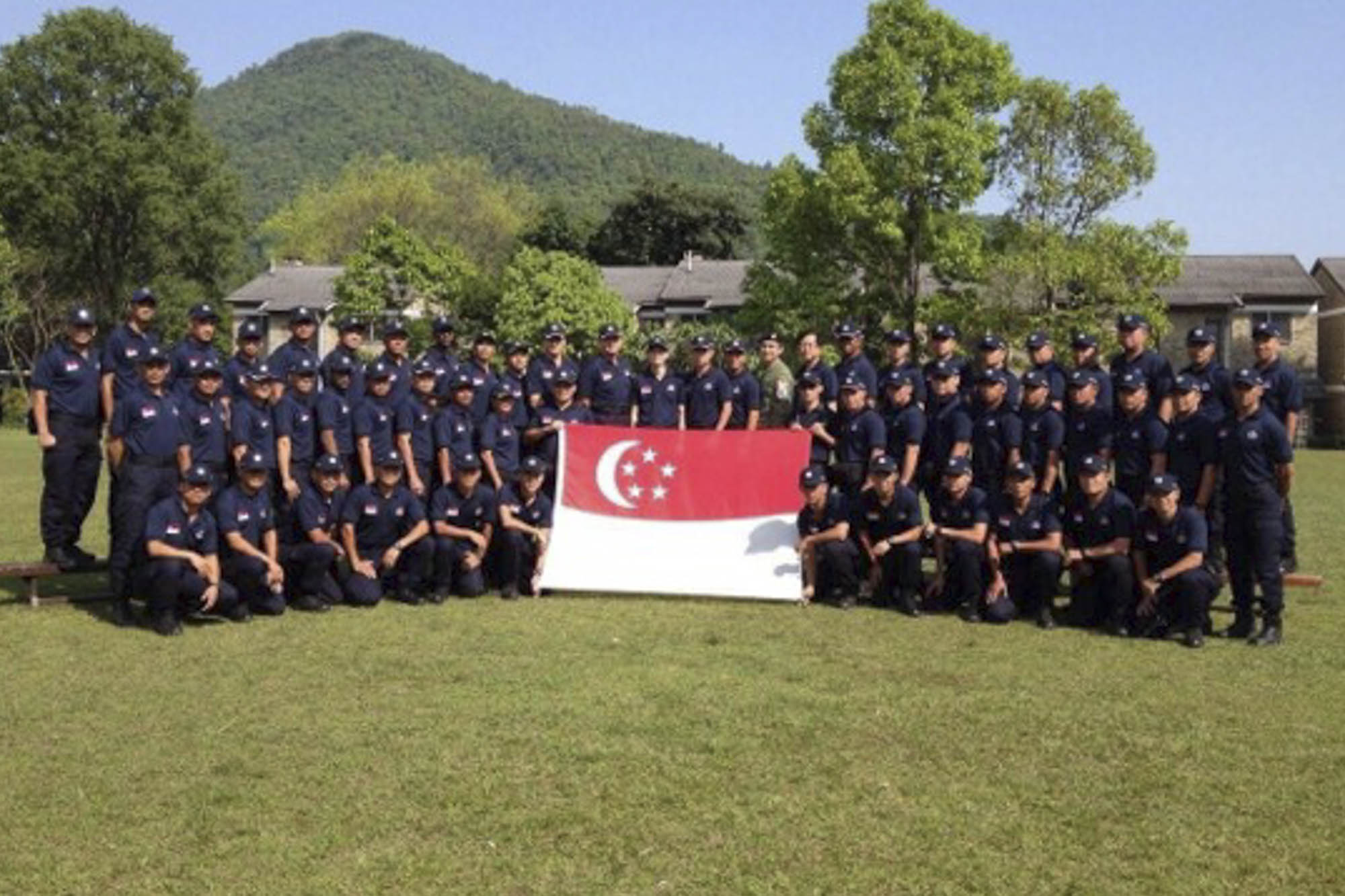
For Superintendent of Police (Supt) (Ret) Puteh Shariff, the deployment provided a firsthand view of the devastation caused by the disaster. “Along the journey, reality sank in when we saw the heaps of debris from collapsed houses lying along the streets,” she recalled.
One encounter remained particularly memorable. Supt (Ret) Puteh met a teenage girl whose home had been destroyed by the earthquake. Despite her loss, the girl was thankful that her family was safe and had found shelter in a nearby tent.
“It made me realise that the everyday problems that we faced in Singapore seemed so insignificant compared to hers,” Supt (Ret) Puteh said.
Three years later, Operation Vanguard was activated again. When part of the Xe-Pian Xe-Namnoy Dam gave way on 23 July 2018, billions of cubic metres of water surged through nearby communities in Attapeu Province, causing widespread flooding, claiming at least 31 lives and displacing more than 7,000 residents.
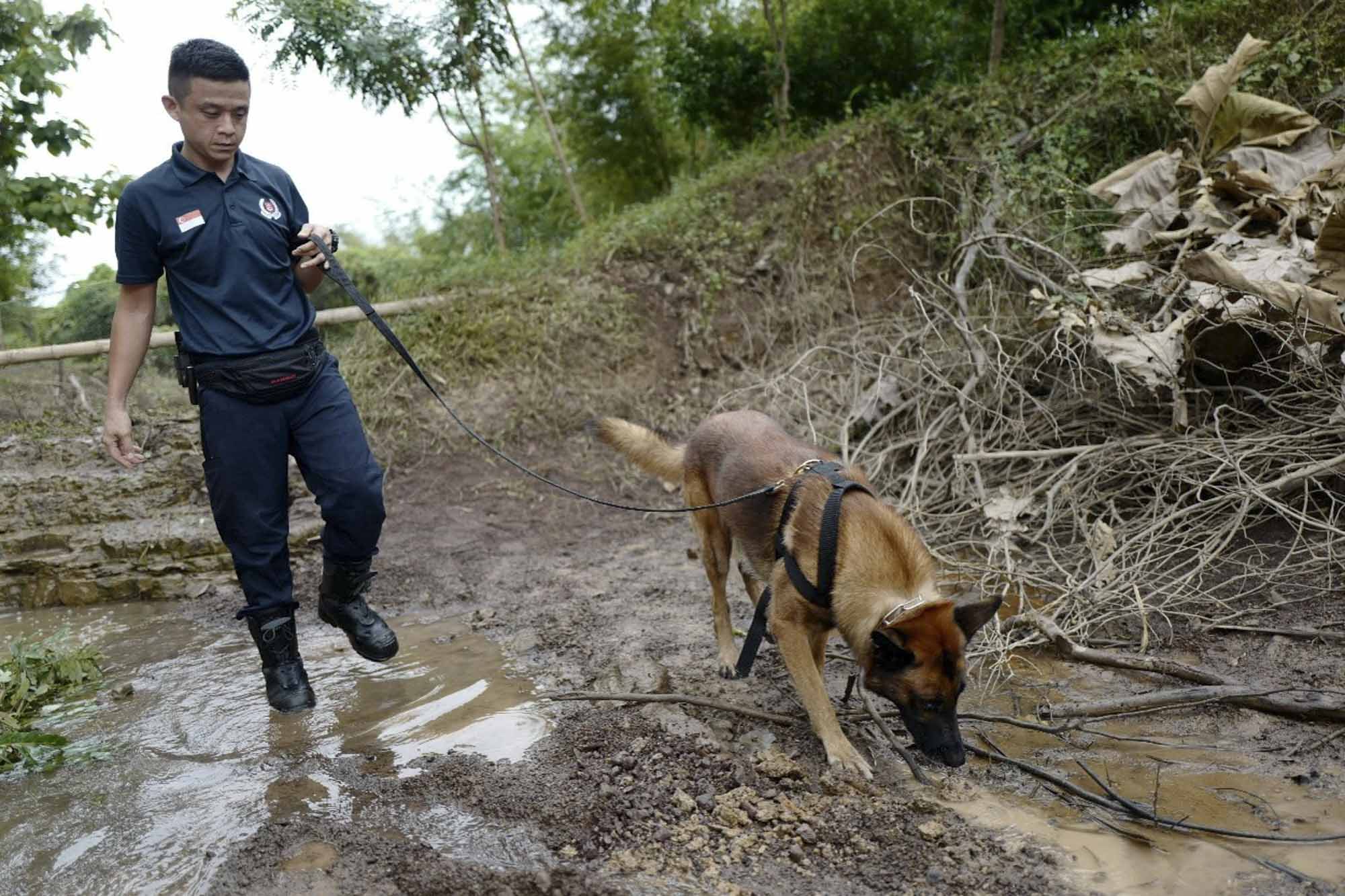
An SPF contingent comprising Police K-9 officers, three Victim Recovery Dogs and UNPKF officers were deployed to support recovery efforts. The deployment formed part of a 32-member Home Team contingent and marked the first overseas mission for the SPF’s Victim Recovery Dogs, which assisted local authorities in search and recovery operations in the flood-affected areas.
Continuing the Legacy in Nepal
In response to Nepal’s request for assistance following flash floods along the Nepal-China border, the SPF activated Operation Vanguard once again in September 2026. A team of 31 SPF officers together with officers from the HSA and the Home Team Science and Technology Agency was deployed to Nepal, bringing expertise in disaster victim identification and aerial surveillance. The 35-member contingent is led by Assistant Commissioner of Police Patrick Tan.

From the first UNTAG contingent that departed for Namibia in 1989 to today’s OPRF deployments, generations of SPF officers have contributed to peacekeeping, humanitarian and disaster-relief missions around the world. While the nature of these missions has evolved over the decades, the SPF’s commitment to supporting communities in need remains unchanged.


