Landing page banner


Scam calls can happen anywhere – even during an ordinary MRT ride.
On 17 September 2026, Ms Vit Olivia Ng was travelling on the North-South Line when she noticed a woman across the aisle looking distressed during a video call. As she overheard the conversation, she began to suspect that something wasn’t right.
A Call That Sounded Off
“Initially, after hearing the call on loudspeaker, I took out my earphones to listen to music,” Ms Ng recalled. “However, before I could select a song, I overheard the conversation and sensed that something was unusual.”
According to Ms Ng, the caller claimed to be a police officer, appearing in uniform against a backdrop with the Singapore Police Force (SPF) logo. He spoke rudely to the woman and repeatedly demanded to see her bank card, even after she had shown him her passport. Ms Ng recognised these as possible warning signs of a Government Officials Impersonation Scam, where scammers pose as Government officials to trick victims into complying with their demands such as transferring a portion of their money over for “safekeeping”. “I may not know every scam tactic, but I felt that something wasn’t right,” she said. “If she hadn’t put the call on loudspeaker, the conversation might not have caught my attention.” “Looking back, I think that was a blessing in disguise,” she said.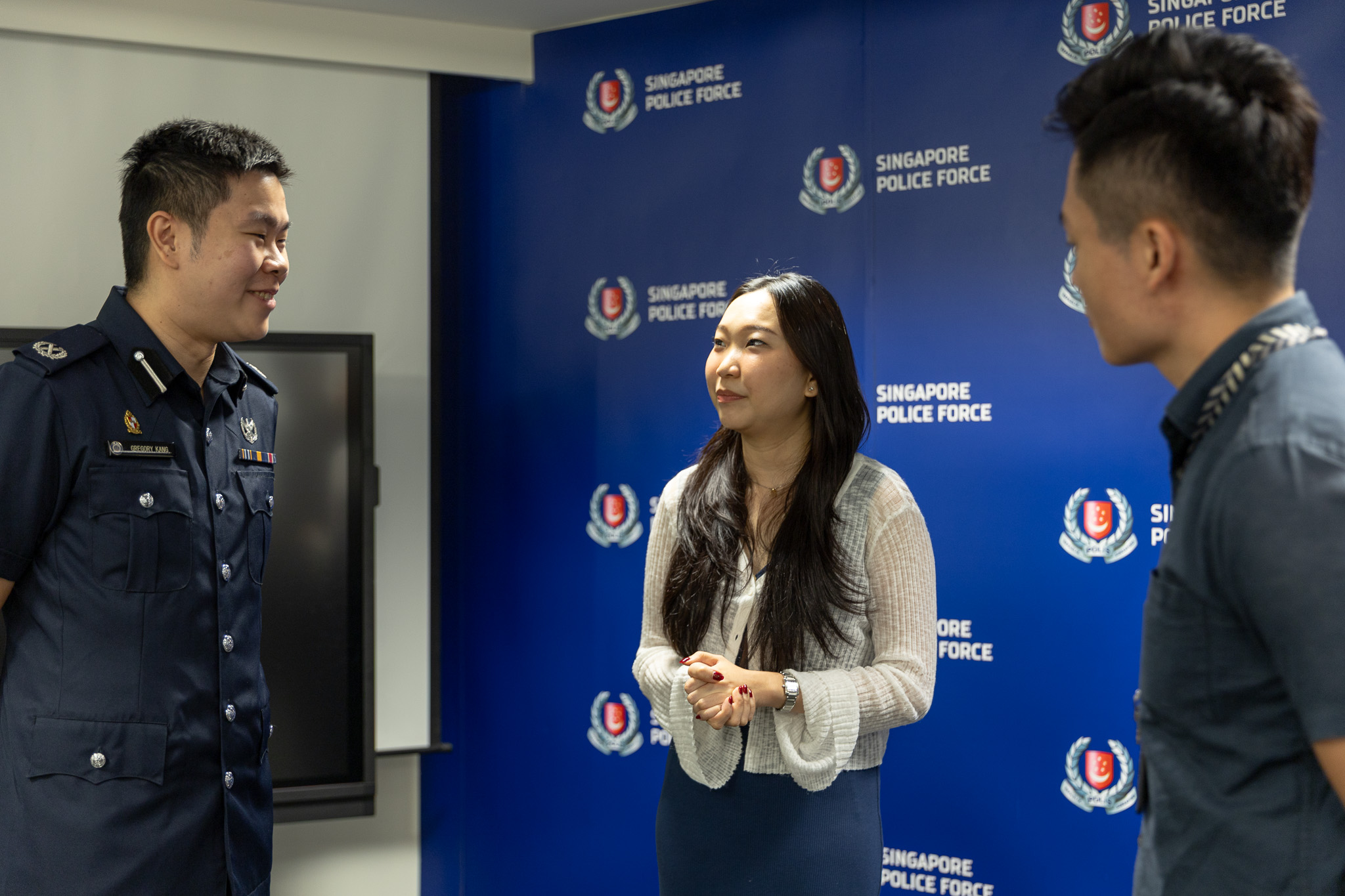
Finding the Courage to Step In
Recognising the warning signs was one thing but stepping in was another. “I hesitated because she was a complete stranger and I wasn’t sure how she’d react,” Ms Ng said.
But as the call continued, Ms Ng grew increasingly concerned that the woman might reveal her passport details or other sensitive information to the scammer. “I couldn’t just sit there and watch,” she said. “I had to do something to help, even if it meant stepping out of my comfort zone.”
Ms Ng approached the woman and told her, “Sorry sis, I think it’s a scam call.” She helped the woman end the call and advised her not to show her personal documents or banking details with unknown callers.
After the passenger beside the woman left, Ms Ng sat with her and learnt that she was a visitor from the Philippines who had only been in Singapore for three weeks. Ms Ng shared information on common scams in Singapore and how she could protect herself. She also offered her contact details so that the woman would have someone local to turn to if she needed help.
“My intention was to help her understand what might be happening without making her feel embarrassed or judged,” Ms Ng said. “I can understand how frightening it might have been for her to receive a call from someone claiming to be a police officer, especially in a foreign country.”
Sharing Her Experience to Help Others
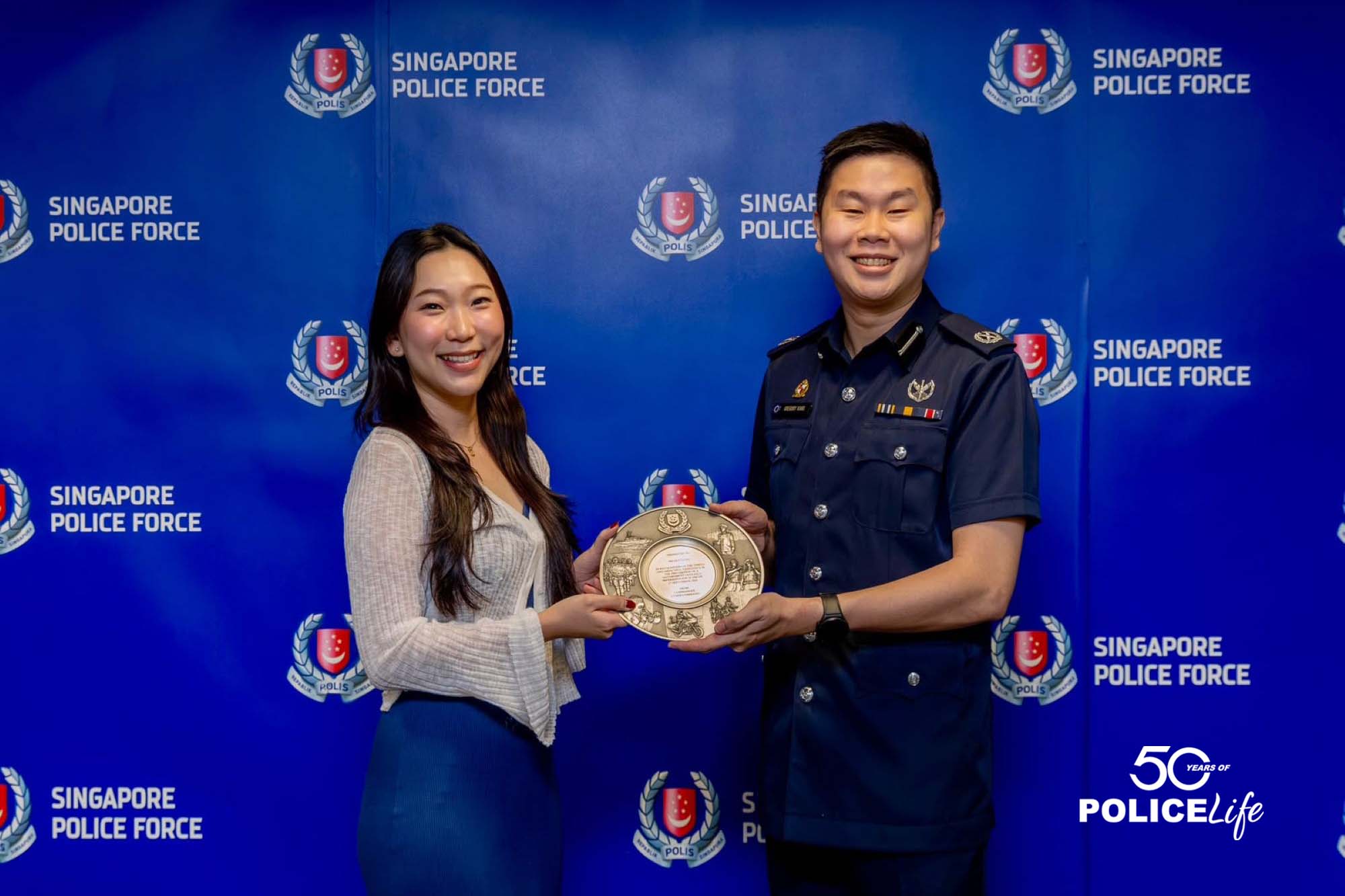
Relieved that the woman had stepped away from the situation safely, Ms Ng later shared a video of the incident on Instagram to raise scam awareness and remind people that scams can happen to anyone, regardless of age or nationality. “I simply wanted to share what happened in the hope that it might help someone recognise a scam or encourage another person to step in,” she said. “I was glad that the incident sparked conversations about scam awareness and looking out for one another.” On 27 October 2026, Ms Ng received the SaferSG Public Spiritedness Award (Pewter Plate) at an award presentation ceremony at New Phoenix Park, in recognition of the timely assistance she rendered.
“I was pretty touched that the SPF recognised this effort,” she said. “I hope that this will encourage more people to step up and help others.”
Choosing to Look Out for Others
For Ms Ng, the experience reinforced how a simple act of concern can help someone facing a possible scam. “Sometimes, recognising that someone looks distressed and taking a moment to check on them can already make a difference,” she said.
Ms Ng understands that approaching a stranger can feel uncomfortable. “It’s normal to be afraid,” she said. “But imagine if your family members got scammed, would you step in to help?”
Her experience is reminder that staying vigilant against scams isn’t just about protecting ourselves – it’s also about recognising when someone else may need help and taking that first step.
“We shouldn’t be afraid to offer help when we genuinely believe someone may be in trouble,” she said.
Beware of Government Officials Impersonation Scams
Government officials will NEVER do these things over a phone call:
• Ask you to transfer money; luxury watches, gold or cryptocurrency;
• Ask you to disclose bank log-in details;
• Ask you to install mobile apps from unofficial app stores;
• Transfer your call to Police, or any other government officials
Members of the public are reminded to NEVER share sensitive information such as bank card details with others.
Here’s how you can ACT against scams:
• Add the ScamShield app to block scam calls, filer scam SMSes and set security features (e.g. set up transaction limits for internet banking transactions, enable Two-Factor Authentication (2FA), Multifactor Authentication for banks and e-wallets, use the Money Lock feature of your bank to “lock up” a portion of your money so that it cannot be transferred out digitally by anyone, further protecting your savings from scams).
• Check for scam signs and with official sources such as the ScamShield Helpline (1799). Be wary of unsolicited calls claiming that you have made purchases or transactions that you do not recognise. Do not transfer money, disclose your banking credentials or personal information, or follow instructions from unsolicited callers. Verify the caller’s claims directly with the relevant organisation through their official channels.
• Tell the authorities, family and friends about scams. If you suspect that you have fallen victim to a scam, contact your bank immediately to report and block any fraudulent transactions, and lodge a Police report.
For more information on scams, visit www.scamshield.gov.sg or call the 24/7 ScamShield Helpline at 1799 if you are unsure if something is a scam.


