Landing page banner


Police Coast Guard (PCG) officers are skilled in seamanship, boat handling, communications and weaponry. They safeguard Singapore’s waters, even in the roughest conditions. To learn how PCG officers are trained to fight crime and safeguard the waters around Singapore (one of the world’s busiest shipping hubs), we paid a visit to the PCG’s Tactical Boat Handling and Firing Simulator (TBHFS)!
As Close as It Gets to the Real Thing
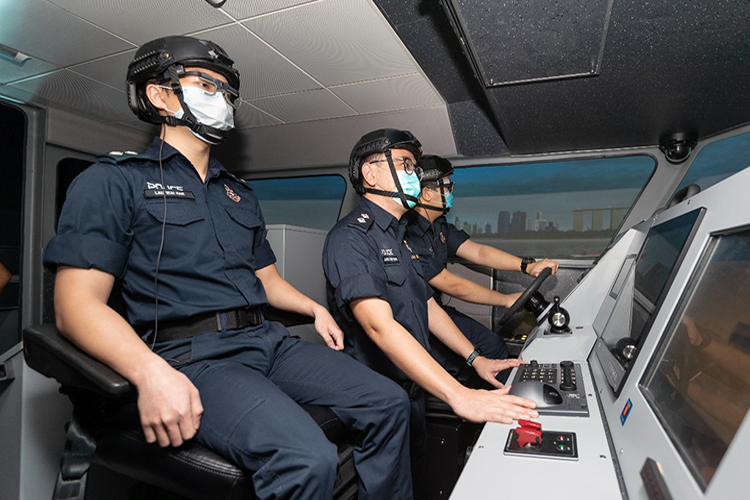
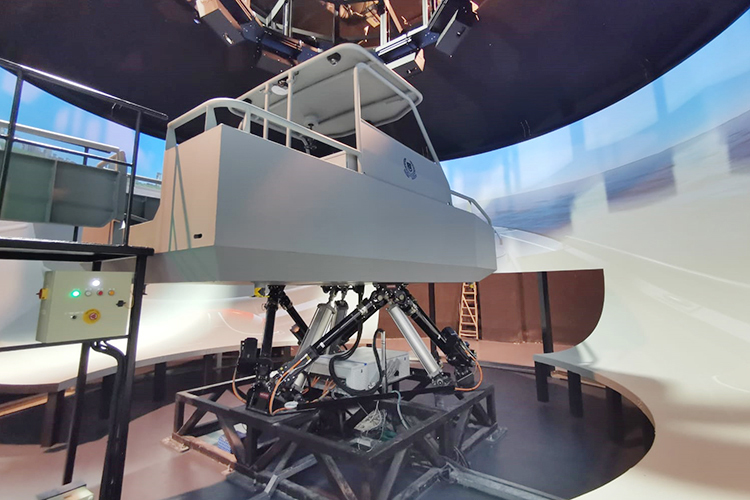
Commissioned in 2020, in collaboration with the Home Team Science and Technology Agency, the TBHFS offers highly realistic simulations of PCG vessels and replicates operational conditions that PCG officers face in their daily work. It has four customised simulators that are based on the PCG’s Patrol Interdiction Boats and Patrol Interceptor Boats, ensuring a realistic training environment for officers.
Dynamic Scenarios
According to ASP Yusrinal, a training officer with the PCG, one of the benefits of the TBHFS is that it allows trainees to practise precision boat-handling skills and high-speed manoeuvres, such as clipping a target boat. The firing simulator also gives trainees the chance to practise firing at target boats, which isn’t possible during their sea phase training.
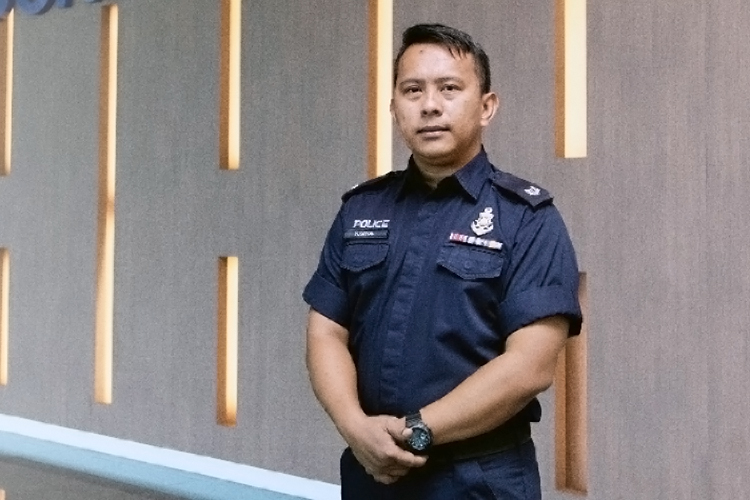
“The TBHFS can simulate many scenarios, conditions and operational terrain,” explained ASP Yusrinal. “This helps trainees hone their watch-keeping, navigation, berthing and maritime interdiction skills in a safe and controlled environment, before their actual sea phase training.”
Command and Control
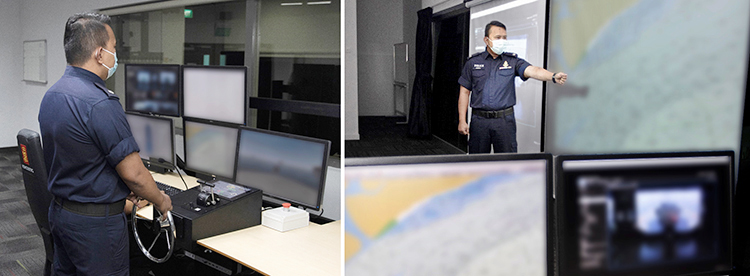
The Instructor Operating Station enables trainers to control the target boat during training scenarios, allowing for greater realism. A briefing facility also lets trainers replay and review complete training session with trainees.
Eyes that Speak the Truth
One of the most advanced features of the TBHFS is its Eye Tracker, which detects the eye movement of trainees and analyses their visual focus during stressful scenarios such as high-speed pursuits. “The Eye Tracker lets us monitor trainees closely and understand their decision-making processes,” said ASP Yusrinal. “We can then give targeted feedback and help trainees develop confidence and competence before they take on high-stress situations at sea.”


