
Landing page banner



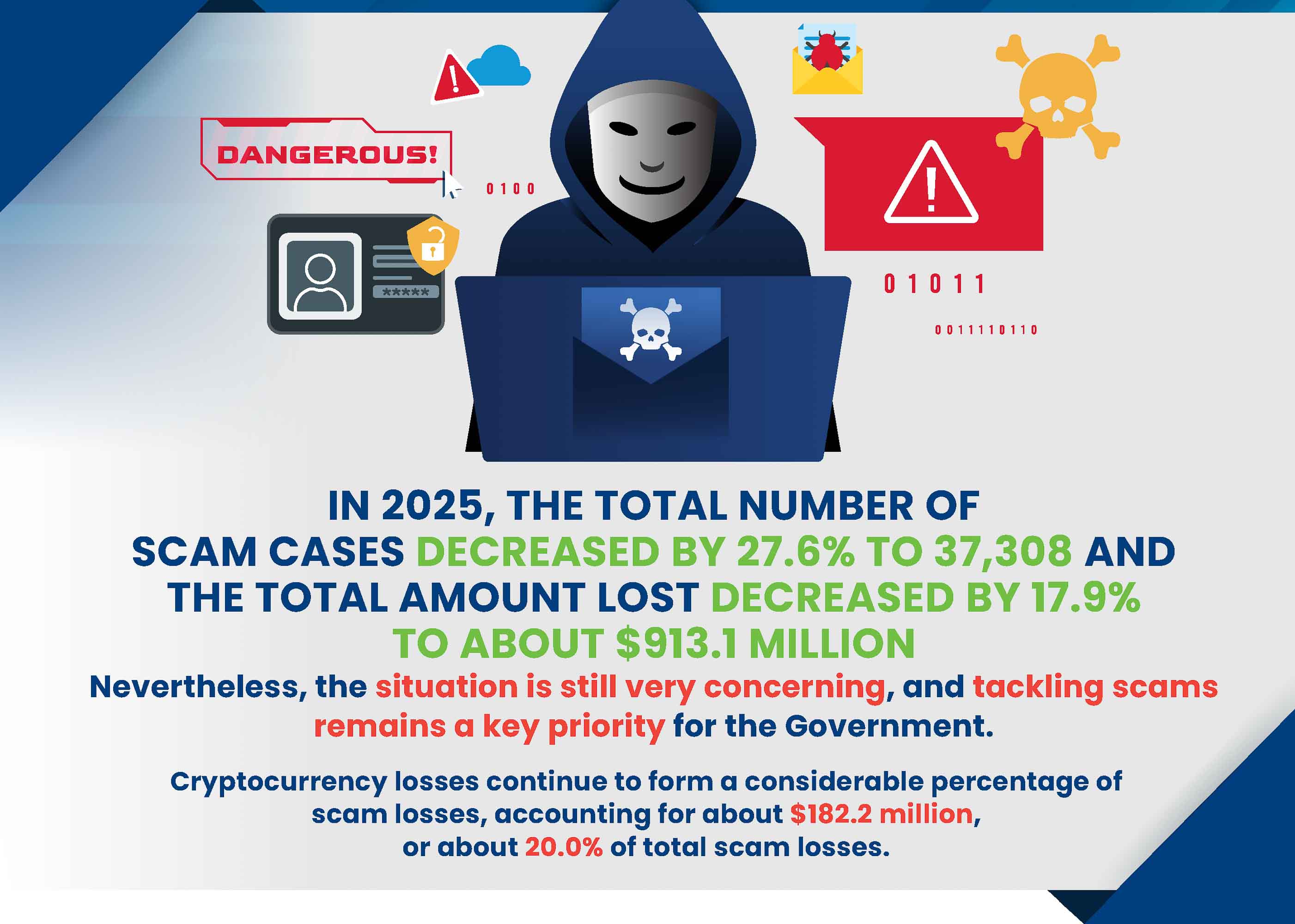
Scams and cybercrime fell by 24.8% in 2025 from the year before.
This suggests that anti-scam strategies and public education measures have played a role in deterring scammers and raising awareness of scams. There were 41,974 cases in 2025, a drop of nearly 14,000 from 2024.
1. The Total Amount Lost to Scams Fell by about 18%
Overall, funds lost to scams decreased from $1.1 billion in 2024 to $913.1 million in 2025. However, the median loss per case rose from $1,389 in 2024 to $1,644 in 2025.
Most scam cases involved losses under $5,000. Only about 5% of cases lost $100,000 or more. Losses from cryptocurrency made up a fifth of all scam losses.
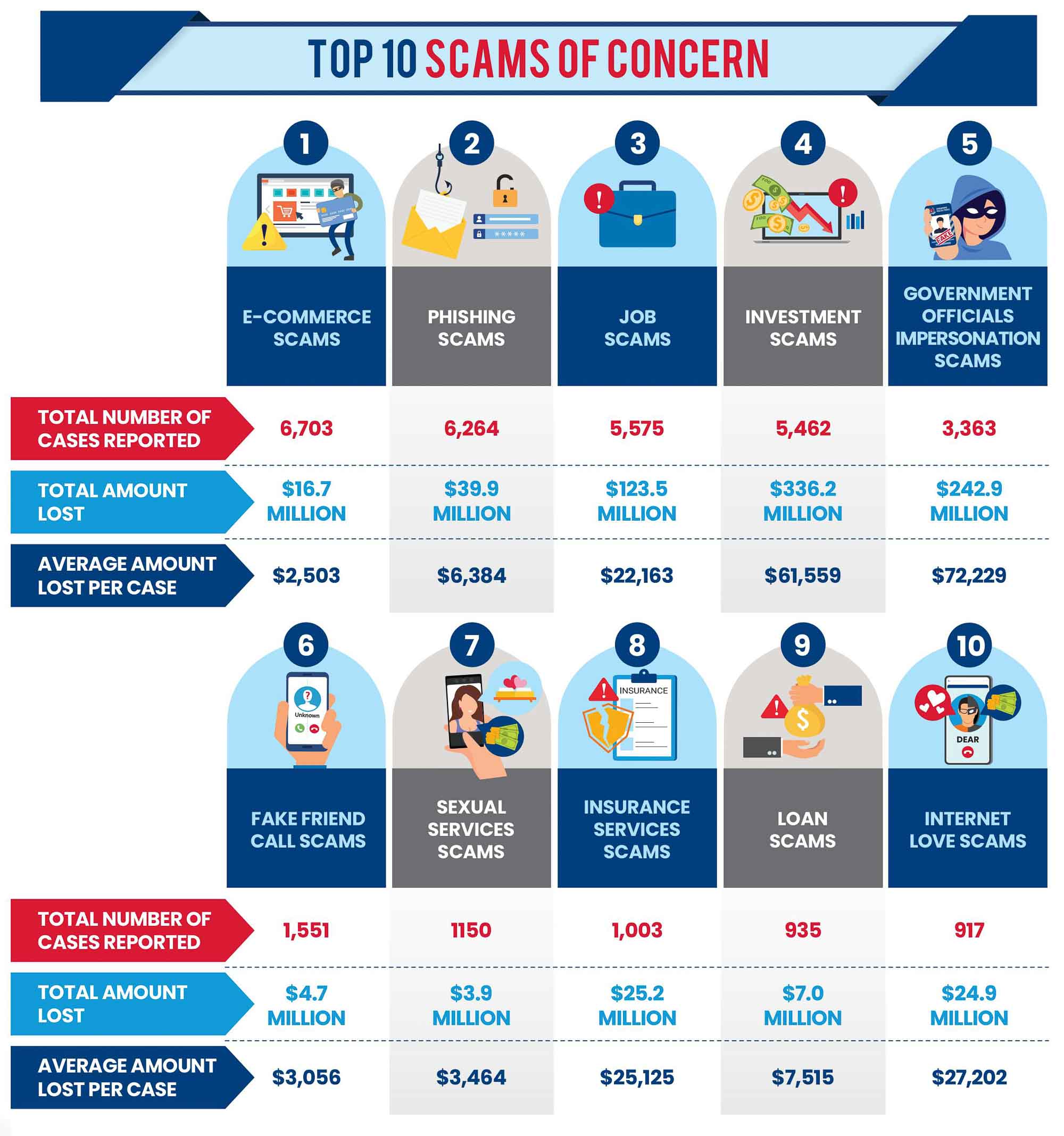
In terms of total amount lost, the top five scam types were investment scams, Government official impersonation scams, job scams, phishing scams and business email compromise scams.
2. Certain Scam Types Saw a Notable Drop in Cases
The number of e-commerce scams, job scams and fake friend call scams declined significantly in 2025.
The total amount lost for malware-enabled scams, business email compromise scams and fake friend impersonation scams also dropped.
Scams involving self-effected transfers fell by 0.6% from 82.4% in 2024 to 81.8% in 2025.
In most of these cases, the scammers didn’t gain direct control of the victims’ accounts, but manipulated victims into performing the monetary transactions by means of deception and social engineering.
3. Elderly Victims had the Highest Average Loss, Although Most Victims were Aged Below 65
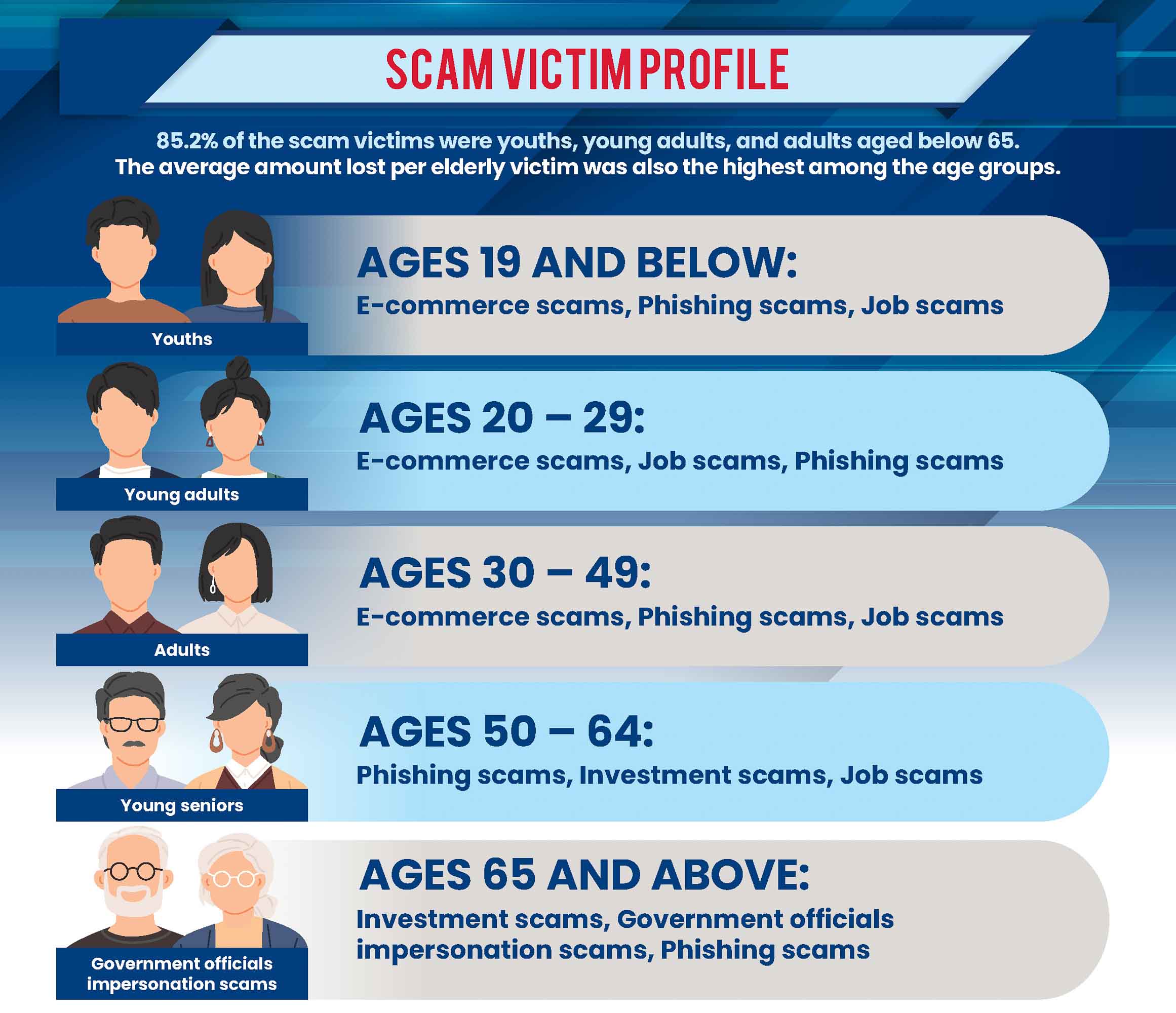
The overwhelming majority of scam victims were aged below 65. Adults between 30 to 49 were the group most prone to scams, making up about 36.1% of victims.
Although seniors older than that made up only about 15% of victims, they lost the most money each compared to all other age groups.
The average amount scammed was $37,053 per elderly victim – higher than youths, young adults, adults and young seniors.
4. More Scammers Used TikTok as a Contact Method
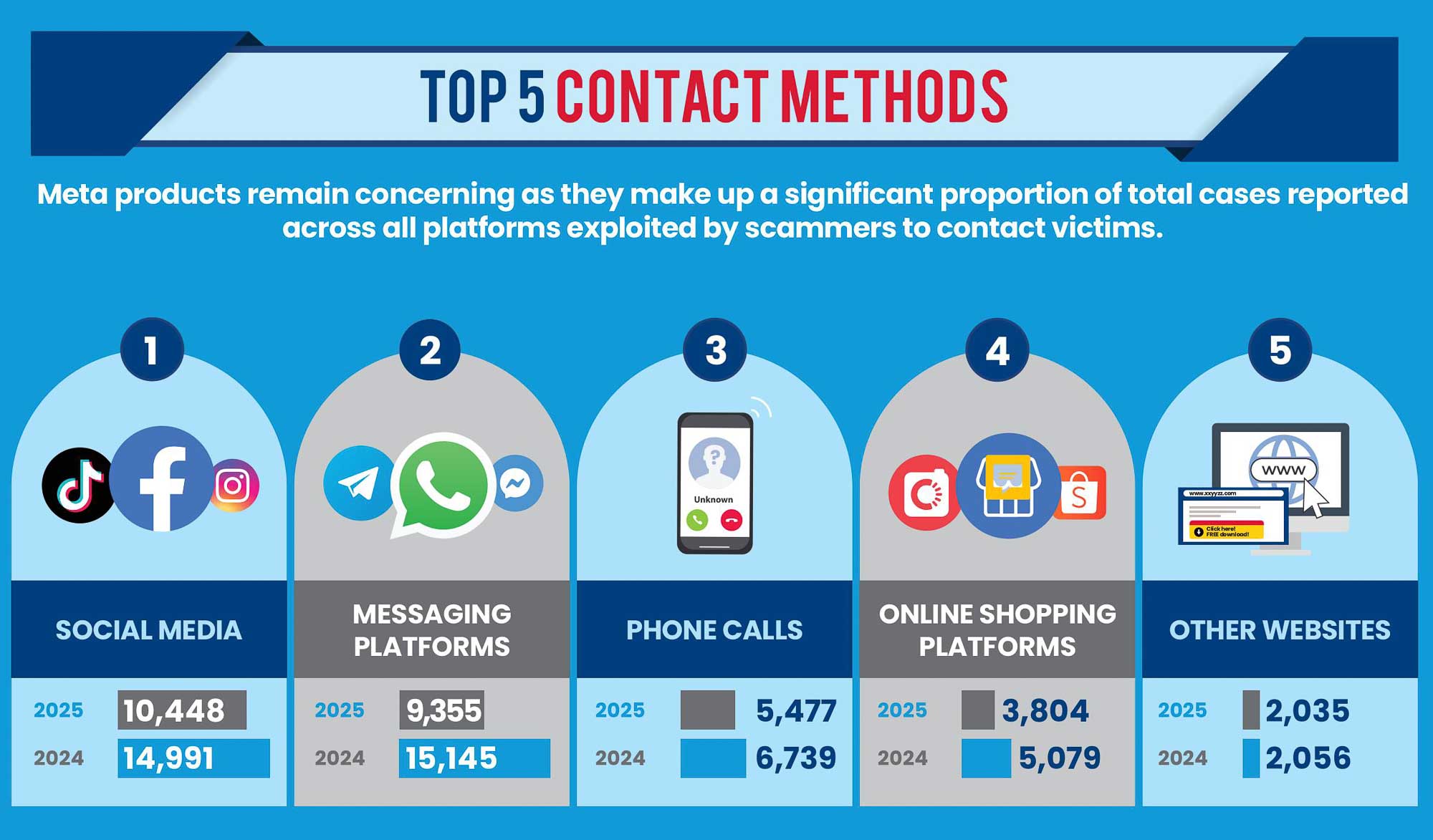
Scammers mostly reached out to victims through social media, messaging platforms, online shopping platforms and phone calls.
There were 37.8% more scams perpetrated on TikTok in 2025 compared to 2024. All other platforms saw a significant decrease in cases, including Facebook, Instagram, WhatsApp, Telegram and Carousell.
This can be attributed to new Police measures to protect users, such as requiring designated platforms to implement processes to disrupt malicious cyber activities.
It aligns with the Online Criminal Harms Act – which came into effect in 2024 – that online service providers are required to abide by.
5. About $140 Million of Scam Proceeds Recovered; Millions More in Potential Losses Avoided
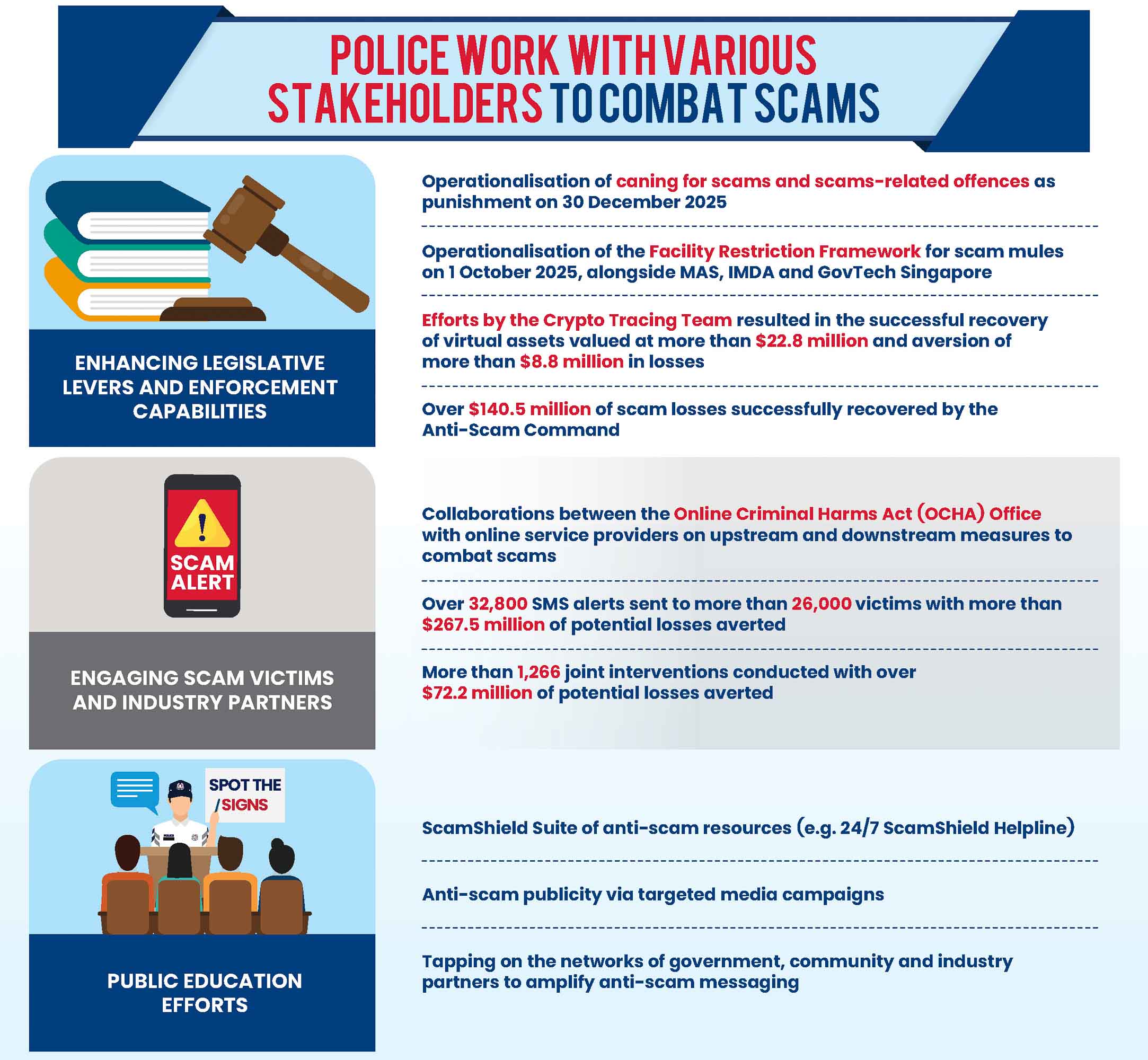
The Police’s Anti-Scam Command (ASCom) recovered over $117 million in non-cryptocurrency and more than $22 million in cryptocurrency scam proceeds.
Multiple anti-scam enforcement operations were conducted and thousands of money mule and scammers were investigated.
With the operationalisation of the Crypto Tracing Team in March 2025, over $20 million worth of virtual assets were recovered, preventing scammers from accessing these illicit gains.
The Police continue to work with other countries to combat scams that span across borders through Project FRONTIER+.
Together, the ASCom and overseas law enforcement agencies busted 17 transnational scam syndicates in 2025.
Additionally, at least $348 million in potential losses were avoided. This was due to proactive interventions with victims at various stages of being scammed. The ASCom and its partner banks sent SMS alerts to victims, prompting them to stop more transfers. Over 32,800 alerts were sent out to more than 26,000 victims.
The ASCom also worked with the Community Policing Units of the Police Land Divisions to stop 1,266 victims at risk. These individuals were referred by financial institutions because they had attempted suspicious monetary transfers.
Annual Scam and Cybercrime Brief 2025
To learn more about the Annual Scam and Cybercrime Brief 2025, download the Brief and its related infographic.


