
Landing page banner


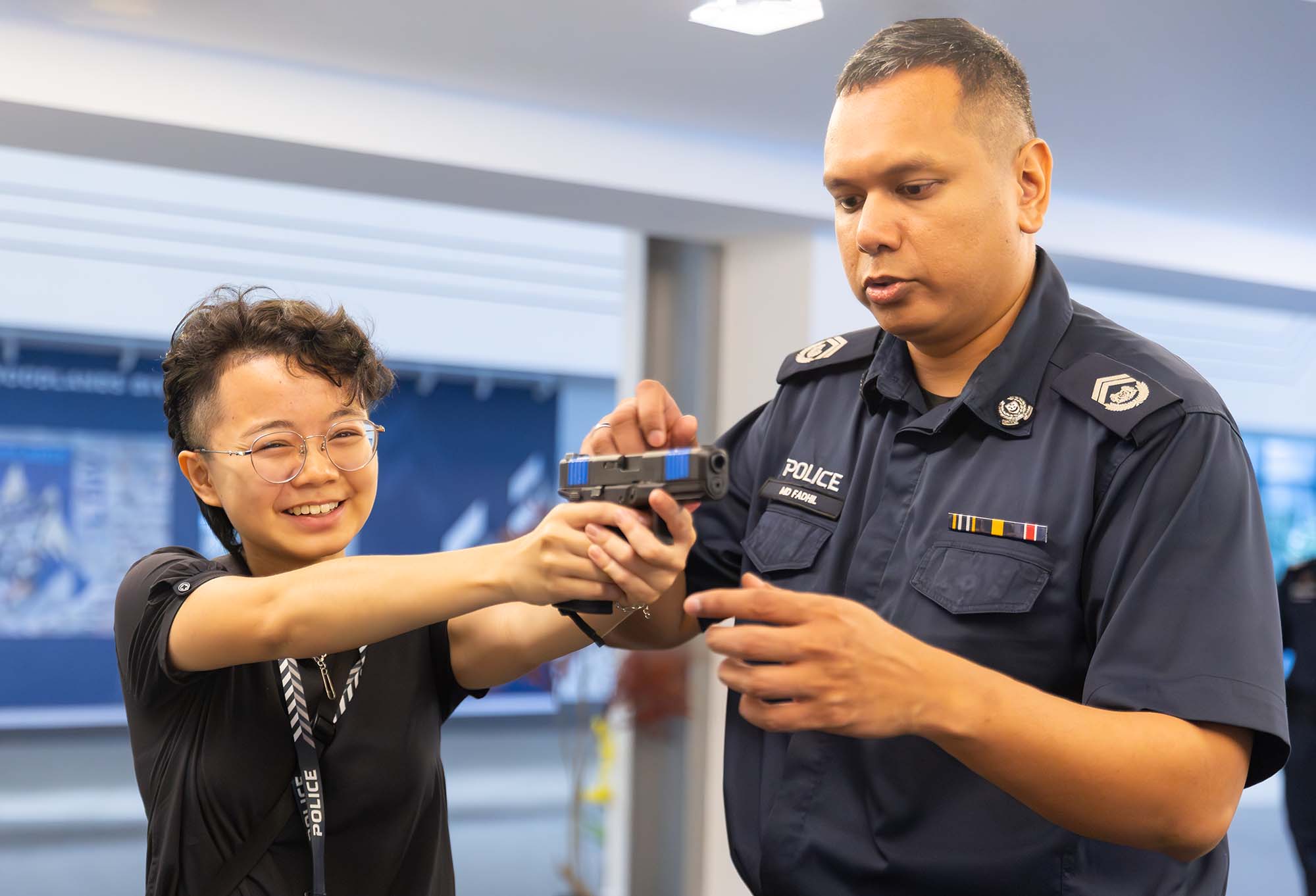
Guns have always made me uncomfortable. So, when I was assigned to learn about how Police officers are trained to use firearms, I felt uneasy.
I was to attend a session on firearms training where we’d be testing two tech aids fitted on pistols.
The first is a sensor system that analyses shooting mechanics and the second uses laser cartridges and optical sensors. During firearms training, these tools visualise the firing results and tell the officers how to improve their shooting.
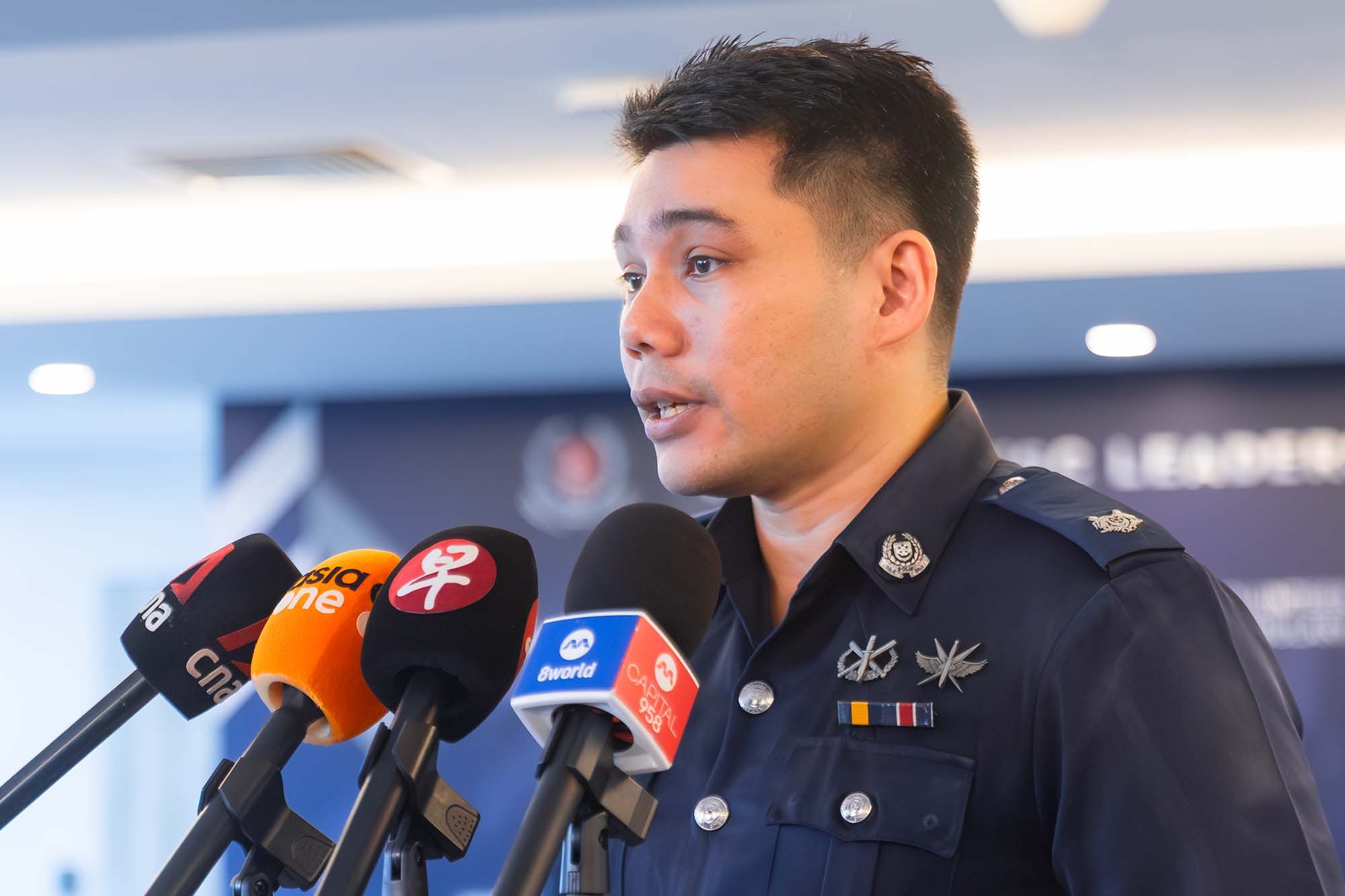
“This complements live-firing training and allows officers to practice more frequently in a safe and controlled environment,” said Assistant Superintendent of Police (ASP) Oliver Michael, Officer-in-Charge, Ops Training Wing, Basic Training School, at Training Command.
Without the Bite
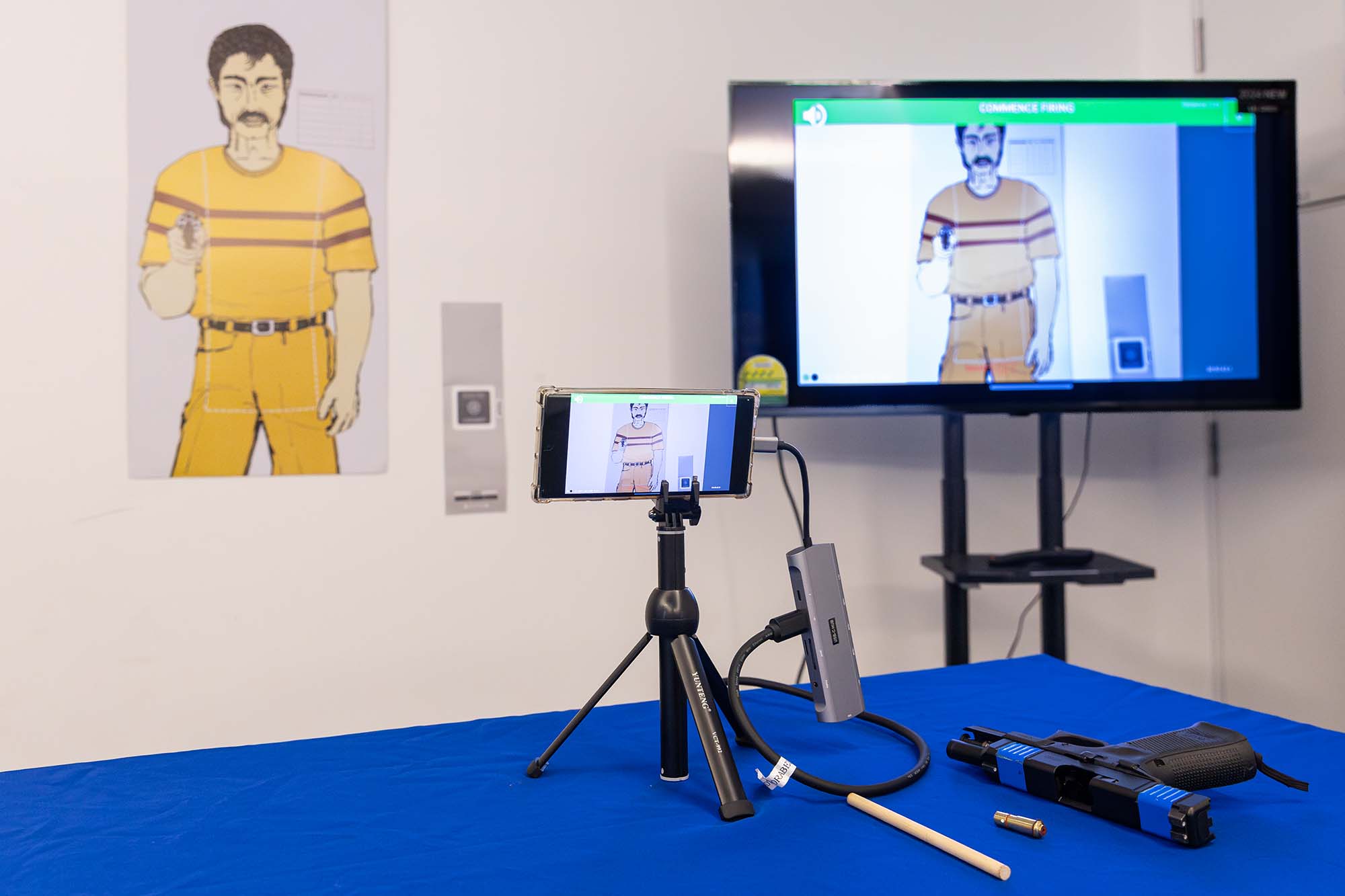
Members of the media and myself were shown to an area where a mini firing range had been set up. The walls had paper targets placed on them and there were also mobile phones showing the app that came with the tools. The mobile phone displays were doubled on larger television displays for us to see the details more clearly.
We were provided with two Glock training pistols prepared for dry-fire practices. This means their magazines were emptied out and they contained no live ammunition.
Two Police officers were the seasoned trainers who took charge of the demonstration.
They were Senior Staff Sergeant (SSSgt) Nur Hassan Bin Mohamed Raffie who recently received the Home Team Trainer of the Year Award and Station Inspector (SI) Muhammad Fadhil Kamroden.
Data Analytics in Action
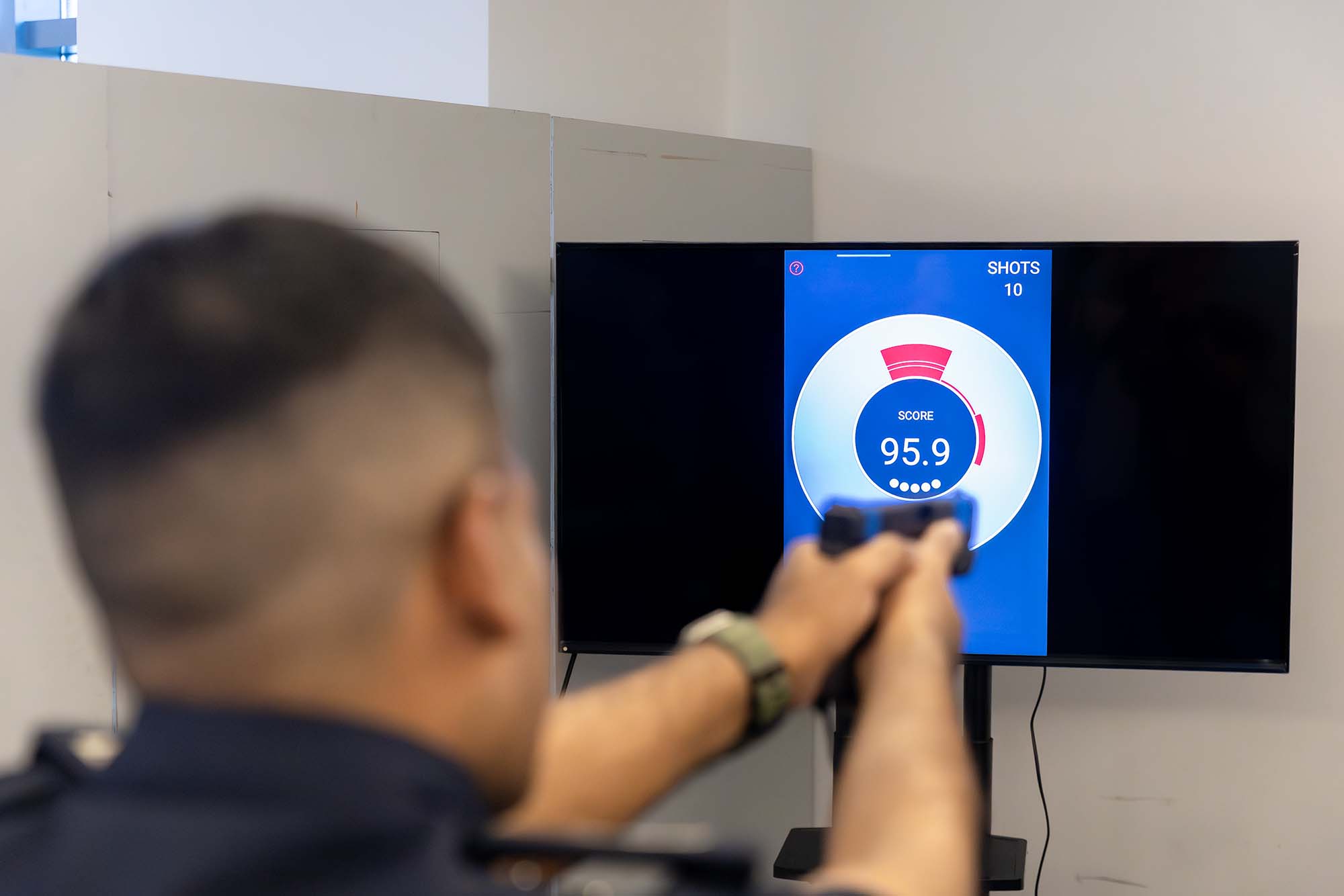
I picked up the first firearm. This one had a sensor system that detected how the barrel moved before, during and after each trigger pull.
It was surprisingly light because of the lack of ammunition. I adjusted my hand positions under SI Fadhil’s supervision, planted my feet firmly on the ground and squinted at the paper target five metres away.
On the wall was a menacing image of a man in a yellow outfit, as it is one of the standard target boards used for firearms training.
He was aiming his own pistol directly at me. I imagined if this were a scene in real life. He had the power to harm me, and potentially many others around him as well.
I put myself in the shoes of a Police officer handling this difficult situation. Now, I had the tool to do the job that I was meant to do. Rather than fear, I felt a sense of responsibility weighing down on me.
I knew that with a good shot, I could protect myself and prevent others from being harmed.
Click. And just like that, I fired my first ever shot with a pistol. The system displayed my score on the television screen. It wasn’t up to Police standards, of course – and the adrenaline rush to do better was intoxicating.
I took nine more shots in quick succession. My score was below 10 for many of them and only one went above 90, the score I was aiming for.
These numbers were a far cry from what SSSgt Nur Hassan had achieved during his demonstration. But as a novice, I consoled myself that at least I had one good shot in the bag.
The mobile app precisely pinpointed areas where I could do better. It also gave me suggestions on how to improve, showing presentation slides with detailed explanations about steadying my stance, and locking my wrist.
These are minute details that might not be apparent to the naked eye.
SSSgt Nur Hassan also shared that while trainers already provide feedback to officers during dry-firing sessions, having inputs based on data analytics significantly improve the training experience.
The digital comments complement a trainer’s own observations, allowing officers to quickly address mistakes and master the essential skill of shooting, faster.
Locking in with Lasers
I had the chance to try firing again, this time with the second training aid. It was a pistol fitted with a laser cartridge and optical sensor that projected a red beam on my target after I pressed the trigger.
For this session, I took more time to aim the pistol and fire. After each shot, SSSgt Nur Hassan would give me his feedback.
I tried to shoot exactly between the two brown lines on the target’s shirt but found that my shots tended to land higher.
At the end of the exercise, a mobile app displayed all 10 of my shots.
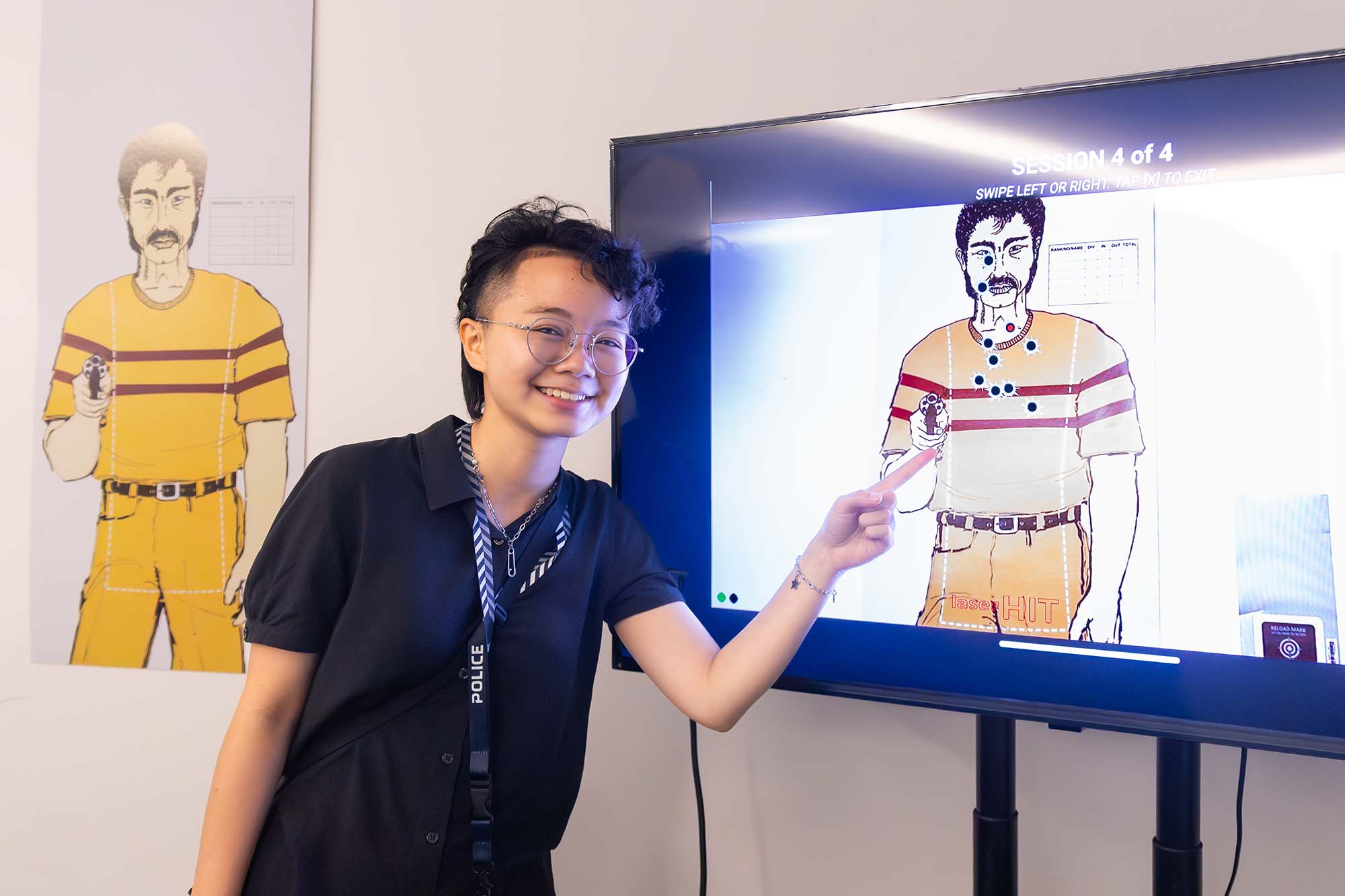
SSSgt Nur Hassan assured me that this session was a little better than my first. I guess I was being too hard on myself, considering that all my shots still landed on the target. It was also my first time shooting, after all.
Stepping back and thinking about the bigger picture, I understood how the newfangled tech will make firearms training easier.
With these two tech aids tech-enhanced dry-fire pistols, officers don’t have to follow rigid schedules or head to specialised range facilities to train, making practice sessions are more flexible and more readily available.
A Newfound Appreciation
According to ASP Michael, marksmanship is a perishable skill. That’s why regular practice is needed to maintain tip-top standards, with officers undergoing recertification for firearms training every year.
Given the amount of time and commitment needed, I realised how Police officers in Singapore take weapon handling very seriously.
Although I hadn’t held a pistol with actual bullets, nor faced an actual criminal, I could now better understand how essential it is for officers to apply the use of force responsibly.
At the end of the session, I left with a renewed respect for the Police doing what is necessary to ensure public safety.


