
Landing page banner


The Police have obtained footage of the Zoom video conference that was part of the scam that involved the impersonation of senior government officials mentioned in the Police News Release issued on 14 May 2026. The Zoom video conference made use of deepfake AI technology1 to fabricate images and videos of senior government officials.
Modus Operandi
In this scam variant, the victim would receive a WhatsApp message from a scammer who had impersonated the Secretary to the Cabinet, informing the victim to attend a meeting with Prime Minister Lawrence Wong.
The victim would then be invited to a Zoom video conference that appeared to involve PM Wong, as well as other local and overseas government officials. The Zoom video conference was fabricated, with some portions edited using deepfake AI technology.
Footage Obtained from Scam Operation
The footage showed a fabricated Zoom video conference about the situation in the Straits of Hormuz. The video conference purportedly included President Tharman Shanmugaratnam, Prime Minister Lawrence Wong, Minister Indranee Rajah and representatives from the Monetary Authority of Singapore (MAS), along with other foreign government officials such as the Foreign Minister of Canada and the Senior Diplomatic Advisor to the President of the United Arab Emirates, as well as private sector participants such as Blackrock and the Dubai International Financial Centre (DIFC). The victim would be introduced to the meeting as one of the private sector participants. The video conference would then proceed with a brief by the various government officials about the situation in the Straits of Hormuz and end with a deepfake video of PM Wong delivering closing remarks, which included an acknowledgement of the victim’s attendance at that video conference.
A scammer, masquerading as a lawyer, would separately contact the victim after the conclusion of the video conference and convince the victim to transfer money.
The following signs of deepfake technology were observed:
- Speech did not synchronise with speakers’ lips, indicating that inauthentic audio was layered on. This suggests that the videos of the speakers were pre-recorded and the speech was inauthentic.
- Speech was broadcast through one account throughout the call, instead of through the call participants. This indicates that pre-recorded, inauthentic speech was layered on to videos of impersonated officials, and broadcast through one main account.
- Distorted background and partially obscured Zoom logo that did not align with the foreground. This indicates that the videos were manipulated using AI technology.
Advisory to the Public
Deepfake AI fabrications can be sophisticated, and it can be difficult to differentiate between authentic and inauthentic content. Members of the public are encouraged to remain vigilant and exercise extra caution, especially when contacted through virtual means. Singapore government officials will never do the following over emails, phone or video calls:
- Ask you to transfer money;
- Ask you to disclose bank login details;
- Ask you to install mobile apps from unofficial app stores;
- Transfer your call to the Police or any other government officials.
Should you encounter a possible scam, false news or advertisements on social media, please report it to the platform’s administrator or to the Police. If you are in doubt, call the 24/7 ScamShield Helpline at 1799 to verify.
Combating deepfake scams is a community effort. If you observe a family member or a friend sharing potentially deepfake scam content, you should intervene and encourage them to first analyse the message, inspect the audio-visual elements, and verify the content with official sources.
For more information on precautionary measures, please refer to details in Annex A. You may also refer to CSA’s advisory at Advisory on Detecting and Responding to Deepfake Scams | Cyber Security Agency of Singapore.
1‘Deepfake’ refers to multimedia (images, video, and audio) that has been synthetically created or manipulated. Deepfakes have been used by malicious parties to create highly realistic and convincing content that seek to deceive users, such as in scams or phishing attacks.
Annex A
Detecting Deepfakes
Members of the public are also encouraged to recognise the signs of deepfake-led scams through the 3A approach:
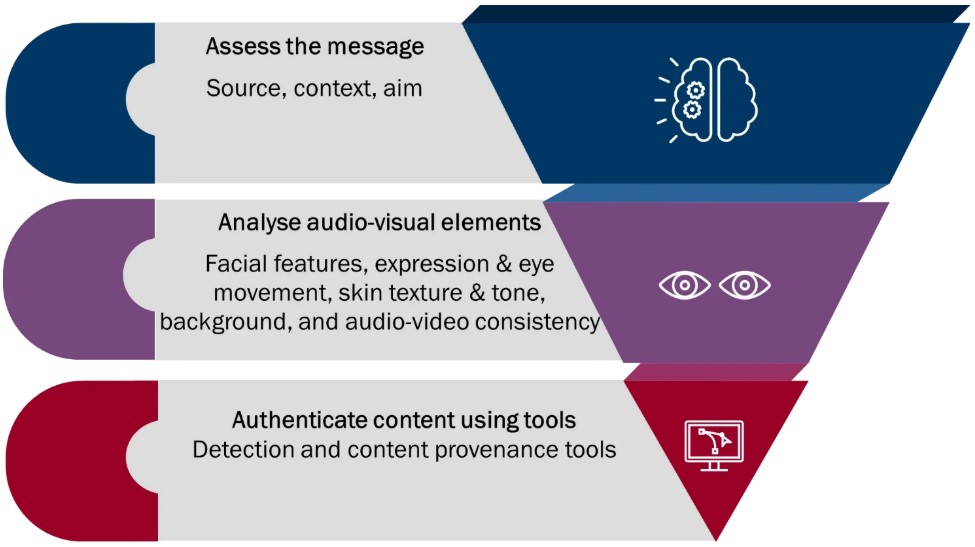
Figure 1. The 3A approach for detecting deepfakes
Assess the Message
Assess the content, by checking its source, context, and aim — especially if the message is unsolicited.
- Source: Is the source trustworthy and can you verify that it is truly who it claims to be? A trustworthy source can be an official organisation, institution, or individual that directly owns or knows the content.
- Context: Does the content read or behave as expected? For example, Singapore government officials will not ask the public to invest in third-party investment schemes or to transfer money to others.
- Aim of content: Does the content ask you to do something urgently, unsafe, or unusual? Take caution if the content asks you to download unknown third-party applications, click on suspicious links, provide personal information or make monetary transfers.
Analyse Audio-Visual Elements
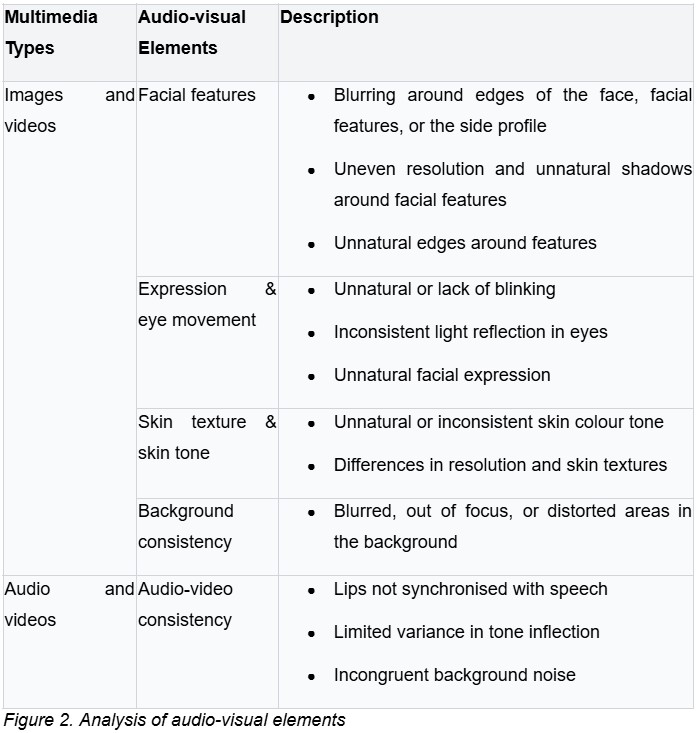
Look out for tell-tale signs that the audio or video has been manipulated, even if it appears to be a ‘live’ interaction. The table below describes elements that you can look out for to decide if it has been altered.
Audio-visual elements
PUBLIC AFFAIRS DEPARTMENT
SINGAPORE POLICE FORCE
16 May 2026 @ 7:55 PM