
Landing page banner


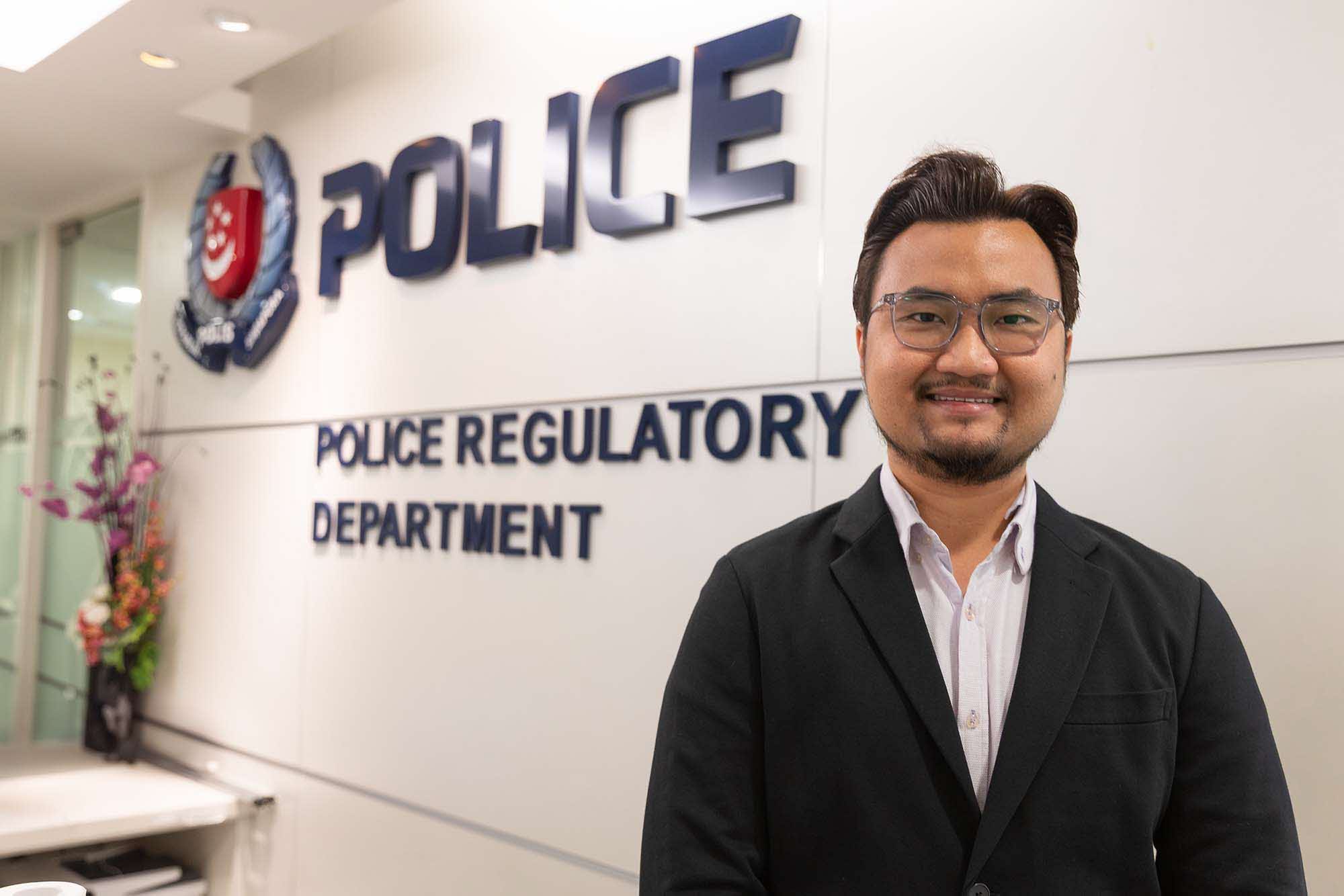
When it comes to regulatory matters overseen by the Singapore Police Force (SPF), every detail matters. And that’s where the Police Regulatory Department (PRD) comes in!
The mission of the PRD is to deliver an effective and efficient regulatory regime to prevent, deter and detect crime. The PRD has five divisions: the General Licensing Division; Public Entertainment and Liquor Licensing Division; Guns, Explosives and Weapons Division; Security Industry Division; and Regulatory Development and Support Division.
Behind the PRD’s work are officers like Mr Tengku Muhammad Khairul Anuar. A Regulatory Officer in the General Licensing Division, he plays an important role in carrying out the Police’s role as regulator in the General Licensing Division.
Finding Purpose in Service
Mr Khairul joined the SPF in July 2017, serving his National Service (NS) full-time with the Community Policing Unit at Sembawang Neighbourhood Police Centre.
The dynamic nature of his engagement work and the camaraderie he experienced during his NS stint strengthened Mr Khairul’s decision to continue his SPF journey as a civilian officer. “It wasn’t only about the job prospects or structured career progression – it was the sense of purpose,” he shared. “I was inspired to serve the community and make a difference in people’s lives.”
This commitment to public service runs in his family; Mr Khairul has two siblings serving in Jurong and Woodlands Police Divisions, while he himself is currently a Police National Service officer at Woodlands Police Division.

Growing with the Role
Mr Khairul joined the PRD as a Licence Processing Officer in January 2020, gaining foundation experience in regulatory work. He took on greater responsibilities as an Assistant Officer-in-Charge of Licensing in August 2021 before assuming his current role as a Regulatory Officer in June 2025, following PRD’s restructuring.
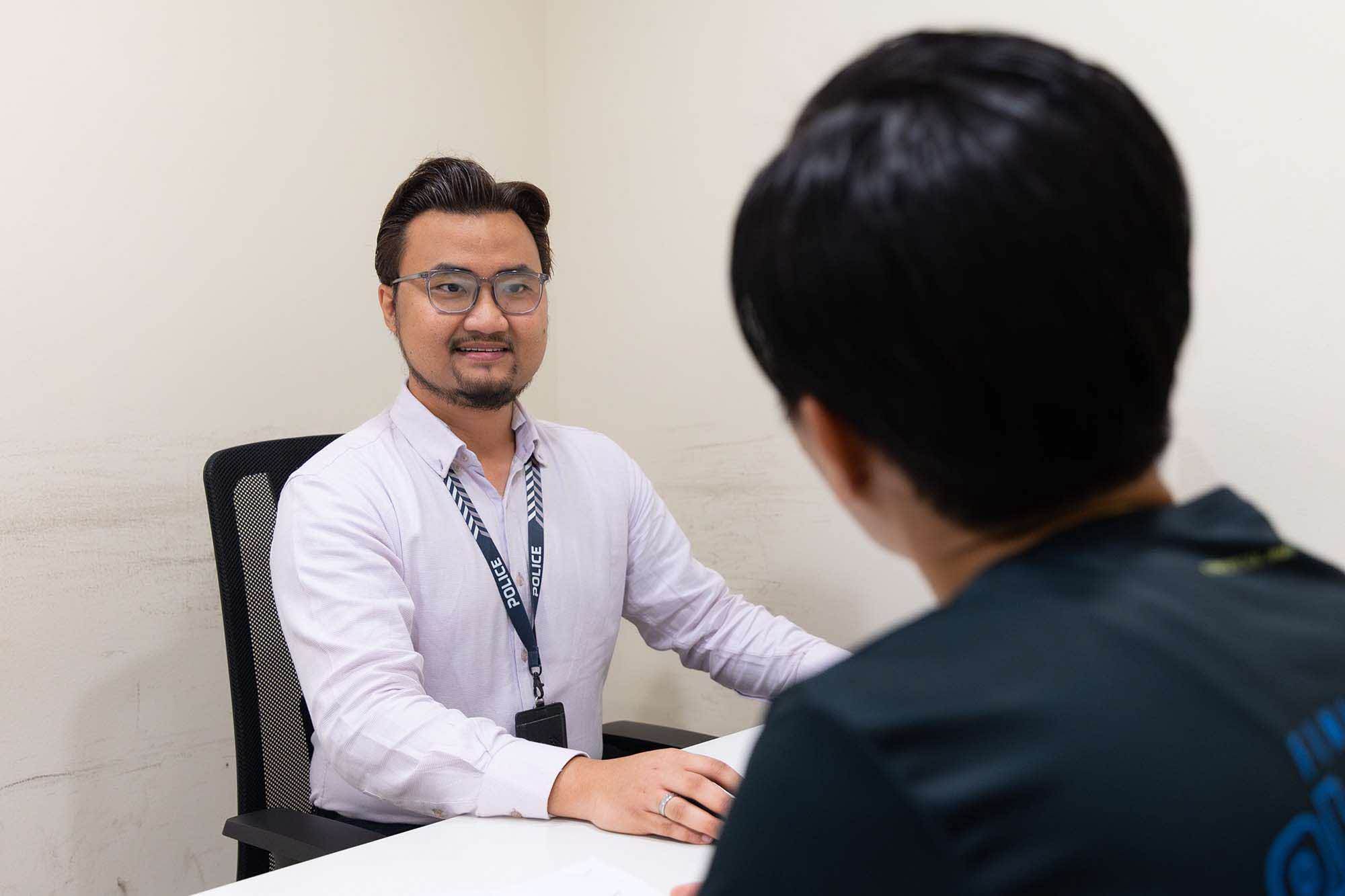
“My responsibilities include assessing and approving licence applications related to massage establishments; handling public enquiries and appeals; and engaging industry stakeholders,” explained Mr Khairul.
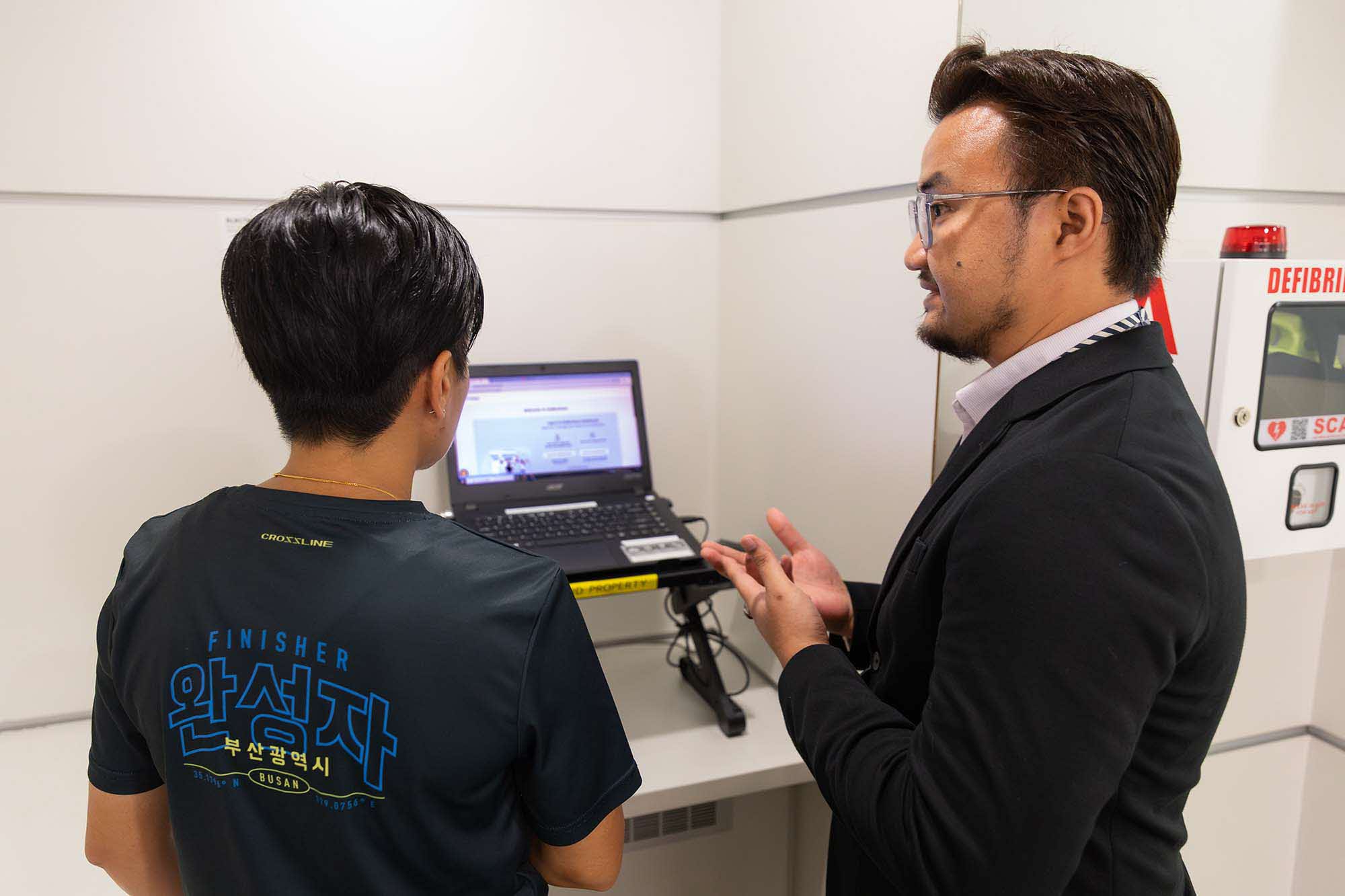
When it comes to applying for a licence, Mr Khairul encourages users to visit the Police e-Services website to learn about eligibility criteria, required documents and applicable fees before submitting their applications via the GoBusiness portal.
Rising to the Challenge
Each of Mr Khairul’s postings has helped to sharpen his understanding of licensing laws, regulations and operational processes – knowledge that proved invaluable during the COVID-19 pandemic.
During this period, regulatory work intensified dramatically. As daily COVID-19 testing became mandatory for massage establishment employees, Mr Khairul and his team worked closely with other Police units as well as public agencies such as the Health Promotion Board, Ministry of Manpower, Ministry of Health, Enterprise Singapore and Public Service Division to enforce and monitor the Fast and Easy Test (FET) regime for massage establishment employees. As the Police were designated the sector leads for the industry, Mr Khairul’s effort ensured that the FET was effective in isolating infected employees and keeping massage establishment premises safe.
“Each day, it seemed like the workload would increase,” recalled Mr Khairul. “We had to ensure that the massage establishments submitted their swab results, had sufficient test kits and could access the testing centres – especially for staff who weren’t tech-savvy.”
What kept Mr Khairul and his team motivated was simple – the welfare and support from PRD management.
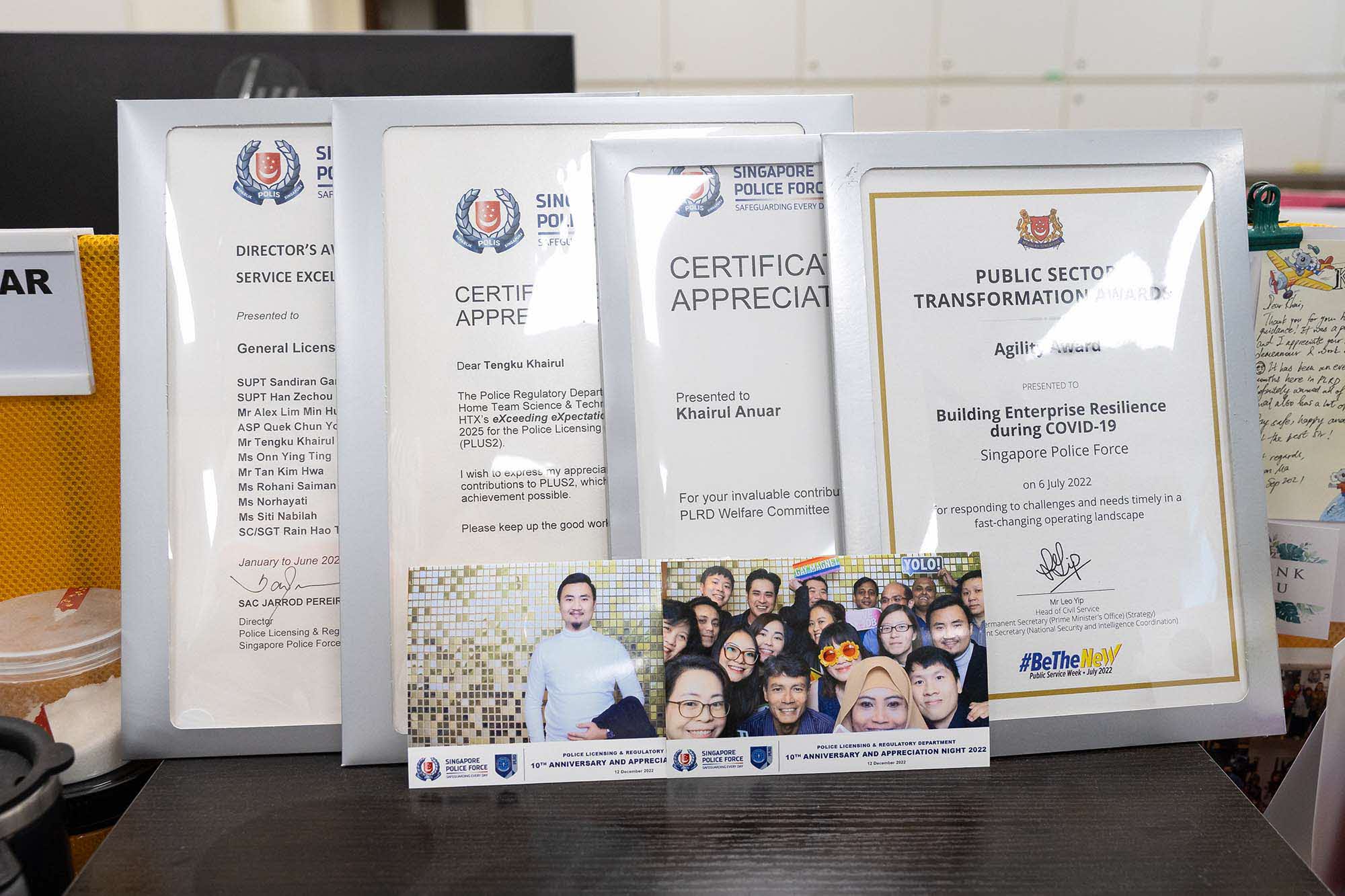
Their efforts did not go unnoticed. In July 2022, Mr Khairul’s team received the Public Sector Transformation Agility Award (Building Enterprise Resilience during COVID-19) for implementing the FET regime for the massage establishment industry.
For Mr Khairul, the award demonstrates the good outcomes that arise when regulatory work is done right, with civilian and uniformed officers collaborating as one. “Civilian officers contribute meaningfully to the PRD’s mission,” shared Mr Khairul. “Together, we show that every regulatory decision we make reinforces our commitment to public safety and security.”


