
Landing page banner


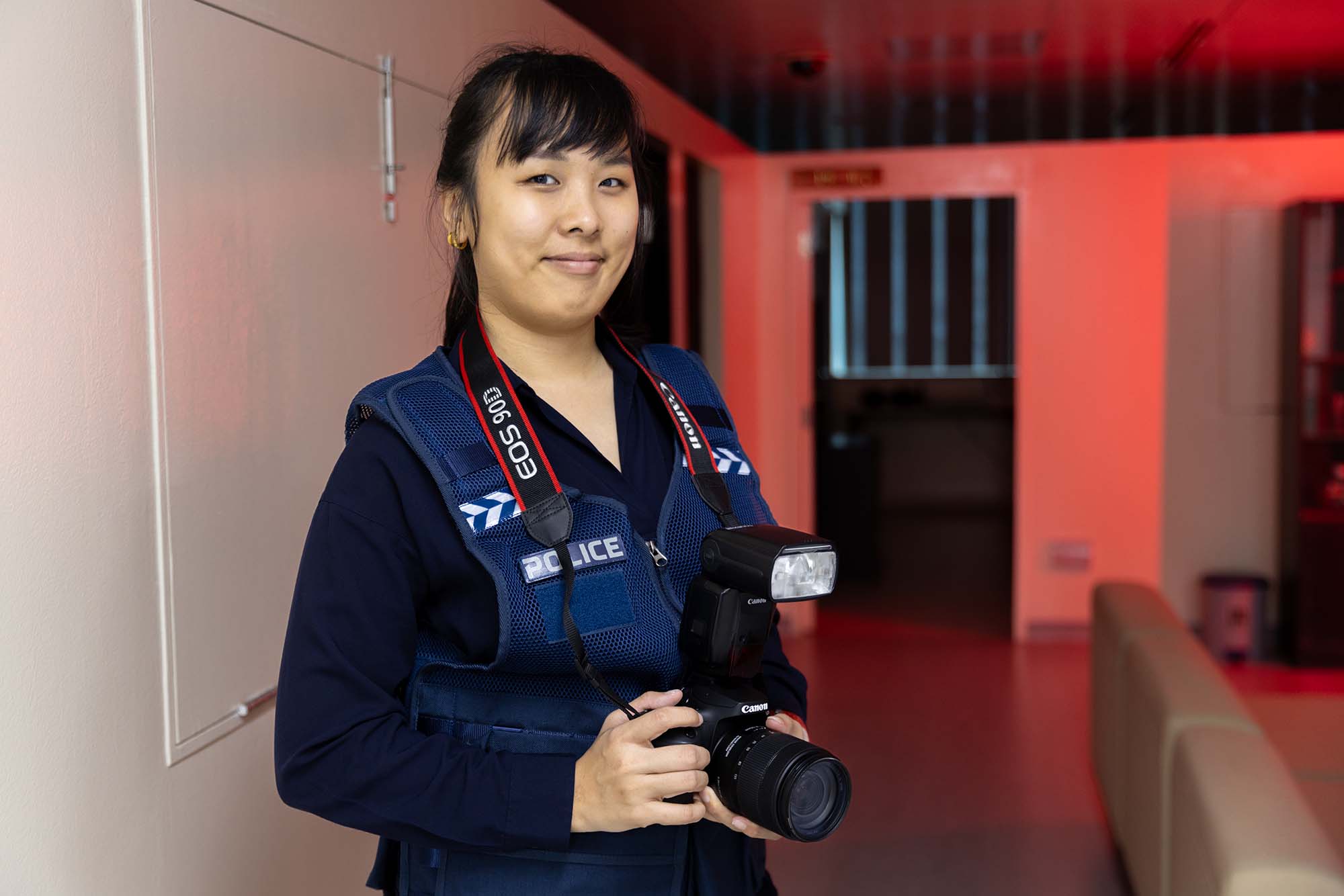
When crimes such as rape and murder cases happen, Ms Chiam Hui Ting heads down to gather evidence.
Hui Ting is a Senior Crime Scene Specialist with the Forensics Division of the Singapore Police Force’s Criminal Investigation Department, forward deployed from Home Team Science and Technology Agency (HTX).
Listening to her story, it struck me how Hui Ting, 30, almost seemed like the younger sister of her colleague Ms Zhang Weiwei, who’s two years her senior. They both graduated from the same polytechnic course, pursued the same career path and later specialised in Bloodstain Pattern Analysis (BPA).
Hui Ting beamed as she spoke about Weiwei, who has been one of her sources of inspiration: “Our job requires us to think on our feet because each case is different. When you arrive at a scene, you need to quickly identify which evidence is crucial and how best to collect it.”
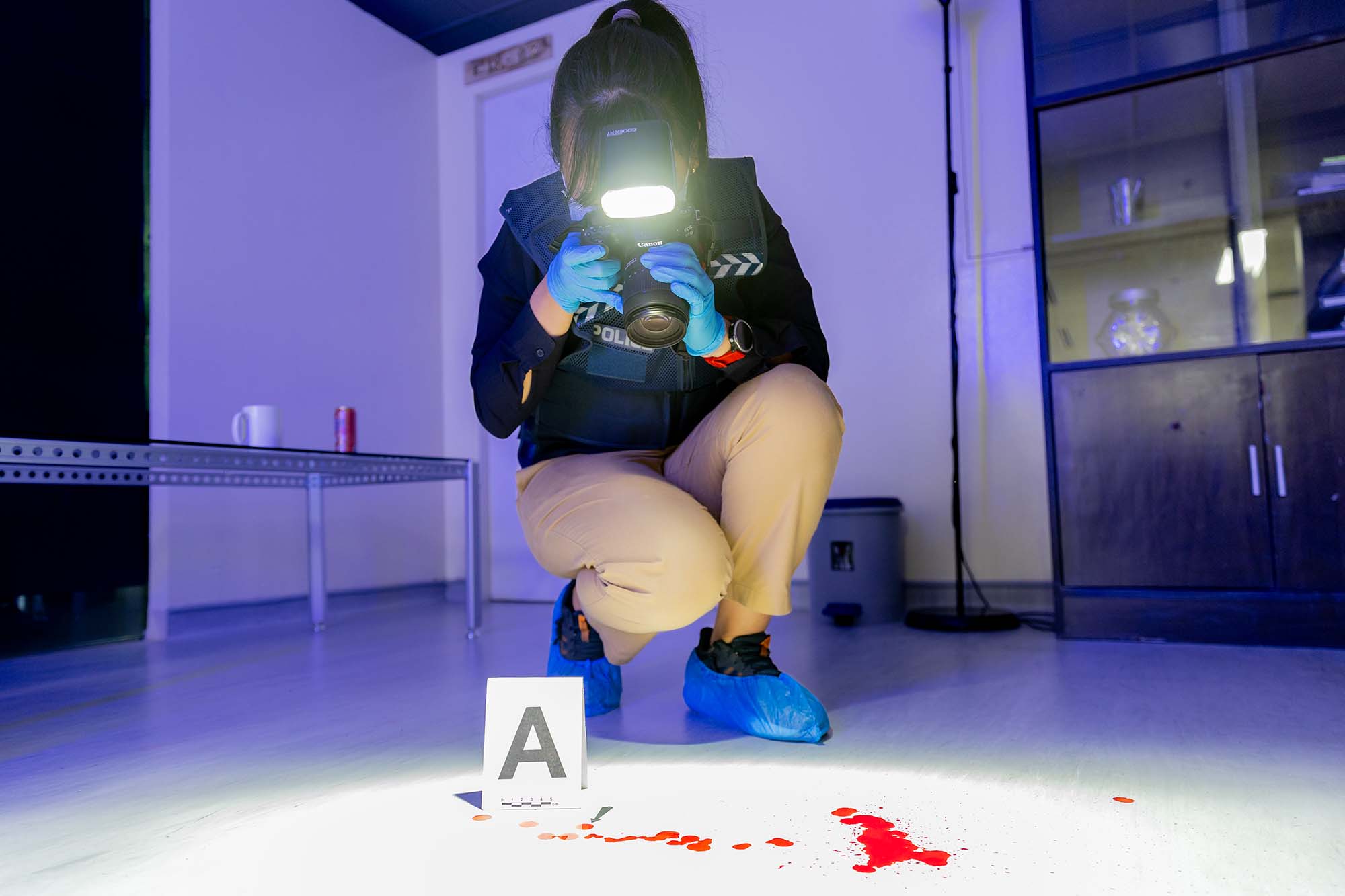
At crime scenes, she looks for bloodstains and evidence that may be hidden in plain sight before taking photographs for documentation. She also dusts for fingerprints and collects them for further examination.
“Sometimes, fingerprints are found on bloodstains or on different surfaces, so we use enhancement techniques to make them more visible,” she added.
Reading Between the Spatter
In October 2025, Hui Ting and Weiwei became the only two people in the Asia-Pacific region certified by the International Association of Identification – a global forensics institution – to conduct BPA.
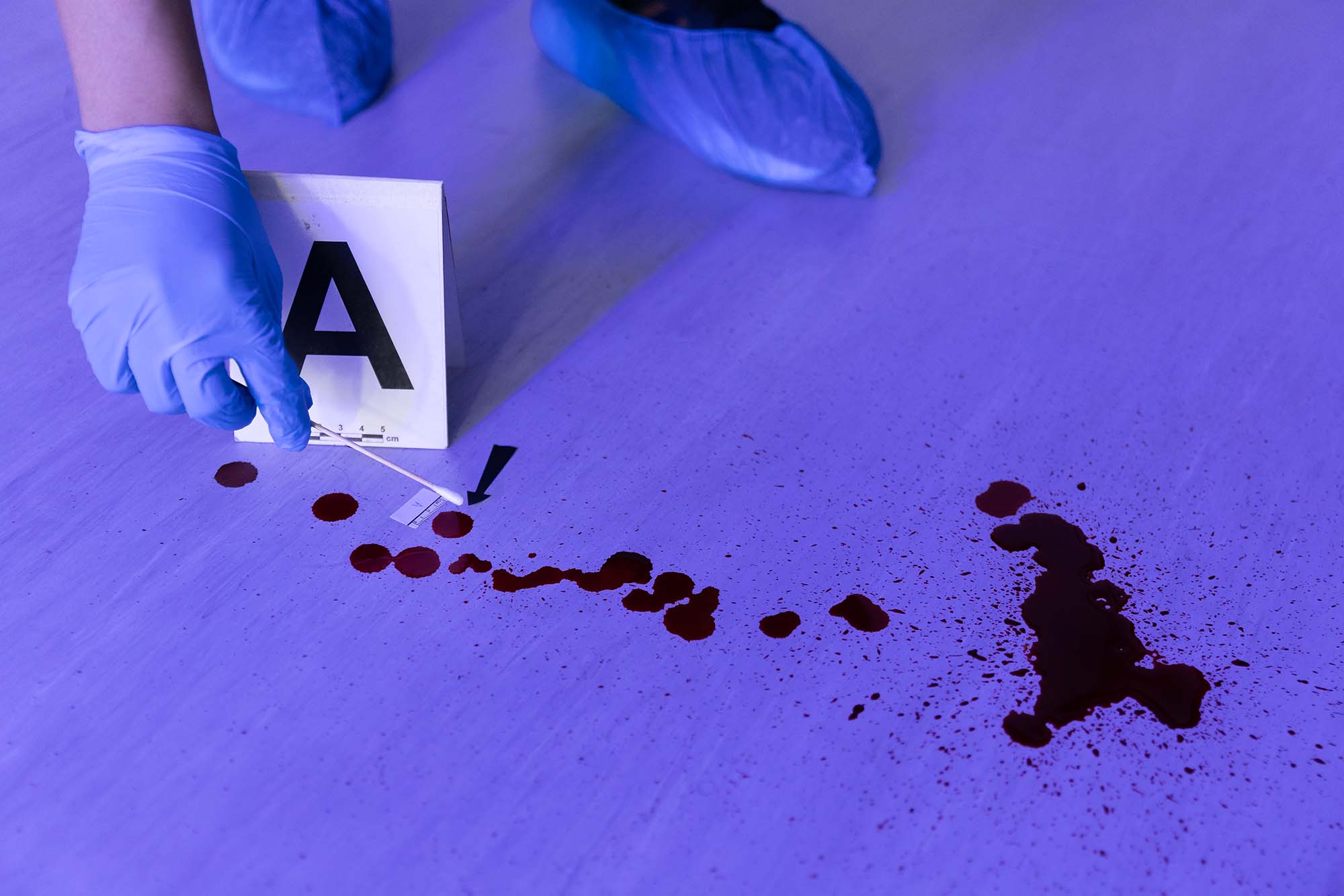
Hui Ting is trained to examine different types of bloodstain patterns to understand the mechanisms that caused them and the possible positions and movements of individuals involved. This allows her to provide valuable insights during investigations.
“You have to observe each stain individually. After analysing them, you step back to see how they fit together as part of a larger sequence of events,” she explained. She applies this expertise to cases such as murder, causing grievous hurt and rioting where bleeding is involved.
One case that tested her skills occurred in 2019 and involved a victim who’d attempted different ways to end his life.
“Based on the bloodstain patterns observed, we came up with a possible sequence of events. There were stains near his bed and quite a number in the toilet, where his body was found,” she said. “We surmised that he could have swung his hands around, leaving stains from his wrist injuries.”
Hui Ting shared that no two crime scenes are the same. Each scene presents a “new challenge” that she has to approach with an open and analytical mindset.
Early in her career, she found it difficult to witness grieving family members at a scene. Over time, she learnt to manage her emotions at work. “We have to maintain our professionalism and complete our work properly so that we can help those people better,” she said.
Cultivating Expertise
I found the tight bond between Hui Ting and Weiwei endearing. The duo studied for their BPA examination together, often meeting at Weiwei’s house during their off days to read through textbooks and discuss materials.
“It was like preparing for my ‘O’ Levels all over again,” recalled Hui Ting.
While she’s grateful for the opportunity to specialise in her chosen field, Hui Ting also feels responsible to set a good example for her team.
She joined the BPA workgroup in 2022, which currently consists of five other Crime Scene Specialists who have completed advanced BPA courses. The workgroup regularly keeps abreast of current BPA processes and explores ways to enhance BPA reporting and scene processing.
“We conduct research and perform experiments related to BPA. We also monitor the latest developments in technology to see how it can help us to analyse blood evidence more effectively,” she explained.
The workgroup is in charge of conducting the basic BPA course, a training requirement for all Crime Scene Specialists.
One particular training tool used by Hui Ting that I found interesting was the Mixed Reality Training System. This system was developed by the SPF and HTX’s Human Factors & Simulation Centre of Expertise. Utilising this system allows Crime Scene Specialists to analyse bloodstain patterns while processing the scene virtually.
“I can project virtual bloodstain patterns onto the furniture, so you can start processing the scene right away,” Hui Ting explained. “Mixed Reality improves training efficiency compared to using synthetic blood, which requires much clean-up afterwards.”
Precision, People and Purpose
At work, Hui Ting values the way her colleagues support one another and the collaborative environment that allows the team to tackle challenges together. She feels a sense of accomplishment when everyone contributes different suggestions, discusses questions and helps one another with crime scene processes.
“Investigation Officers approach cases from their own point of view based on their leads, and our forensics team offers a scientific point of view,” she said. “It’s really harmonious when we all come together and discuss the value of each piece of evidence at a scene, which strengthens the overall investigation.”
When asked about the most important trait for her job, she replied that it would be a keen eye for detail. “In our work, you cannot miss out on anything,” she said.
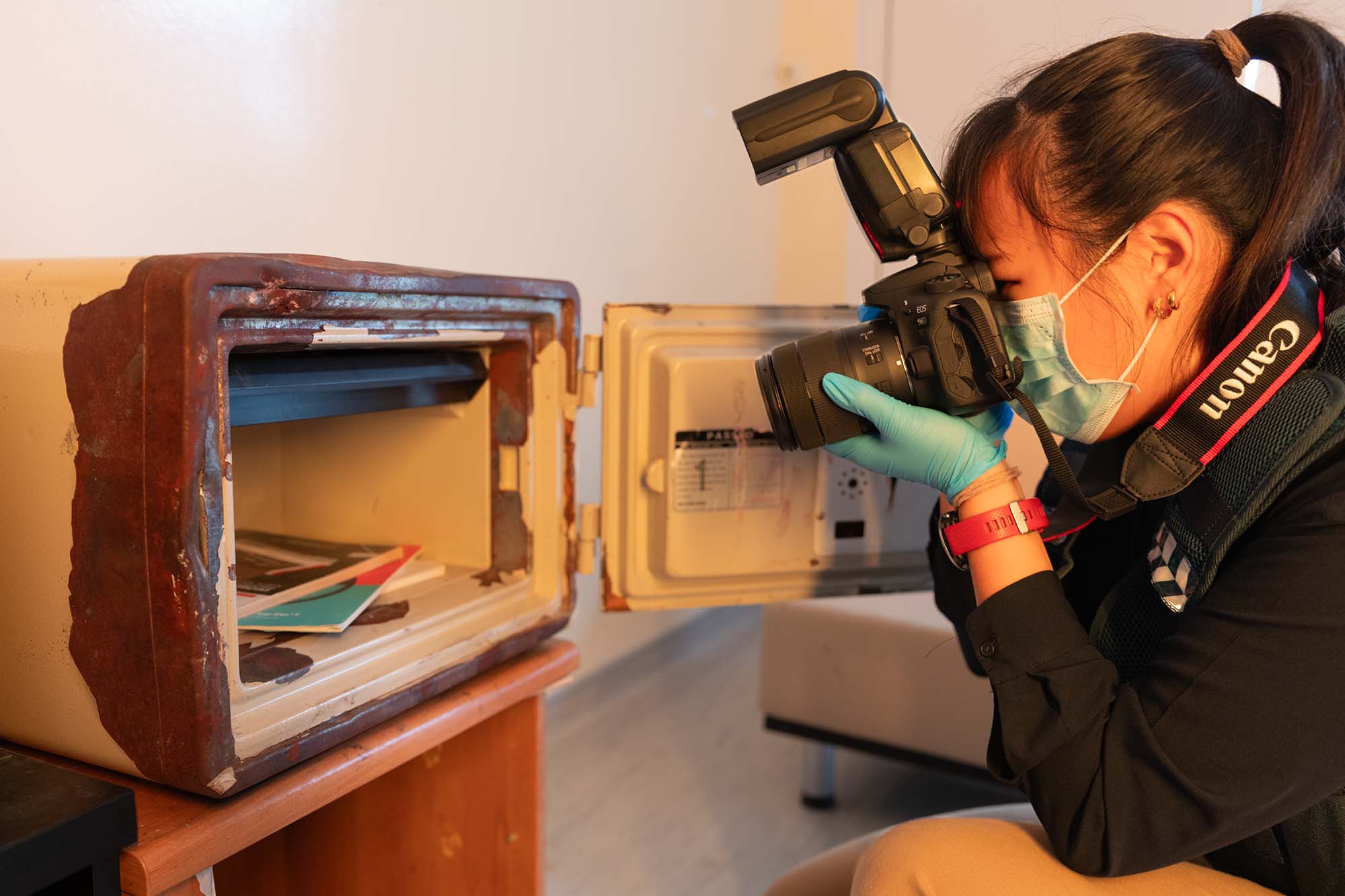
Back at home, Hui Ting’s family members were initially uncertain about her career choice because they thought it was unconventional. Over time, they came to respect her dedication and courage. She loves her job because it allows her to help victims and do her part to achieve justice.
“Solving crimes doesn’t happen overnight,” she said, “Eventually, when I watch the news and see the defendant being charged, I know the work we put in mattered.”


